
Naniwa vs Shapton: Which Whetstone Should You Buy?
1What we stock, side by side
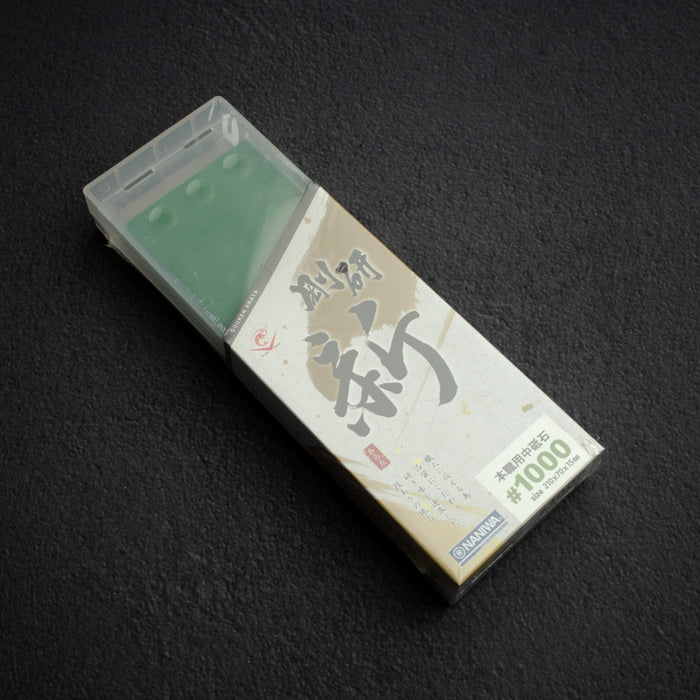
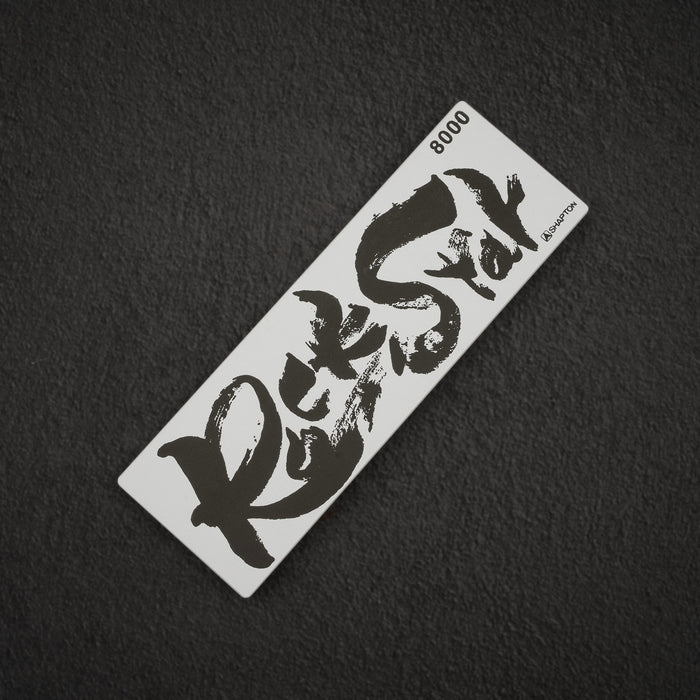
Both makers sell more ranges than we carry. These are the ones on our shelves, and all of them are splash-and-go: wet the surface and start, no soak needed. The Chosera, the Professional, the Arata and the RockStar share the same 210 by 70 mm face; what changes is the thickness, which is how long the stone lasts, and whether a base comes with it.
Prices are the regular prices read from our store on 5 November 2026.
| Range | Thickness | Base | Our range | 1000 grit at our shop |
|---|---|---|---|---|
| Naniwa Chosera | 25 mm (30 mm at 10,000) | Fixed stand on the 1000; nagura stone included | Chosera stones | A$134.95 |
| Naniwa Professional | 20 mm | None | Professional stones | A$108.95 |
| Naniwa Gouken Arata | 15 mm | Removable base (the box) | Gouken stones | A$94.95 |
| Naniwa Gouken Kagayaki | 10 mm | None; two fit in one carry box | Gouken stones | A$109.95 (400/1000 combination) |
| Shapton RockStar | 10 mm | Sold bare or in a stainless case | RockStar 320, 1000, 3000, 8000 and 16,000 | A$75.00 (sold out) |
2How each stone feels
The Chosera is the reference. It cuts fast, dishes slowly, and its feedback through the blade is very gentle. Naniwa now keep the Chosera name for the Japanese market; overseas the same abrasive is sold as the Professional line, 20 mm thick instead of 25 and without the stand or the nagura (a small rubbing stone for raising slurry).
The Gouken Arata is Naniwa's answer to the one real problem with the Chosera, which is its size and weight. It has the same face, it is 15 mm thick, it drops the nagura, and it sits in a base you can lift off. It feels identical to a Chosera in use, and it is far easier to store or carry.
The Kagayaki is the budget member of the family. It is built on Naniwa's Super Stone but made slightly harder, so it dishes less, and at 10 mm it is the one to put in a bag.
The RockStar is Shapton's solid 10 mm stone. Shapton make it from the same grade of abrasive as their Glass Stones but without the glass backing, so you get twice the thickness of stone, in ten grits from 320 to 16,000. Shapton build their stones to cut quickly, be ready to use straight away and wear slowly.
3Do Naniwa and Shapton stones need soaking?
No. Both makers sell these stones as splash-and-go, and both warn against the opposite mistake. The Professional is not to be soaked for more than 15 minutes or left in water, because that affects the bond. Shapton say not to leave a RockStar in water and to wipe it after use, because a stone left wet softens and wears faster, and to keep hot water and detergent off it.
Some Chosera owners give it a few minutes in water anyway and find the feel improves. Try it both ways and keep whichever you prefer. Whatever you own, let it air dry before you put it away, out of direct sun and away from heat or a fan, because drying it fast can crack it. Our beginner's guide to whetstones covers soaking stones against splash-and-go stones in more detail.
4Bare stone or stone on a base?
The Chosera 1000 comes on its own stand, which makes it the easiest to start with. The Professional and the RockStar are bare stones, so plan on a stone holder, or buy the Naniwa Professional 1K / 3K Whetstones with Suehiro Stone Holder Bundle, A$309.95 for the 1000 and the 3000 with the holder, with three left when we checked. The Arata's base lifts off, so the stone itself stores flat in a drawer.
5Chosera vs Kuromaku and Glass Stone
Plenty of people who search for Naniwa against Shapton mean the Chosera against Shapton's Kuromaku or Glass Stone. We do not stock either, so here is how they sit against the Naniwa stones we carry instead.
The Kuromaku is a solid 15 mm stone that comes in a plastic case, the Shapton stone most often weighed against a Chosera. Against it, the Chosera is always the gentler stone on the blade at about the same speed, the Arata has a 3000 grit where the Kuromaku range has none, and at the fine end the Chosera 5000 is in our experience a better stone than the Kuromaku's fine grits.
The Glass Stone is a 5 mm layer of stone bonded to 5 mm of tempered glass. The Kagayaki is about the same size and performs much the same, but it gives better feedback, it costs less, and all of its thickness is stone you can use.
6Which to buy
Prices and stock below are the regular prices and the stock as at 5 November 2026. Stock moves, so check the product page before you buy.
- Your first stone, kept at home: the Naniwa Chosera 1000 grit Japanese waterstone with stand, A$134.95. It is the stone our beginner's guide starts people on.
- The Chosera feel for less, easy to store: the Naniwa Gouken Arata (Baby Chosera) 1000 Grit Sharpening Stone, A$94.95, then the Naniwa Gouken Arata (Baby Chosera) 3000 Grit Sharpening Stone, A$134.95, when you want a finer edge.
- You already own a stone holder: the Naniwa Professional P-310 1000 grit Japanese Waterstone, A$108.95.
- A light stone for travel or a tight budget: the Naniwa Gouken Kagayaki 400 - 1000 Grit Sharpening Stone, A$109.95.
- A fast finishing stone from Shapton: the Shapton RockStar Sharpening Stone 8000 Grit, A$114.00, or the Shapton RockStar Sharpening Stone 16000 Grit, A$170.00, the finest grit in either range we stock.
- A fine Naniwa finisher that costs less than a Chosera 10,000: the Naniwa Junpaku 'Snow White' 8000 Japanese waterstone, A$169.95, a magnesia-bonded stone that cuts almost as fast as the Chosera 10,000 at about a third of its A$499.95 price (the 10,000 was still sold out when we checked).
Which grit to start with has its own page: our whetstone grit guide. Every stone here dishes with use, and our flattening guide shows how to bring it back flat. If you would rather not sharpen at all, our sharpening service is the other answer.
7Questions people actually ask
Is Naniwa or Shapton better?
Neither is better at everything. Naniwa's stones give the gentler feedback and come in more forms, from a 25 mm Chosera on a stand to a 10 mm Kagayaki for a bag. Shapton's RockStar is a thin, solid stone with a grit range that reaches 16,000. For a first stone we point most cooks to Naniwa.
Do Naniwa and Shapton stones need soaking?
No. The Naniwa Chosera, Professional and Gouken stones and the Shapton RockStar are splash-and-go: wet the surface and start sharpening. Neither maker wants them left in water. The Professional should not be soaked for more than 15 minutes, and Shapton say a RockStar left wet softens and wears faster. Let them air dry, away from heat.
Is the Naniwa Professional the same as the Chosera?
The abrasive is the same. Naniwa keep the Chosera name for the Japanese market, where it comes 25 mm thick with a nagura stone, and on a stand in the 1000 grit we sell. The Professional is the overseas version, 20 mm thick and sold without a base, which makes it lighter and easier to store.
Which grit should you buy first?
A 1000 grit, in either brand. It does the everyday sharpening on its own for the first months. Add a 3000 grit once you can raise a reliable burr on the 1000 and want a cleaner edge.
If you would rather see the stones before you choose, our stores in St Peters and Crows Nest (Sydney), Braddon (Canberra) and Prahran (Melbourne) are glad to help.