Crows Nest store now open from Friday to Tuesday, 10am till 6pm.

Iron Clad  |  SKU: HIGONOKAMI-SK-SML

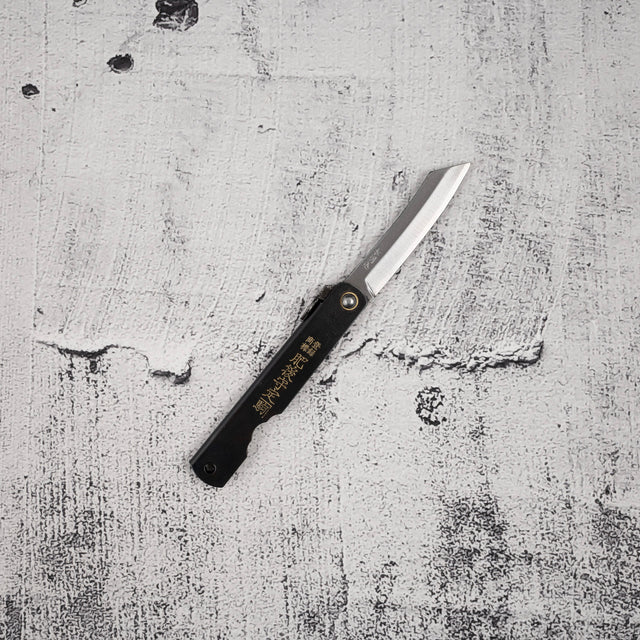
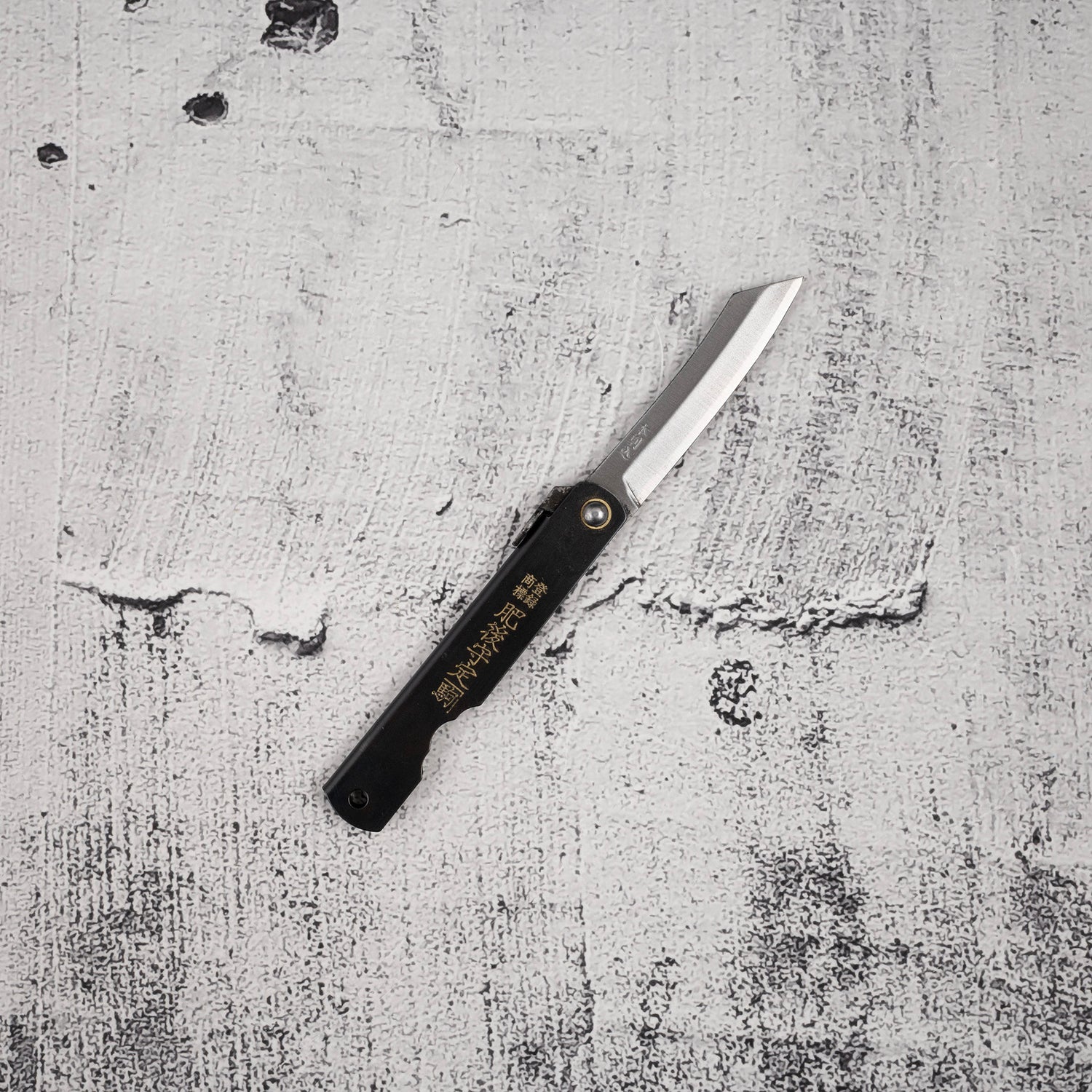
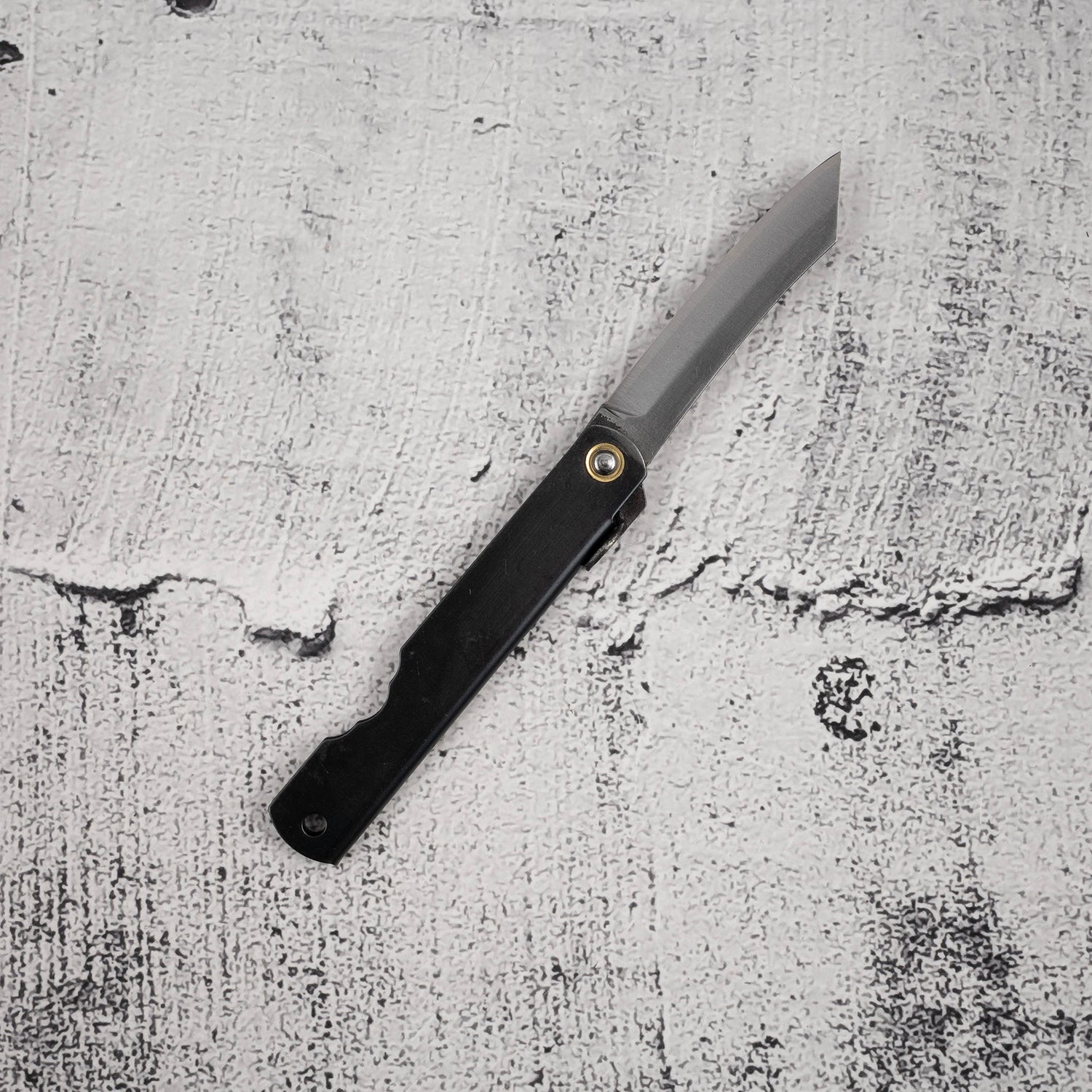
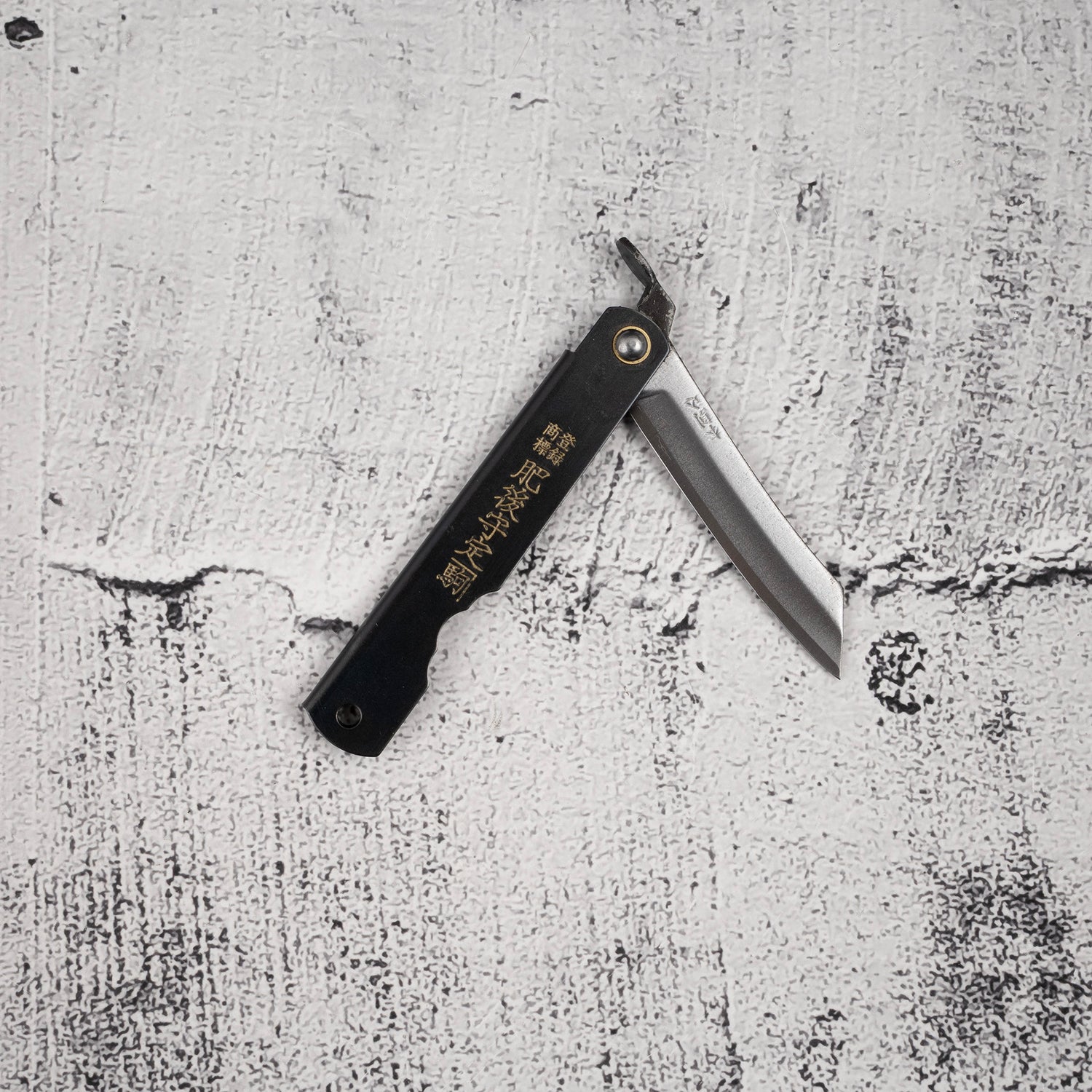
Higonokami SK Steel Folding Knife - Small

Regular price $823.00

IMPORTANT: Carbon steel knives can rust or patina quickly if not cared for properly. They require regular cleaning, drying, and oiling. If you are unfamiliar with carbon steel maintenance, we recommend choosing a stainless steel option instead.

Availability

  • St Peters
    2 Bishop St Unit 2 St Peters NSW 2044
  • Crows Nest
    107 West St, Crows Nest NSW 2065
    Pickup only
Detailed Specifications
Line Higonokami SK Steel
Profile Petty / Utility, Paring
Bevel Type Double Bevel
Weight 32 g | 1.1 oz
Edge Length 65 mm | 2 9/16″
Heel Height 13 mm | 33/64″
Width @ Heel 2.6 mm | 7/64″
Width @ Mid 2.3 mm | 3/32″
Width @ 1cm from Tip 2.3 mm | 3/32″
Steel SK Steel | Carbon
Blade Construction Warikomi - Soft Iron Clad
Hardness (HRC) 58 - 62
Surface Finish Migaki
Handle Special Handle
Region Miki
Best for
  • Gift buyers
  • Household
  • Free shipping for knives over AU$200 Australia wide.
  • World-wide shipping via DHL Express, 3 to 5 days.


The Higonokami is a type of traditional friction folder, usually carried by workers of all kinds to perform delicate tasks that require sharpness and precision over strength, for its intended purpose, it forms an excellent pair with other traditional farming or logging tools like Nata. By now, they are still widely adopted for works like sharpening a pencil and are popular as small gifts that are characterful and functional.

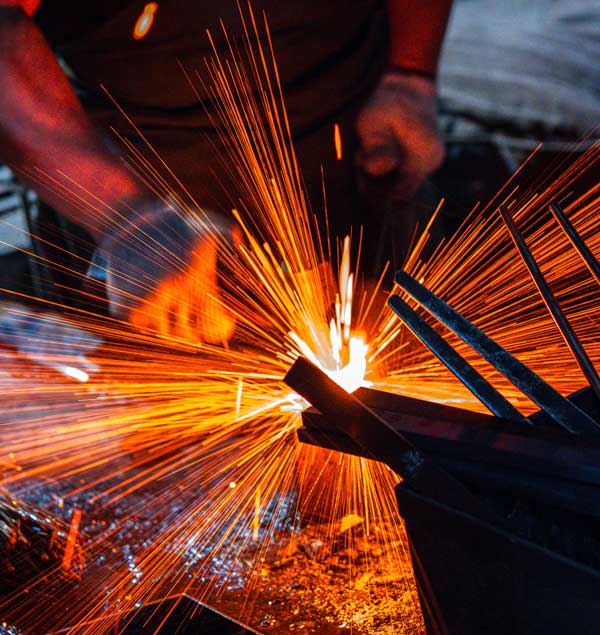
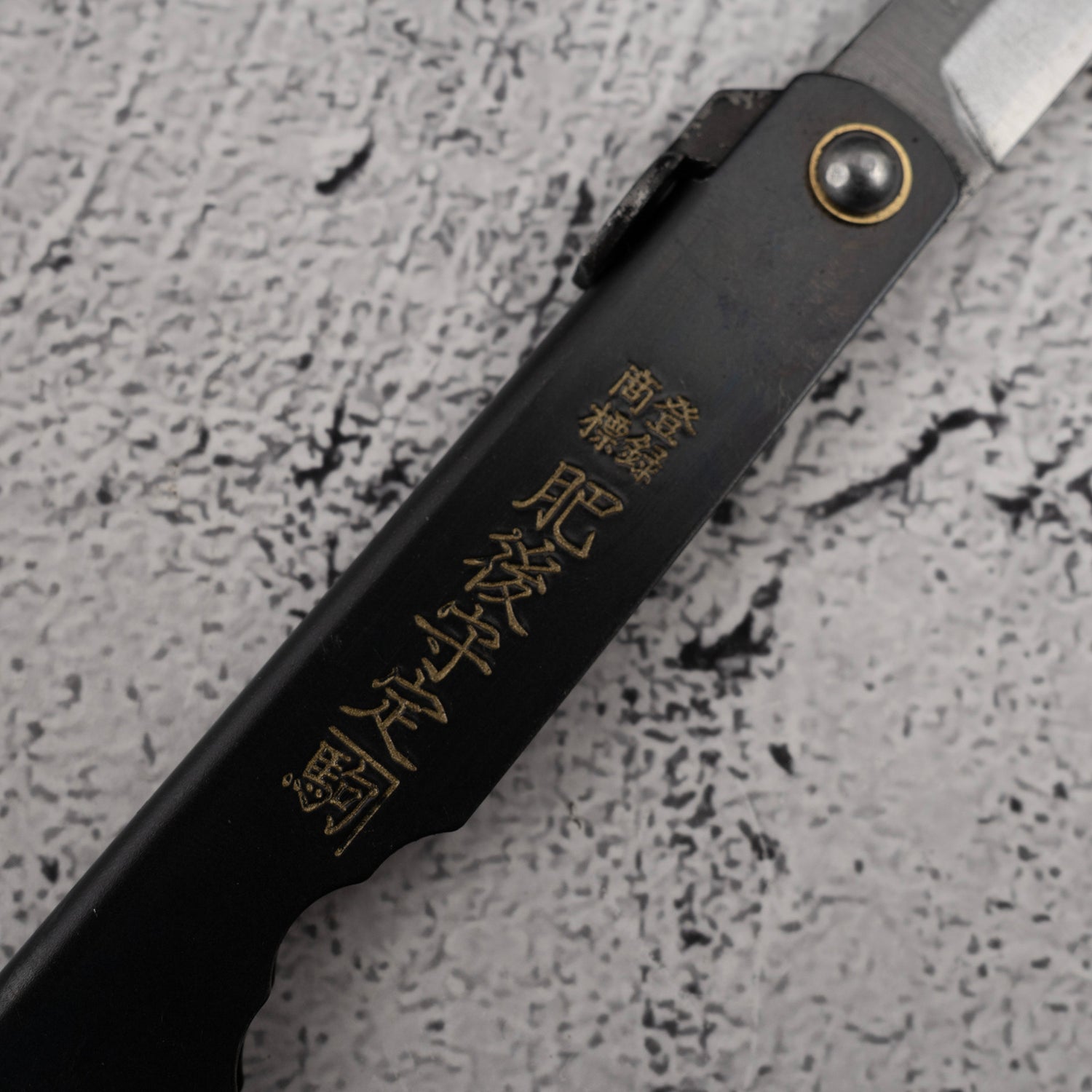
The most classic Higonokami is produced by Nagao Kanekoma Factory(永尾かね駒), with their name proudly engrave on the handle: 登録商標(Registered Trademark) 肥後守(Higonokami, name of the knife) 定駒(Defined/designed by Kanekoma). They insist the use of traditional technique Warikomi - a method of manually split soft iron to clad a hard steel in the middle - to produce these knives. This is the same method commonly used for Katana forging to produce a blade that have good overall strength and good edge retention that is also easy to sharpen.

The scales and the knife blade are pinned together by a rivet, which the blade pivots around, then friction created by the rivet between the scale and blade holds the blade from deploying when it is carried. This ancient form of knife was widely utilized way before the invention of ball bearings, and it is a very easy to own item due to the lack of a locking mechanism, which made it unregulated in many places. This SK carbon steel line is made with reactive iron cladding, which require you to look after it like any other carbon steel knives to keep it from rusting. If its done well, it would reward you with amazing sharpness that is easy to restore.

Pros Cons
  • Ideal entry point to Japanese knives
  • Ideal for the household
  • Budget friendly
  • Prone to rust
Care Instruction
  1. Don't cut hard things! Japanese knives are brittle so bone hacking is a NO NO!
  2. Wash with neutral detergent after use, and wipe dry;
  3. Please don't wash knife with dishwasher, it will damage the wood handle;
  4. Be careful not to leave the knife close to a heat source for a long time;
  5. It is a lot more dangerous to cut with a blunt knife than a sharp knife!
  6. It is best to sharpen a Japanese knife regularly on a waterstone.
  7. Oil the (carbon) knife if storing for an extended period of time to prevent rust.

Nagao Kanekoma Factory

Nagao Kanekoma — The Last House of Higonokami

The Higonokami is one of Japan's most enduring everyday carry knives — a traditional friction folder once tucked into the pocket of nearly every Japanese schoolchild and tradesperson. Today, only one workshop retains the right to stamp its blades with the original 肥後守 trademark: Nagao Kanekoma Factory in Miki City, Hyogo.

The story begins in the 1880s, when founder Komataro Nagao began forging blades by hand in the Hirata district of Miki. In 1894, hardware wholesaler Tasaburo Shigematsu refined an earlier folding design by adding a small lever — the chikiri — that lets the user thumb the blade open and folds flush against the scale when closed. He named it after Higo, the old province of Kumamoto where his best customers lived, and the name stuck. By 1911, a young Crown Prince (later Emperor Taisho) had bought one at the Kobe Export Exhibition, and the Higonokami's reputation was sealed.

A boom in cheap imitations led the Miki Knife Manufacturers Association to register the Higonokami trademark in 1910, restricting its use to association members. The post-war rise of utility knives, electric pencil sharpeners, and anti-knife campaigns thinned the trade dramatically, and over the decades every other licensed maker closed or moved on. Nagao Kanekoma is the last one standing.

Their knives are still built the traditional way, using warikomi — soft iron split by hand and forge-welded around a hard steel core, the same lamination logic behind a katana. The result is a blade with good edge retention that remains easy to sharpen on a stone. The brass scales carry the proud engraving: 登録商標 肥後守 定駒 — Registered Trademark, Higonokami, by Kanekoma. Simple, characterful, and unmistakably Japanese.

Read more

Nagao Kanekoma — The Last House of Higonokami

Few knives carry the weight of a whole country's memory quite like the Higonokami. For more than a century it lived in the pockets of Japanese schoolchildren, farmers, carpenters, and clerks — a small brass-handled friction folder pulled out to sharpen a pencil, whittle a stick, slice an apple, or trim a length of twine. It was the knife of ordinary life. And today, only one workshop in the world is still allowed to stamp a blade with the original 肥後守 trademark: Nagao Kanekoma Factory, tucked into the old blade-smithing town of Miki City in Hyogo.

The story starts in the 1880s, when founder Komataro Nagao began forging knives by hand in the Hirata district alongside his colleague Mr. Murakami. In those days every blade was beaten out at the anvil, hard steel forge-welded into a soft iron body, the sheaths struck from brass or black-dyed iron and carved with portraits, horses, flowers, birds, and landscapes. A single craftsman might finish five to eight a day, and no two were quite the same.

In 1894, a hardware wholesaler named Tasaburo Shigematsu brought back a folding knife from Kagoshima and asked the Miki smiths to refine it. The result was a stroke of quiet genius: a small lever — the chikiri, or "tail" — pinned to the spine of the blade so it could be thumbed open and folded flat against the scale. Shigematsu named it after Higo, the old province of Kumamoto where most of his customers lived, and the name stuck fast. Sales exploded. By 1911 a young Crown Prince — later Emperor Taisho — spotted one at the First Kobe Export Articles Competitive Exhibition, bought it on the spot, and the Higonokami's fame was sealed.

A golden age followed. The Higonokami Knife Union, founded in 1899, swelled to forty member workshops and over two hundred craftsmen. But success drew imitators, and cheap counterfeits flooded the market. In 1910 the Miki Knife Manufacturers Association registered the Higonokami trademark, restricting its use to legitimate members. Then came the long decline — utility knives, electric pencil sharpeners, and the anti-knife social campaigns of the 1950s hollowed out the trade one workshop at a time. One by one the licensed makers shut their forges or moved on to other work. When the dust settled, Nagao Kanekoma was the last one standing.

They have kept faith with the old methods. Every blade is still made by warikomi — soft iron manually split and forge-welded around a hard steel core, the same lamination logic that gives a katana its strength and edge. The result is a blade with excellent edge retention that still yields easily to a sharpening stone. There is no lock, no ball bearing, no spring — just a single rivet, the friction of brass on steel, and a small lever to coax the edge into the light.

The handle still bears the old engraving: 登録商標 肥後守 定駒 — Registered Trademark, Higonokami, by Kanekoma. Four generations on, it remains one of the most quietly perfect everyday objects Japan has ever produced.

“Endures the test of time across 5 generations, delivering the tradition in its truest form.”

Est. 1894 | 明治27年
Known for Inheriting and handing down the classic Higonokami folder form to this date
Website higonokami.jp Instagram @higonokami.kanekoma Facebook 肥後守 Read more about Nagao Kanekoma Factory
Nagao Kanekoma Factory — Miki
Profile: Petty
Profile

Petty

Utility, Paring

The Petty knife, a smaller Japanese utility knife, serves as an ideal tool for precision tasks such as peeling, trimming, and slicing fruits and vegetables. With a blade length ranging from 120mm to 180mm (4.7 to 7 inches), it stands out for its ability to handle detailed work like deveining shrimp or cutting garnishes. Its slightly longer and slimmer profile compared to the Western paring knife enhances its functionality for intricate tasks, making it a valuable addition to any kitchen toolkit.
Composition

SK Steel Element Composition

Compare with
    SK Steel
    0.8% 0.6% 0.4% 0.2% 0
    C Carbon 0.8%
    Primary hardening element. Raises hardness and wear resistance — but too much increases brittleness and corrosion susceptibility. As a reference: German 1.4112 (~0.5%) sits at the low end; VG-10 (~1.0%) is a common mid-range; SG2 (1.25–1.45%) and ZDP-189 (~3.0%) represent high and extreme ends respectively.
    C
    0.8%
    Mn Manganese 0.3%
    Aids hardenability and strength. Acts as a deoxidiser during smelting. Excess can reduce toughness.
    Mn
    0.3%
    P Phosphorus 0.03%
    Impurity from the smelting process. Even small amounts cause brittleness — steelmakers keep this as low as possible.
    P
    0.03%
    S Sulfur 0.03%
    Impurity that reduces toughness and promotes brittleness. Intentionally added only in free-machining steels.
    S
    0.03%
    C — Carbon Mn — Manganese P — Phosphorus S — Sulfur
    Hardness 58–62 HRC
    555759616365+
    Steel
    SK Steel
    Category
    Carbon
    Manufacturer
    Various
    Hardness
    58–62 HRC
    Steel

    SK Steel

    • Manufacturer
      • Various
    • Nature Carbon
    • Hardness58–62 HRC
    SK4, 5, etc
    Construction: Warikomi - Soft Iron Clad
    Construction

    Warikomi - Soft Iron Clad

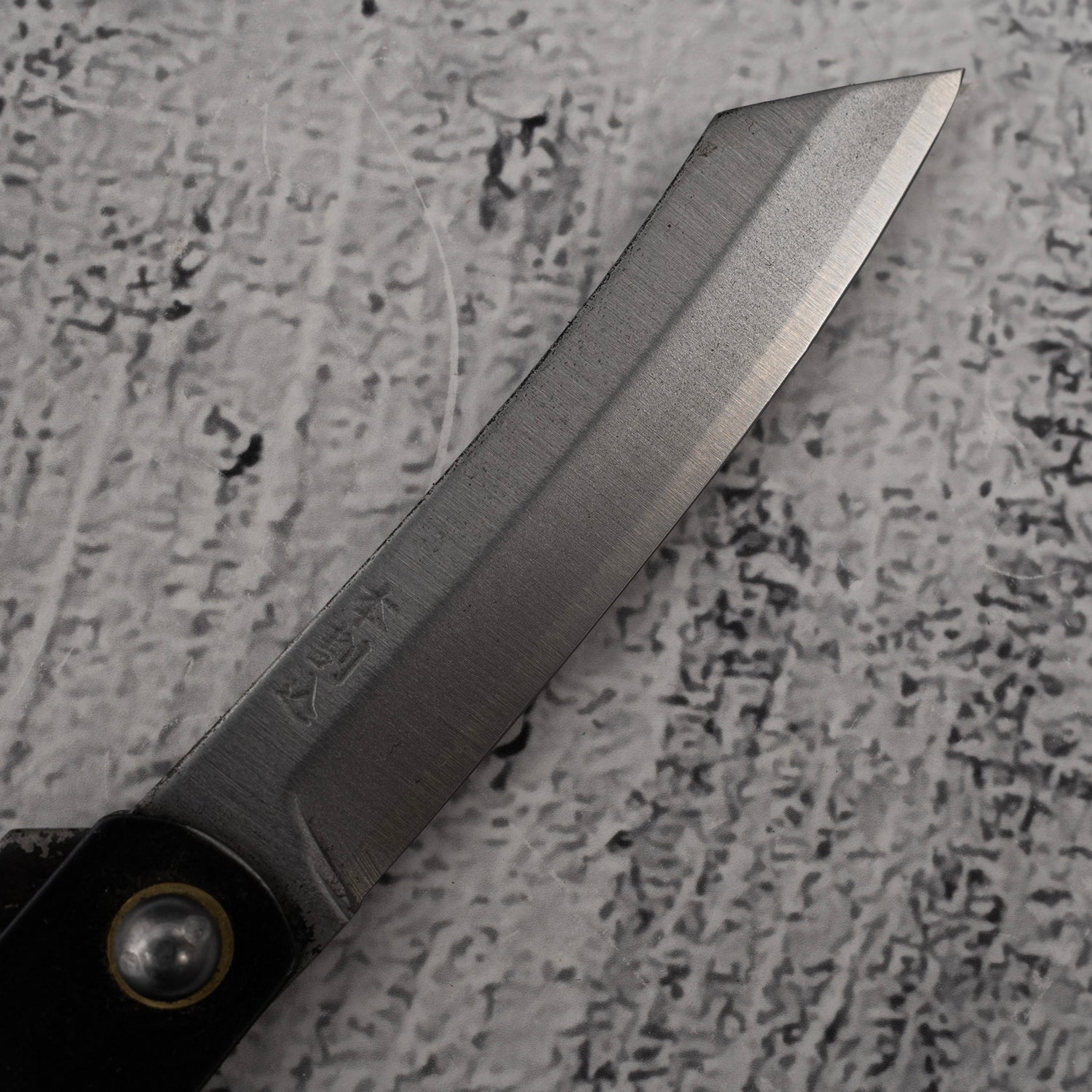
    Warikomi (割り込み) is a traditional Japanese knife-making technique where a bar of hard steel is inserted into a split of softer steel or iron and then forge-welded, forming a multi-layered blade. This construction blends a hard-wearing cutting edge with the toughness and resilience of softer cladding, reducing chipping while enhancing durability. Unlike san-mai, where the hard core runs through the spine, warikomi often encloses the core in a way that provides greater flexibility and shock resistance. The visible lamination line can resemble a hamon, adding aesthetic appeal. A celebrated example is Tsukasa Hinoura's "River Jump", which demonstrates the artistry and functional mastery of warikomi, uniting sharpness, toughness, and beauty in a single blade. When executed with stainless steel cladding, warikomi enters exceptionally rare territory — stainless resists forge-welding far more stubbornly than traditional iron or carbon steel, requiring precisely controlled temperatures and atmospheric conditions to overcome its chromium oxide barrier, making a clean, lasting bond an achievement that only the most skilled smiths can reliably produce.

    Finish: Migaki
    Finish

    Migaki

    "Migaki" means "polished" or "shined" in Japanese, The term "Migaki finish" in the context of Japanese kitchen knives indeed does not exclusively refer to a mirror polish but encompasses a broader range of polished finishes that can vary from semi-gloss to a more refined, subtle sheen, rather than a highly reflective surface. The primary goal of a Migaki finish is to enhance the knife's functionality and aesthetic appeal, focusing on a smooth finish that improves resistance to corrosion and minimizes drag during cutting, rather than achieving a purely mirror-like appearance.

    1 / 4

    You May Also Like