PRAHRAN STORE NOW OPEN · THU–MON · 10AM–6PM

Matsubara  |  SKU: MABA-B2NASH-GY210BK

Matsubara Blue 2 Gyuto 210mm Nashiji Burnt Kashi

Regular price $7,220.00

IMPORTANT: Carbon steel knives can rust or patina quickly if not cared for properly. They require regular cleaning, drying, and oiling. If you are unfamiliar with carbon steel maintenance, we recommend choosing a stainless steel option instead.

Sold out right now

Leave your email and we’ll send one message the moment it’s back in stock.

One email, no marketing. Privacy policy.

Availability

  • St Peters, NSW —
    2 Bishop St, Unit 2, St Peters NSW 2044
  • Crows Nest, NSW —
    107 West St, Shop 1, Crows Nest NSW 2065
    Pickup only
  • Prahran, VIC —
    180 Commercial Road, Shop 1, Prahran VIC 3181
    Pickup only
Detailed Specifications
Line Matsubara Blue 2 Nashiji Stainless Clad
Profile Gyuto / Chef's knife
Bevel Type Double Bevel
Weight 203 g | 7.2 oz
Edge Length 221 mm | 8 45/64″
Heel Height 59 mm | 2 21/64″
Width @ Heel 3.0 mm | 1/8″
Width @ Mid 1.6 mm | 1/16″
Width @ 1cm from Tip 0.8 mm | 1/32″
Steel Blue 2 / Aogami #2 | Carbon
Blade Construction Sanmai - Stainless Clad
Hardness (HRC) 61 - 63
Surface Finish Nashiji
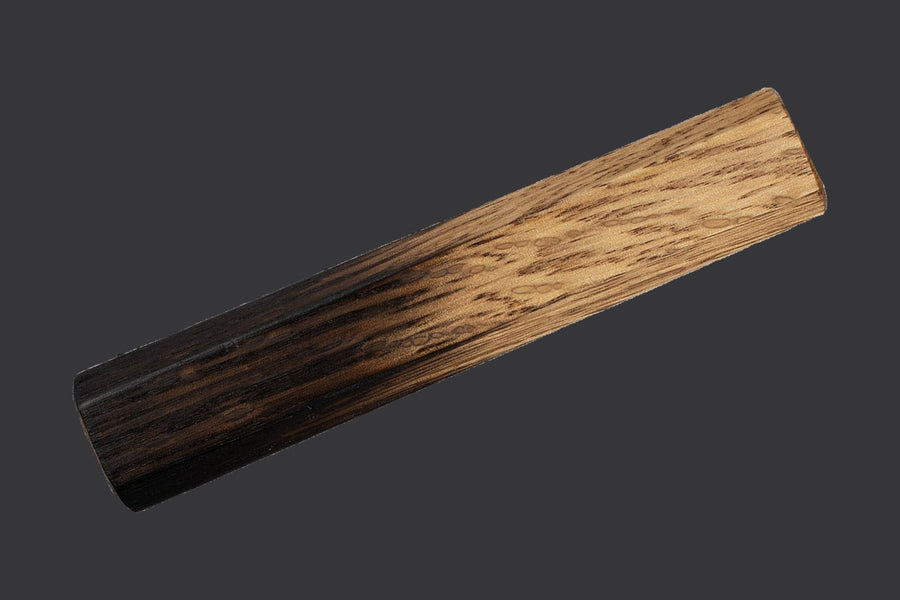
Handle Burnt Kashi Octagonal
Region Nagasaki
Best for
  • Enthusiasts
  • Pro chefs
  • Free shipping for knives over AU$200 Australia wide.
  • World-wide shipping via DHL Express, 3 to 5 days.


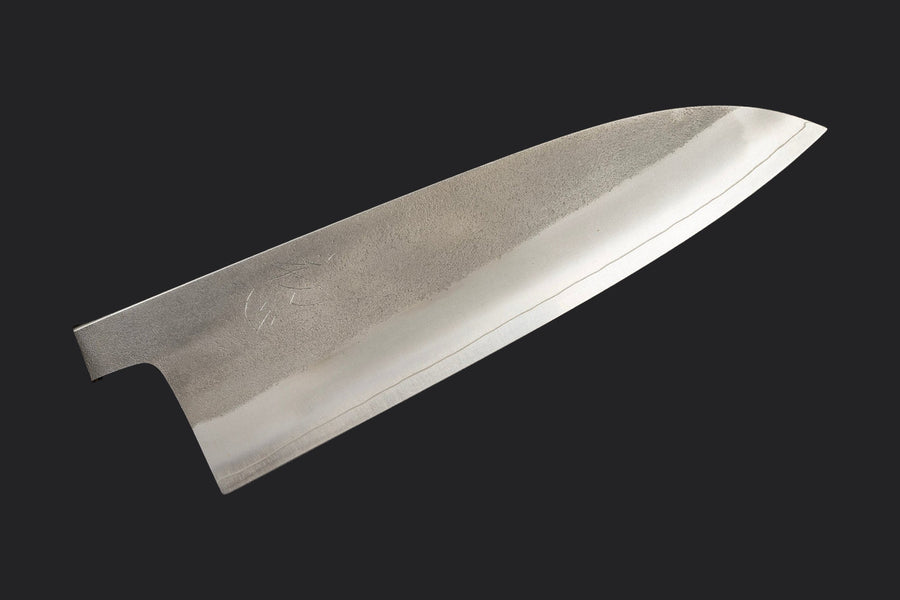
Shu Matsubara’s Blue 2 Nashiji is a rustic looking and highly practical knife that carries some decent performance and great value. The stainless cladding over the Blue 2 steel is a great plus in usability, and the hand-forged taper and profile offers great handling in use.

The organic trace left from handcraft can be easily spotted on these blades at first glance, the floating cladding line, texture-rich Nashiji and tapered spine speaks of the heat and sweat they went through. Nashiji/pear skin finish is one of my favourite finishes, not only because of the lovely look, but also its ability to keep it. 

After forging and heat treating, the black oxidation layer is left on the surface of the knife, by using a wire brush instead of more aggressive abrasive, this softer layer of oxide can be removed without erasing away the texture of the steel. As the wire brush is essentially scratching the steel until the surface is evenly scratched, it is really hard to create more scratch on Nashiji surface in regular use. Compared with other clean and even finishes, this high entropy finish can stay this way very easily.

Just like the surface finish of them, these knives’ construction is also very masculine. They weigh on the higher side in their respective category and tend to have a slightly taller profile. The heavy weight is pretty great for those who like a reassuring handling for their tools, and Matsubara surely delivers that. The geometry of the blade is too not the most aggressive and laser-like. Some thickness is left in the bevel for a more robust edge, but a gentle convex can still ensure a relatively smooth cut.

The Blue 2 is a common steel used extensively in hand forged blades, having more edge retention and being less reactive than White and easier to deal with than Blue Super, many blacksmiths are happy to forge with this steel and many chefs are happy to use knives made with it. Despite the need for maintenance still, the wicked edge you can get on this steel still attracts many users, not to mention the stainless cladding it is warped in on these knives have made the caring much less tedious.

These blades remind me of Shigeki Tanaka’s works(it’s definitely a coincidence that both makers share the family name), rustic, organic and characterful. The pricing is also pretty attractive, and I even think for the amount of work put into these knives, this price is pretty low for what you get. I’d highly recommend this knife for anyone who is looking for a carbon steel knife and prefers a heavy, workhorse style blade.

Pros Cons
  • Budget friendly
  • Great for professionals
  • Great artistic
  • Need some work on the blade
  • Prone to rust
Care Instruction
  1. Don't cut hard things! Japanese knives are brittle so bone hacking is a NO NO!
  2. Wash with neutral detergent after use, and wipe dry;
  3. Please don't wash knife with dishwasher, it will damage the wood handle;
  4. Be careful not to leave the knife close to a heat source for a long time;
  5. It is a lot more dangerous to cut with a blunt knife than a sharp knife!
  6. It is best to sharpen a Japanese knife regularly on a waterstone.
  7. Oil the (carbon) knife if storing for an extended period of time to prevent rust.

Matsubara Hamono

Matsubara Hamono — Nagasaki's Father-Son Forge

Tucked away in Omura City, Nagasaki, Matsubara Hamono is a father-and-son story in steel—master smith Katsuto Tanaka (田中勝人) , a fourth-generation blacksmith, forging side-by-side with his son, Hiroki (裕紀). Their workshop (often called Tanaka Kama Kogyo) sits in a region where blade-making runs deep; local lore traces the craft back more than 800 years, and you feel that lineage in every heat, hammer, and quench. Expect characterful finishes—rustic kurouchi and lively tsuchime—and a practical mix of steels: White #1 for that keen, classic bite, Blue #2 for edge retention, and clean, stainless, user friendly Ginsan. Matsubara profiles have a signature “tall and useful” vibe (think tall nakiri or even kiri-style cleavers), with grinds that slide through produce and cladding that keeps maintenance sane in a busy kitchen. It’s old-school know-how meeting real-world cooking—family craft, regional history, and knives that simply make you want to cook.

松原包丁

Read more

When you hold a knife from Matsubara Hamono, you’re not just grasping steel — you’re holding generations of craftsmanship, heritage, and family dedication. Based in Omura City, Nagasaki Prefecture, this workshop is led by fourth-generation blacksmith Katsuto Tanaka and his son Hiroki Tanaka, representing the perfect bridge between traditional Japanese forging and modern knife design.

The Matsubara region has a blade-making lineage that stretches back more than 800 years, and that deep history lives on in every hammer strike and heat treatment performed in the Tanaka family forge. What makes Matsubara Hamono stand out is the hands-on approach — forging, cladding, grinding, and finishing are all done in-house. Under Katsuto’s steady experience and Hiroki’s youthful eye for refinement, their knives blend time-honored forging skill with contemporary practicality and balance.

Matsubara knives are instantly recognizable for their tall blade profiles, generous knuckle clearance, and distinctive finishes such as kurouchi (black-forged), tsuchime (hammered), and nashiji (pear-skin). They are often forged from steels like Shirogami #1, Aogami #2, and Ginsan, carefully laminated with stainless cladding for ease of maintenance. The result is a knife that performs brilliantly in both professional kitchens and at home — offering a smooth, confident cut and superb edge retention.

Choosing a knife from Matsubara Hamono means choosing personality, story, and purpose. Each blade carries the spirit of Nagasaki’s forging tradition and the personal touch of the Tanaka family. It’s not a product of automation but of artistry — the warmth of human hands meeting the precision of fine steel. Whether you’re a passionate home cook or a seasoned chef, a Matsubara knife brings together heritage, functionality, and the unmistakable soul of true Japanese craftsmanship.

“Father and son in Ōmura, Nagasaki — four generations of forging with Shimabara spirit.”

Est. 1933 | 昭和8年
Known for Father-and-son operation, fourth-generation blacksmithing
Instagram @matsubara_hamono Read more about Matsubara Hamono
Matsubara Hamono — Nagasaki

Knife details

Frequently asked questions

Gyuto or santoku - which should I choose?

Both are all-purpose Japanese knives, and for most home cooks either will handle the bulk of daily prep. The choice comes down to length, blade shape, and how you like to cut.

A gyuto is the Japanese chef's knife - typically 210 to 240mm with a gently curved edge that lets you rock and slide through cuts as well as chop. The extra length and pointed tip give you reach and versatility, from proteins to large produce.

A santoku is shorter, usually 165 to 180mm, with a flatter profile and a rounded sheep's-foot tip. It rewards a straight up-and-down push cut, feels nimble in smaller hands or tight kitchens, and is the classic Japanese household knife.

Rule of thumb: choose a gyuto if you want one do-everything knife with more reach, or a santoku if you prefer a compact, easy-to-control blade. Plenty of our customers end up owning both.

What is a Gyuto, and what is it used for?

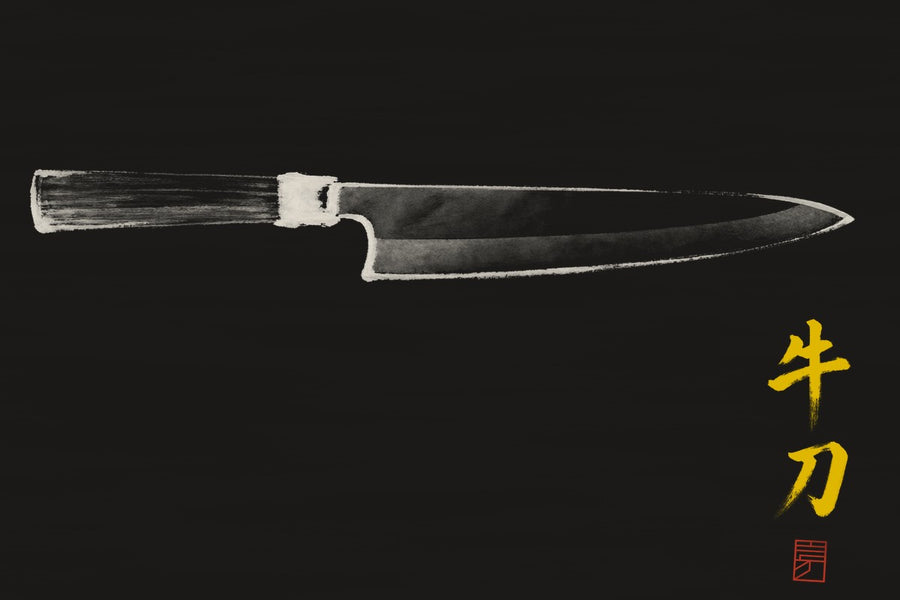
A gyuto is the Japanese chef's knife — a double-bevel general-purpose kitchen knife. The name literally means "beef sword," and it's still a fair job description: you use it to slice meat, chop vegetables, dice aromatics, and break down fish. If you own one good knife, this is the shape it should be.

Versus a typical Western chef's knife, a gyuto is thinner behind the edge, sharpened to a keener angle (roughly 15–18° rather than 20–22°), and usually made from harder steel — often above 60 HRC. That's what makes it slice so cleanly: less crushing, less tearing. The trade-off is a more brittle edge, so it asks to be honed and sharpened more attentively than a soft Western blade.

Blades run from compact 150mm to long 240mm, but for a home kitchen I'd start at 210mm — my sizing FAQ explains why.

What size gyuto should I buy?

In a home kitchen I'd pick a 210mm gyuto. It's the sweet spot: long enough for a full slicing stroke, short enough to stay nimble on a normal cutting board and easy to control while you're still building your technique.

Step up to a 240mm only if you regularly break down large cuts — roasts, whole fish, big vegetable prep. The extra length means longer strokes and fewer passes, but it also means more weight and a bigger board; if the tip is hanging off your bench you're fighting the knife, not cooking with it. If you're mainly doing vegetables and portions, the 240 gives you nothing you'll use.

For a first gyuto, buy a well-made stainless one around 210mm in the low hundreds. Traditional carbon steels (white and blue paper steel) cut and sharpen beautifully, but they rust if you leave them wet — learn one variable at a time. Better steel is step two.

240mm vs 210mm gyuto — which size should I choose?

My call: get the 210mm. I only steer people to a 240mm when they regularly break down roasts, poultry, or whole fish — that's the one job where the extra 30mm genuinely changes how you work.

The trade-off is stroke length versus handling. A 240 slices through a big piece of meat in one or two long draws; a 210 does the same job with more passes but much lighter handling, and fine work — herbs, small dice — stays quick instead of feeling like more knife than you need. The 240 also wants a bigger board, or its tip hangs off the edge and you compensate without noticing.

Longer is not more professional, it's just for bigger food. If you cook like most home cooks, the 210 is the knife you'll reach for every day, and choosing it is a decision, not a compromise.

Japanese vs German kitchen knives — which should I buy?

If you want the sharpest possible edge and don't mind caring for a harder, more brittle blade, buy Japanese; if you want a tougher, more forgiving knife that can take abuse and be honed casually, buy German. Japanese knives, like the gyuto, are ground to a much sharper edge angle, typically 15 to 18 degrees compared to 20 to 22 degrees on a western chef's knife, and use harder steel that can exceed 60 HRC, which is why they cut with such precision but also chip more easily. German knives are softer and more ductile, so they resist chipping and bend rather than break, but they won't hold that razor-sharp edge as long.

A Japanese knife is not the right choice if you regularly cut through bones, frozen food, or hard squash, or if you're used to rocking the blade hard on a cutting board, that lateral stress and impact can chip the edge. German knives are the better everyday beater for heavy prep, but you'll trade away the effortless slicing and fine edge retention that make Japanese steel so satisfying.

The gyuto, literally "beef knife," is the Japanese take on a French chef's knife, with a flatter profile that suits push-cutting and slicing. That acute blade geometry is only possible because of the harder steel used, a typical western knife at 20 to 22 degrees would roll or dull quickly at 15 to 18 degrees, whereas the harder Japanese steel holds that finer edge. That's the core trade-off: hardness buys sharpness and edge retention, but it also makes the blade more brittle, so you need a gentler technique and a wooden or plastic board. For more on how these knives are built and what to look for, see the Knives and Stones Education Centre.

Will a carbon steel knife rust, and how do I look after it?

Yes - carbon steels such as Aogami (Blue) and Shirogami (White) react with food, moisture, and acids. Left wet they can spot or rust, and with normal use they develop a grey-blue patina. That patina is expected and is part of owning a carbon-steel knife; it is not damage.

Care is simple once it becomes habit: hand-wash in warm water, never leave the knife soaking or sitting in a wet sink, and dry it thoroughly the moment you finish. Avoid the dishwasher entirely, and wipe the blade between tasks when you are cutting acidic foods like citrus, tomato, or onion.

If the knife will sit unused for a while, wipe a very thin film of food-safe camellia oil (or a neutral mineral oil) onto the blade before storing it. A light surface rust spot lifts easily with a rust eraser or a little Bar Keepers Friend; sustained neglect is the only thing to really avoid.

Carbon steel rewards this small amount of attention with a keener edge and easier sharpening than most stainless. If you would rather not think about maintenance at all, ask us about stainless or stainless-clad options instead.

Blue 2 vs White 2 steel for Japanese kitchen knives

Blue 2 (Aogami #2) and White 2 (Shirogami #2) are both Hitachi high-carbon steels, but Blue 2 adds chromium and tungsten to White 2’s base, giving it noticeably better edge retention while keeping similar sharpness. The trade-off is that Blue 2 is slightly more abrasion-resistant during sharpening, so it takes a little more time to refine an edge, whereas White 2 is easier to sharpen and can take a finer, more aggressive edge but dulls faster in use.

You May Also Like