Crows Nest store now open from Friday to Tuesday, 10am till 6pm.

Tsunehisa  |  SKU: TNHS-G3NSJ-PE135

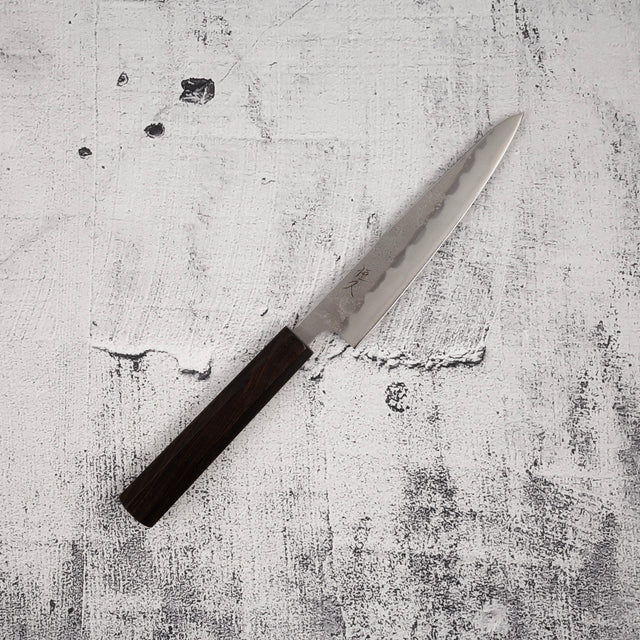
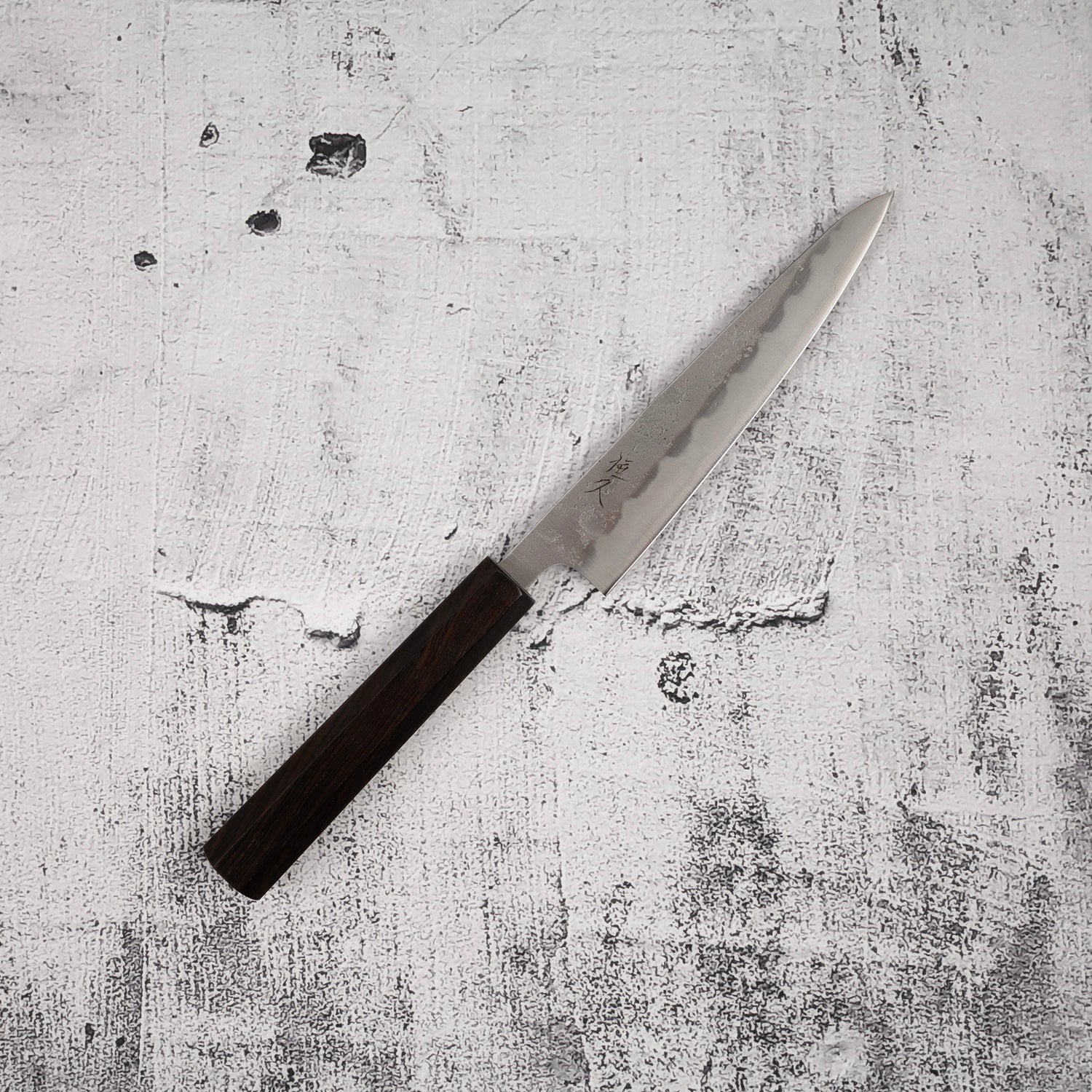
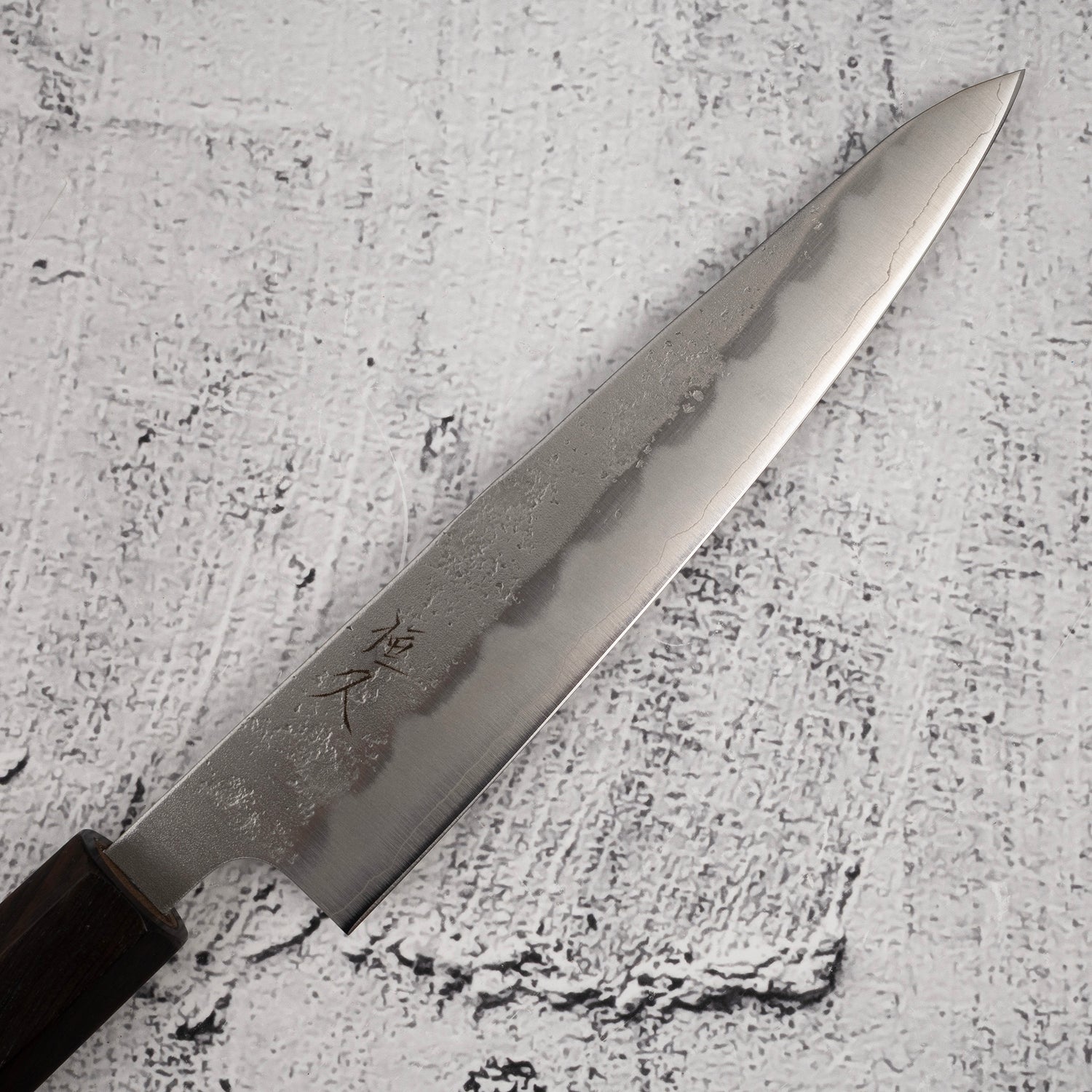
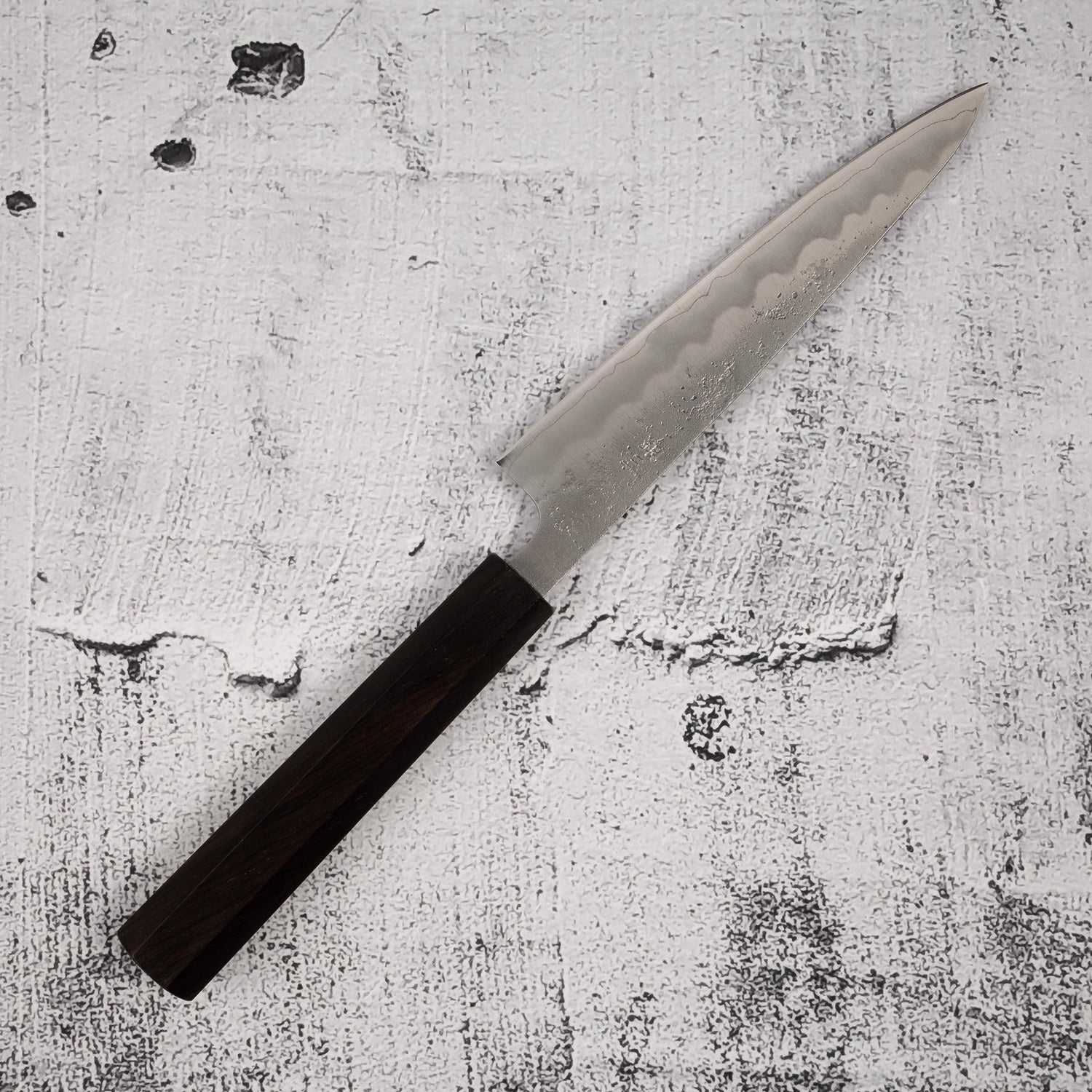
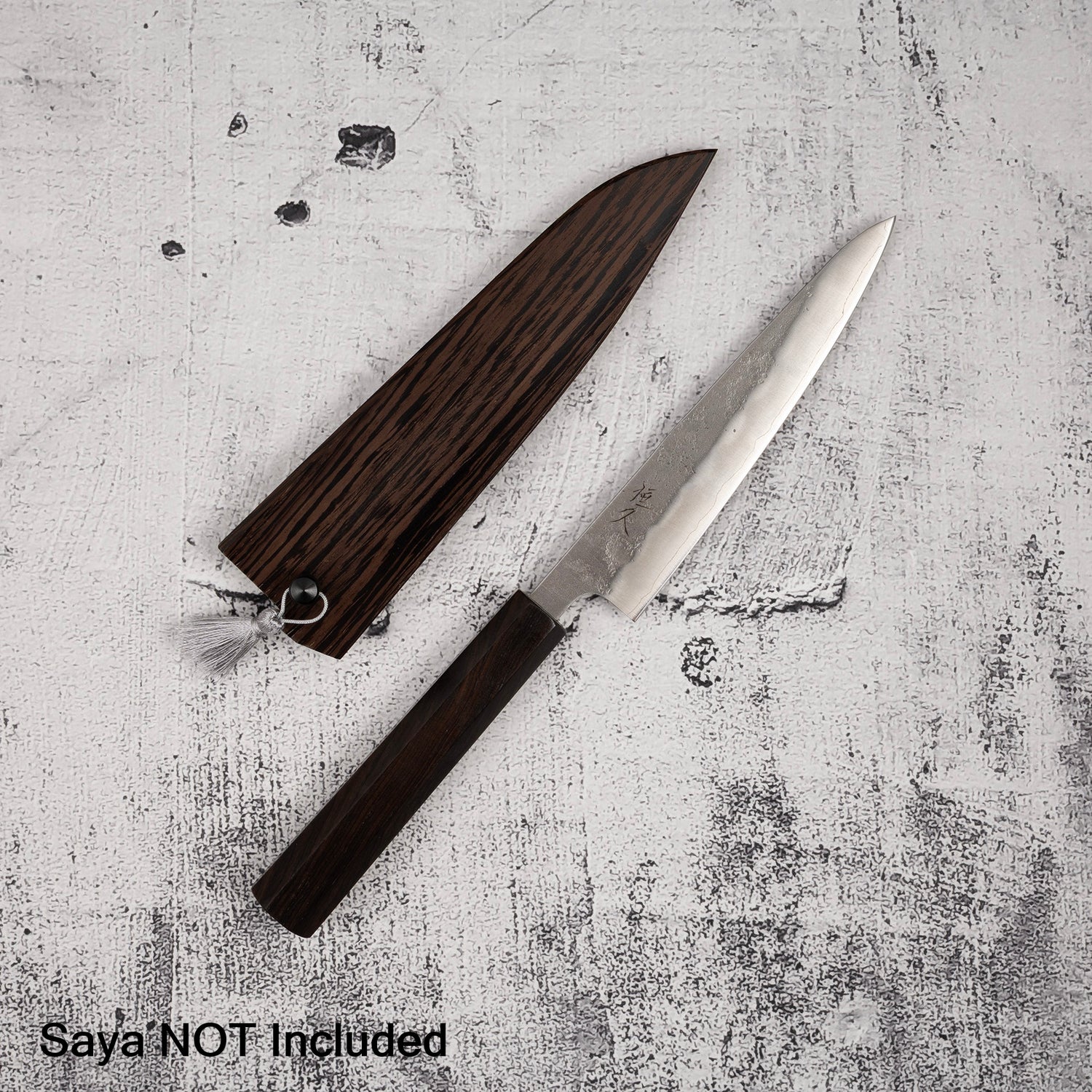
Tsunehisa Ginsan Nashiji Petty 135mm Ebony Handle

Regular price $3,907.00

Add a saya or K&S Knife Roll to receive $20 bundle discount!

Detailed Specifications
Line Tsunehisa Ginsan Nashiji
Profile Petty / Utility, Paring
Bevel Type Double Bevel
Weight 83 g | 2.9 oz
Edge Length 139 mm | 5 15/32″
Heel Height 28 mm | 1 7/64″
Width @ Heel 2.0 mm | 5/64″
Width @ Mid 1.9 mm | 5/64″
Width @ 1cm from Tip 1.1 mm | 3/64″
Steel Ginsan / Silver #3 | Stainless
Blade Construction Sanmai - Stainless Clad
Hardness (HRC) 60 - 62
Surface Finish Nashiji
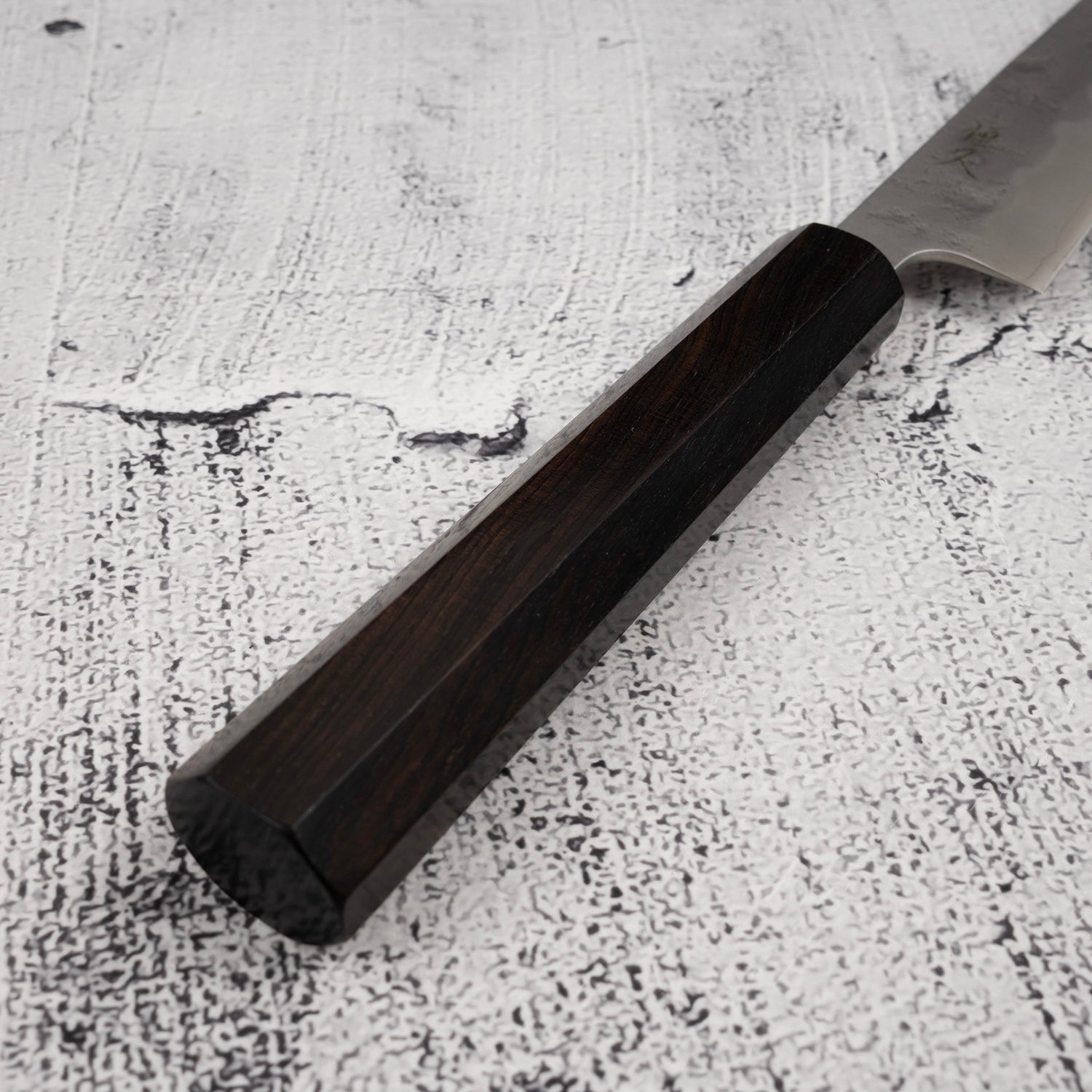
Handle Octagonal Ebony
Region Fukuyama
Best for
  • First-timers
  • Students
  • Free shipping for knives over AU$200 Australia wide.
  • World-wide shipping via DHL Express, 3 to 5 days.


Tsunehisa Ginsan Nashiji is a series of products that have been quite popular in the entry level market, and the reason is simple, it offers pretty much everything you would want from a Japanese kitchen knife while being affordable and easy to look after, and some of the design features are very beneficial to entry level users who what get into the world of Japanese kitchen knives,

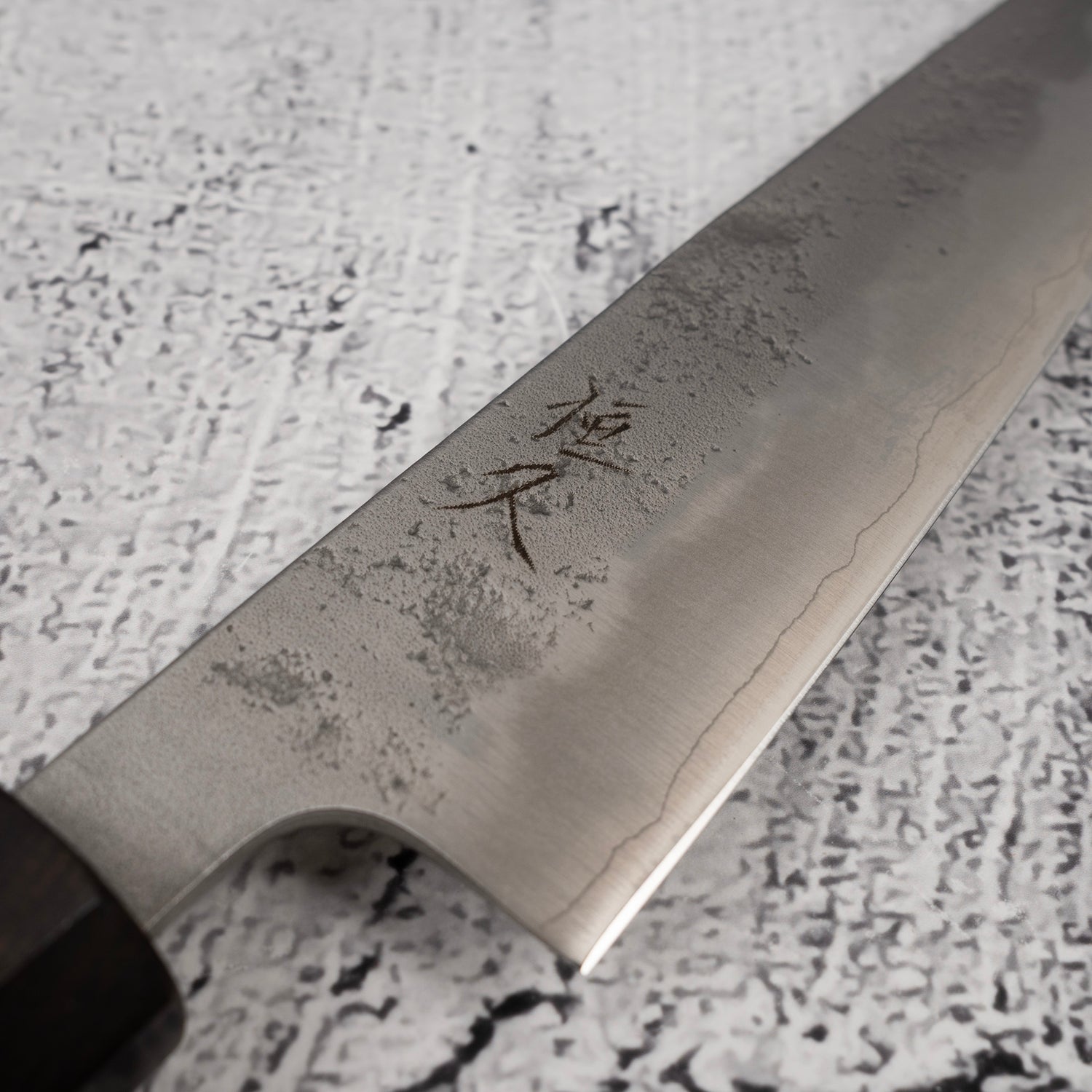
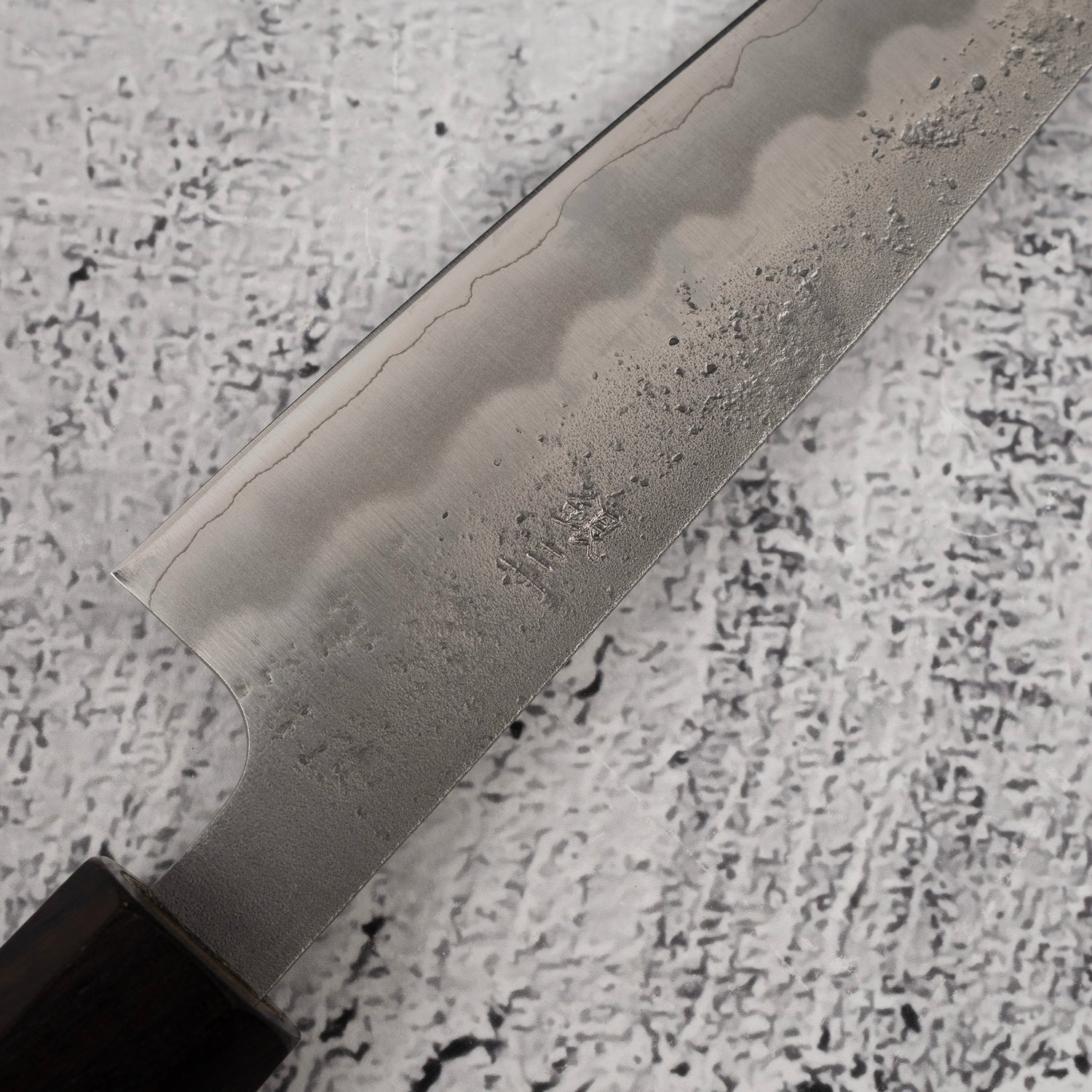
I think the look of these knives would catch the attention of many people in the first place, the very textured Nashiji finish meets the bevel in a wavy line, achieved by sandblasting the Migaki finished bevel over a mask. This is a bit more complicated design than for a budget knife, but it has that very organic look instead of the smooth and uniform finish, which creates that “forged look” that people associate with Japanese handmade knives. 

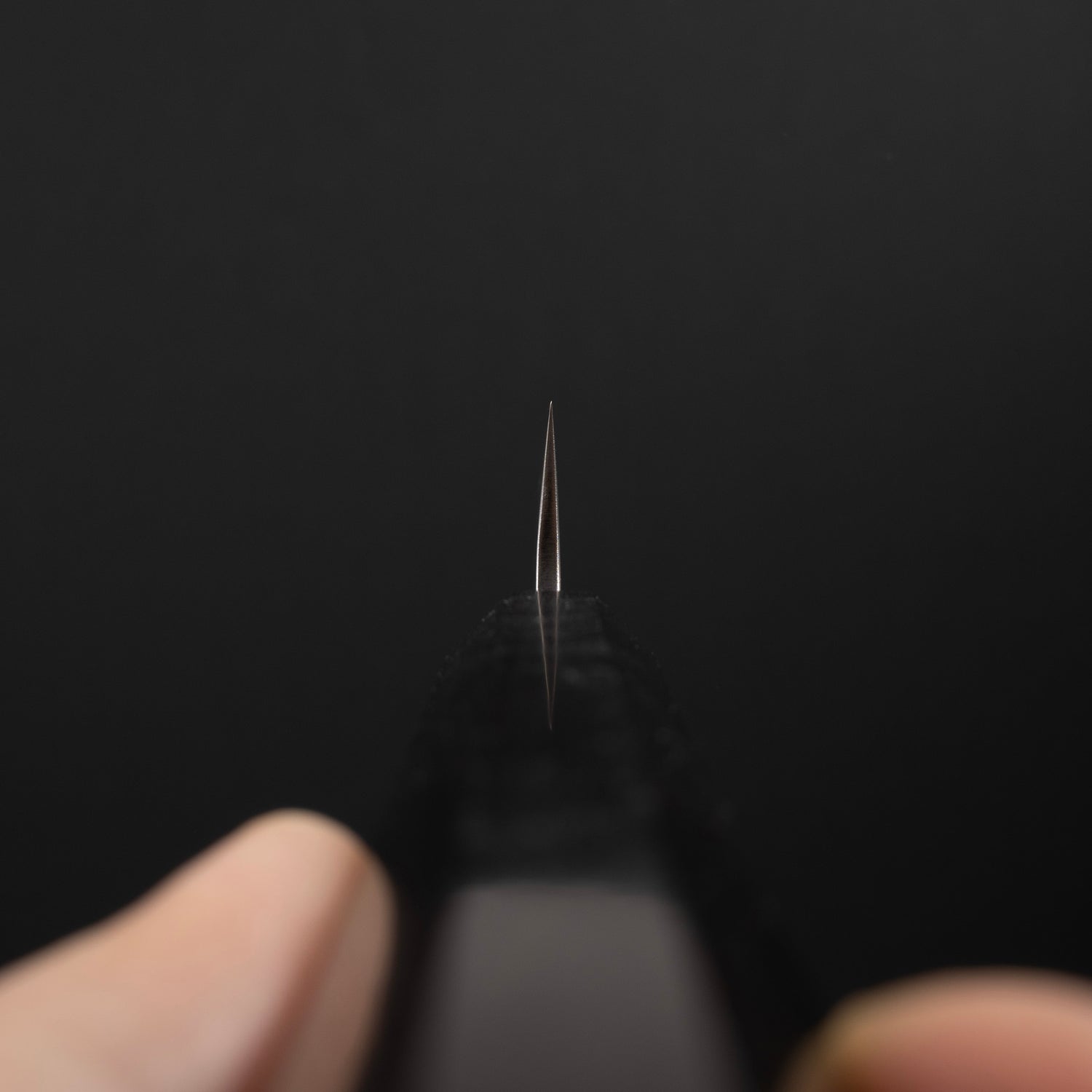
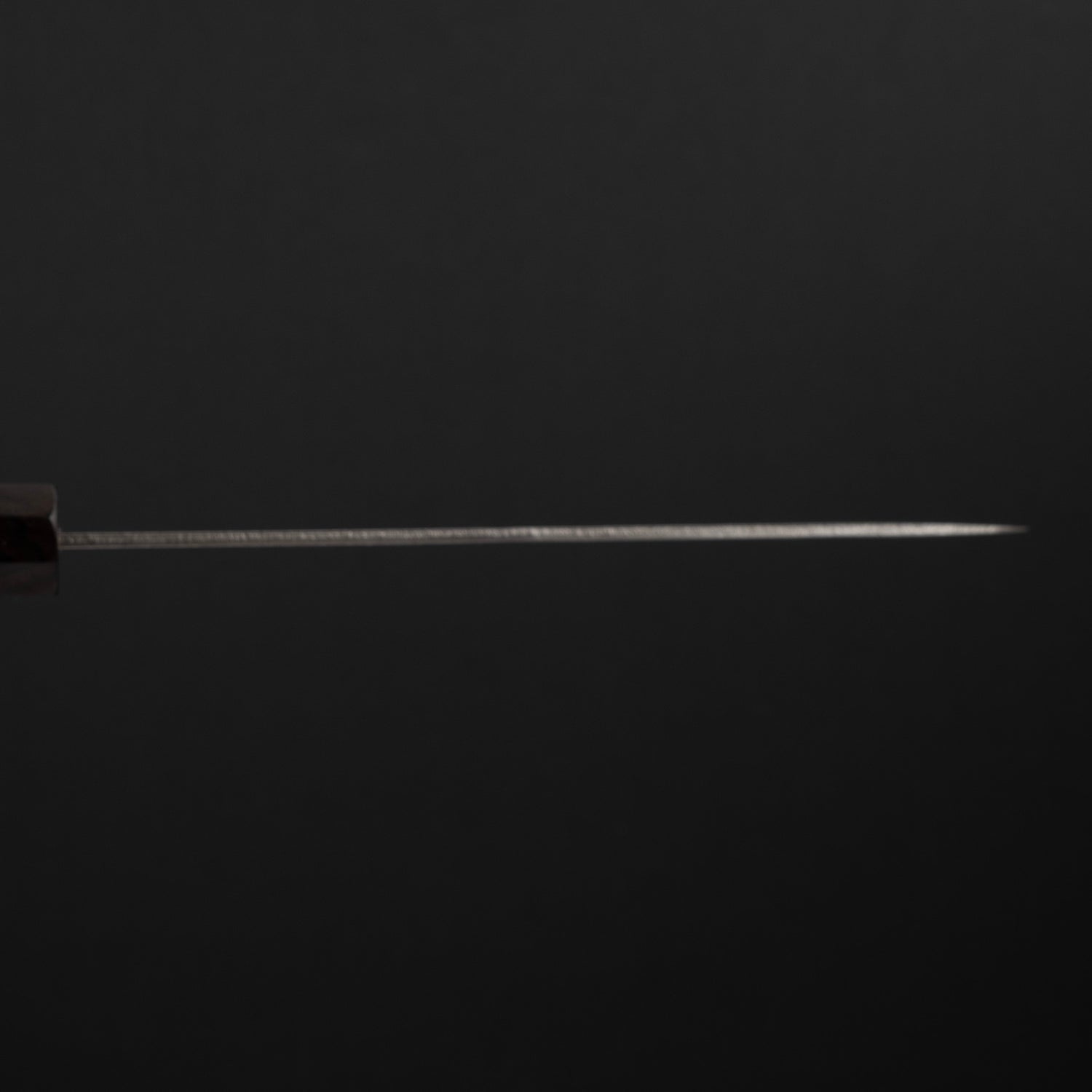
As for how it cuts, I have to admit this is not the smoothest cutting knife out there. It retains some thickness behind the edge and has a bit flat bevel, which adds some resistance to the cut. It may be a design decision made to increase the strength of the edge which can be a plus for entry level users that are afraid of chipping their knife as soon as they start using them. That being said, these knives would still easily outperform the typical European knives like Wusthof or Zwilling, they just wouldn’t stand out among their Japanese colleagues. 

The use of Ginsan steel would be the one biggest reason for me to recommend this to a beginner user who is also considering learning sharpening down the road. This is a very simple stainless steel that has only chromium addition to give it the stainlessness. As a result, it is very easy to sharpen among all common stainless steels, but the higher carbon content allows it to develop a quite clean ape very easily. Basically, it is an ideal beginner knife, low in maintenance and easy to sharpen, which works well with other features of this line.

I would highly recommend this line to people who are unsure about what to choose for themself to begin with when it comes to the first ever Japanese kitchen knives, and it can also be a good gifting option for people who are unsure of the receiver of the knife can handle the knife well.

Pros Cons
  • Workhorse grind
  • Ideal for the household
  • Easy to look after
  • On the thicker side
Care Instruction
  1. Don't cut hard things! Japanese knives are brittle so bone hacking is a NO NO!
  2. Wash with neutral detergent after use, and wipe dry;
  3. Please don't wash knife with dishwasher, it will damage the wood handle;
  4. Be careful not to leave the knife close to a heat source for a long time;
  5. It is a lot more dangerous to cut with a blunt knife than a sharp knife!
  6. It is best to sharpen a Japanese knife regularly on a waterstone.

Tsunehisa

Tsunehisa — Japan's Regions, One Brand

Tsunehisa isn’t tied to one workshop – it’s a celebration of all Japan’s great knife regions. Think Sakai’s laser-precision grinds, Tosa’s mastery of steels like Ginsan, and the distinct traditions of other forging hubs, all united under one brand. By pooling this regional expertise, Tsunehisa delivers exceptional handmade quality at surprisingly accessible prices.

Each knife reflects thoughtful design and rigorous quality control by the Ironclad group (led by Shibata Takayuki). You get authentic techniques – hand-forging, perfect heat treats – paired with modern functionality and Japan's finest steels. Clean aesthetics ensure they look as good as they perform.

Tsunehisa believes a great knife should be a lifelong companion. That’s why they combine serious performance with dedicated after-sales care, including sharpening support. It’s genuine Japanese craftsmanship, distilled for cooks who value both heritage and smart value.

Read more

Forget choosing between Japan's legendary knife-making regions. Tsunehisa brings them all to your kitchen. This innovative brand acts as a curator, sourcing blades from specialist workshops across Sakai, Tosa, and other iconic forging centers – each area contributing its centuries-old expertise. Sakai brings its peerless precision and mastery of carbon steels; Tosa counters with exceptional stainless like the coveted Ginsan (Silver #3); other regions add their own unique forging signatures. This collaborative approach is Tsunehisa’s superpower: harnessing diverse, hyper-specialized skills to create knives offering incredible value without compromising on authentic craftsmanship.

Under the stewardship of Shibata Takayuki's Ironclad group, Tsunehisa maintains a relentless focus on quality and thoughtful design. Experienced staff meticulously inspect every single knife – ensuring consistent geometry, flawless heat treatment, and perfect fit-and-finish before it ever leaves Japan. The result? Blades that feel substantial yet balanced, with grinds that glide through ingredients and steels that take and hold a devastating edge.

Aesthetics are clean, purposeful, and timeless. You won’t find unnecessary ornamentation, but rather a focus on elegant lines, comfortable wa (Japanese) or yo (Western) handles, and finishes that highlight the beauty of the materials – whether it’s the subtle sheen of Ginsan, the rustic charm of kurouchi, or the mesmerizing layers of Damascus cladding.

But Tsunehisa’s commitment extends far beyond the sale. They understand a true kitchen companion needs lifelong support. That’s why they emphasize robust after-sales service, offering maintenance guidance and professional sharpening options to keep your knife performing flawlessly for decades. It’s this combination – regional mastery, rigorous quality control, accessible pricing, and dedicated support – that makes Tsunehisa a standout choice. It’s not just a knife; it’s your gateway to experiencing the breadth and depth of Japan’s blade-making heritage, designed to become an indispensable, cherished part of your cooking journey.

“Not one workshop — a curated showcase of Japan's best knife regions, sharpened by Shibata.”

Est. 2015 | 平成27年
Known for Multi-region sourced knives, value-focused, finished by Takayuki Shibata
Read more about Tsunehisa
Tsunehisa — Fukuyama
Profile: Petty
Profile

Petty

Utility, Paring

The Petty knife, a smaller Japanese utility knife, serves as an ideal tool for precision tasks such as peeling, trimming, and slicing fruits and vegetables. With a blade length ranging from 120mm to 180mm (4.7 to 7 inches), it stands out for its ability to handle detailed work like deveining shrimp or cutting garnishes. Its slightly longer and slimmer profile compared to the Western paring knife enhances its functionality for intricate tasks, making it a valuable addition to any kitchen toolkit.
Composition

Ginsan / Silver #3 Element Composition

Compare with
    Ginsan / Silver #3
    13.0% 9.8% 6.5% 3.3% 0
    C Carbon 1.0%
    Primary hardening element. Raises hardness and wear resistance — but too much increases brittleness and corrosion susceptibility. As a reference: German 1.4112 (~0.5%) sits at the low end; VG-10 (~1.0%) is a common mid-range; SG2 (1.25–1.45%) and ZDP-189 (~3.0%) represent high and extreme ends respectively.
    C
    1.0%
    Cr Chromium 13.0%
    Raises corrosion resistance; 13%+ qualifies steel as stainless. Also improves hardenability and wear resistance. In kitchen use, higher chromium levels contribute to a slight drag or sticking sensation when cutting — a trade-off for the rust resistance it provides.
    Cr
    13.0%
    Mn Manganese 0.7%
    Aids hardenability and strength. Acts as a deoxidiser during smelting. Excess can reduce toughness.
    Mn
    0.7%
    Si Silicon 0.35%
    Strengthens the steel matrix and acts as a deoxidiser. Improves hardness and resistance to oxidation.
    Si
    0.35%
    P Phosphorus 0.03%
    Impurity from the smelting process. Even small amounts cause brittleness — steelmakers keep this as low as possible.
    P
    0.03%
    S Sulfur 0.02%
    Impurity that reduces toughness and promotes brittleness. Intentionally added only in free-machining steels.
    S
    0.02%
    C — Carbon Cr — Chromium Mn — Manganese Si — Silicon P — Phosphorus S — Sulfur
    Hardness 60–62 HRC
    555759616365+
    Steel
    Ginsan / Silver #3
    Category
    Stainless
    Manufacturer
    Hitachi Special Steel, Japan 🇯🇵
    Hardness
    60–62 HRC
    Steel

    Ginsan / Silver #3

    • Manufacturer
      • Hitachi Special Steel, Japan
    • Nature Stainless
    • Hardness60–62 HRC
    Ginsan steel, also known as Silver 3 or G3 steel, is a type of stainless steel used in high-quality kitchen knives. It is appreciated for its ability to offer the traditional feel and sharpness of carbon steel while providing the corrosion resistance of stainless steel. Ginsan steel contains a moderate amount of carbon, chromium, and other alloying elements that ensure a good balance between edge retention and ease of sharpening. This steel is particularly favored for its fine grain structure, which allows for a very sharp edge, and its resistance to rust makes it a popular choice among professional chefs and home cooks who seek the performance of carbon steel without the maintenance challenges. Ginsan steel knives are known for their durability, ease of care, and excellent cutting performance, making them a preferred option for those looking for high-quality stainless steel cutlery.
    Construction: Sanmai - Stainless Clad
    Construction

    Sanmai - Stainless Clad

    Sanmai(Three-Piece) is a common construction for double bevel knives where two pieces of softer cladding steel are forgewelded to each side of a harder core steel. The harder but more brittle core steel will form the hard cutting edge after heat treating, and the softer cladding will support the core to increase the overall strength of the blade.

    The soft cladding enables the thinning process to be a lot easier than a honyaki or monosteel construction. And in the case where the cladding steel are stainless in nature, it can offer protection for the carbon or semi-stainless cores against rusting and discoluoring.

    Finish: Nashiji
    Finish

    Nashiji

    The "nashiji finish" on Japanese kitchen knives refers to a unique, textured surface finish that resembles the skin of an Asian pear, which is known as "nashi" in Japanese. This finish is achieved through a specific hammering and polishing technique, giving the knife blade a distinct, matte appearance with a slightly uneven, tactile surface. Beyond its aesthetic appeal, the nashiji finish also provides practical benefits. It helps to reduce food sticking to the blade by creating tiny air pockets between the food and the steel. This finish is commonly found on traditional Japanese knives, such as santokus and nakiris, and is highly valued for both its functional and visual characteristics, enhancing the overall culinary experience.

    Handle
    Handle

    Octagonal Ebony

    • Profile Octagonal WA
    • Material
      • Ebony

    This handle, crafted from a single piece of ebony, exemplifies minimalist elegance and functional design. Its unique octagonal shape, featuring a subtle taper, offers a comfortable grip and a visually appealing geometric profile. The ebony wood, known for its deep, rich color and durability, has been meticulously milled from a single block, ensuring a seamless construction that highlights the wood's natural beauty and grain. The handle's surface has been highly polished, achieving a glossy finish that not only enhances the ebony's luxurious dark hue but also provides a smooth, tactile experience for the user. This design choice reflects a minimalist approach, focusing on simplicity, quality, and usability. The combination of the octagonal shape with the taper adds a modern twist to the classic material, making it a standout piece that blends traditional craftsmanship with contemporary aesthetics.

    1 / 5

    You May Also Like