PRAHRAN STORE NOW OPEN · THU–MON · 10AM–6PM

Tsunehisa  |  SKU: TNHS_B2KU_SU27

Tsunehisa Blue 2 "Samurai" Sakimaru Sujihiki 270mm, Nenox-style Handle

Regular price $9,026.00

IMPORTANT: Carbon steel knives can rust or patina quickly if not cared for properly. They require regular cleaning, drying, and oiling. If you are unfamiliar with carbon steel maintenance, we recommend choosing a stainless steel option instead.

Sold out right now

Leave your email and we’ll send one message the moment it’s back in stock.

One email, no marketing. Privacy policy.

Availability

  • St Peters, NSW —
    2 Bishop St, Unit 2, St Peters NSW 2044
  • Crows Nest, NSW —
    107 West St, Shop 1, Crows Nest NSW 2065
    Pickup only
  • Prahran, VIC —
    180 Commercial Road, Shop 1, Prahran VIC 3181
    Pickup only
Detailed Specifications
Line Tsunehisa Samurai Blue2 Kurouchi
Profile Sujihiki / Slicing knife
Bevel Type Double Bevel
Weight 284 g | 10.0 oz
Edge Length 285 mm | 11 7/32″
Heel Height 38 mm | 1 1/2″
Width @ Heel 4.8 mm | 3/16″
Width @ Mid 3.1 mm | 1/8″
Width @ 1cm from Tip 1.2 mm | 3/64″
Steel Blue 2 / Aogami #2 | Carbon
Blade Construction Sanmai - Soft Iron Clad
Hardness (HRC) 61 - 63
Surface Finish Kurouchi
Handle
Region Fukuyama
Best for
  • Enthusiasts
  • Collectors
  • Free shipping for knives over AU$200 Australia wide.
  • World-wide shipping via DHL Express, 3 to 5 days.


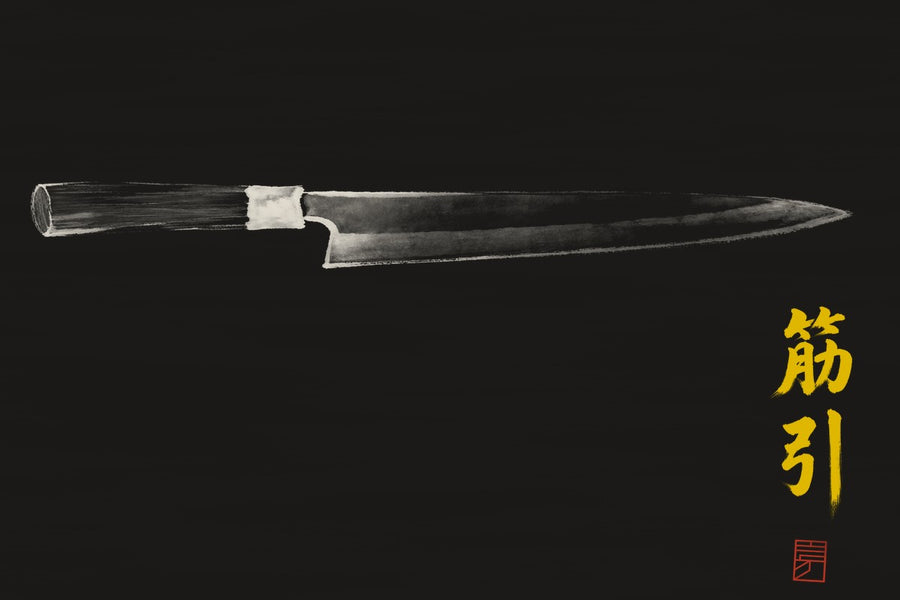
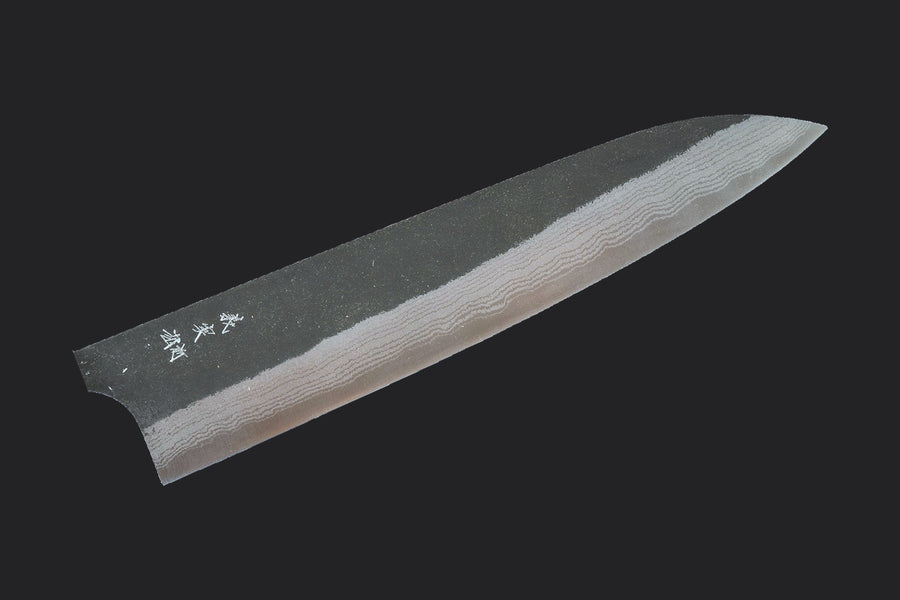
There is something quite unapologetic about the Tsunehisa Samurai B2 Sakimaru. Most sujihiki are made light and slender, almost disappearing in the hand during a long slicing stroke. This one goes in a different direction. The blade carries a noticeably substantial spine and some real weight, combined with the long sweeping edge and distinctive Sakimaru tip that give the knife its almost sword-like appearance. It isn't trying to be a laser slicer; instead, the mass of the blade helps carry it smoothly through a long draw cut, particularly when portioning larger pieces of meat or fish.

At the centre is Aogami #2, or Blue #2 carbon steel, hardened to around 62 HRC. Blue #2 remains one of my favourite traditional Japanese carbon steels because it sits in a very practical middle ground: it takes a very keen edge, holds it well, but is still relatively friendly on the stones when it eventually needs sharpening. The core is clad in soft iron with a dark kurouchi finish, giving the Samurai a very traditional, almost rustic appearance that suits the shape surprisingly well. This is a fully reactive construction, though, so both the exposed core and iron cladding need to be kept clean and dry. Patina is very much part of owning one of these.

Despite the Sakimaru appearance, this should be understood as a double-bevel Sakimaru Sujihiki rather than a traditional single-bevel Sakimaru Yanagiba. That makes it considerably more approachable for anyone already familiar with normal double-bevel Japanese knives. The long curved profile works particularly nicely with a draw-cutting motion, while the elevated rounded tip gives you plenty of control when starting or finishing a slice and is also useful for finer scoring work.

For me, the appeal of the Samurai is really the combination of presence and practicality. It has the dramatic profile people normally associate with much more specialised Japanese slicers, but underneath that appearance is a straightforward Blue #2 double-bevel knife that can actually be used without learning an entirely different sharpening technique. If you want a lightweight, delicate sujihiki, there are better options. If you want a serious carbon-steel slicer with some weight behind the cut and a lot of personality, this one makes considerably more sense.

Pros Cons
  • Great artistic
  • Workhorse grind
  • Need extra care
  • Heavy
Care Instruction
  1. Don't cut hard things! Japanese knives are brittle so bone hacking is a NO NO!
  2. Wash with neutral detergent after use, and wipe dry;
  3. Please don't wash knife with dishwasher, it will damage the wood handle;
  4. Be careful not to leave the knife close to a heat source for a long time;
  5. It is a lot more dangerous to cut with a blunt knife than a sharp knife!
  6. It is best to sharpen a Japanese knife regularly on a waterstone.
  7. Oil the (carbon) knife if storing for an extended period of time to prevent rust.

Tsunehisa

Tsunehisa — Japan's Regions, One Brand

Tsunehisa isn’t tied to one workshop – it’s a celebration of all Japan’s great knife regions. Think Sakai’s laser-precision grinds, Tosa’s mastery of steels like Ginsan, and the distinct traditions of other forging hubs, all united under one brand. By pooling this regional expertise, Tsunehisa delivers exceptional handmade quality at surprisingly accessible prices.

Each knife reflects thoughtful design and rigorous quality control by the Ironclad group (led by Shibata Takayuki). You get authentic techniques – hand-forging, perfect heat treats – paired with modern functionality and Japan's finest steels. Clean aesthetics ensure they look as good as they perform.

Tsunehisa believes a great knife should be a lifelong companion. That’s why they combine serious performance with dedicated after-sales care, including sharpening support. It’s genuine Japanese craftsmanship, distilled for cooks who value both heritage and smart value.

Read more

Forget choosing between Japan's legendary knife-making regions. Tsunehisa brings them all to your kitchen. This innovative brand acts as a curator, sourcing blades from specialist workshops across Sakai, Tosa, and other iconic forging centers – each area contributing its centuries-old expertise. Sakai brings its peerless precision and mastery of carbon steels; Tosa counters with exceptional stainless like the coveted Ginsan (Silver #3); other regions add their own unique forging signatures. This collaborative approach is Tsunehisa’s superpower: harnessing diverse, hyper-specialized skills to create knives offering incredible value without compromising on authentic craftsmanship.

Under the stewardship of Shibata Takayuki's Ironclad group, Tsunehisa maintains a relentless focus on quality and thoughtful design. Experienced staff meticulously inspect every single knife – ensuring consistent geometry, flawless heat treatment, and perfect fit-and-finish before it ever leaves Japan. The result? Blades that feel substantial yet balanced, with grinds that glide through ingredients and steels that take and hold a devastating edge.

Aesthetics are clean, purposeful, and timeless. You won’t find unnecessary ornamentation, but rather a focus on elegant lines, comfortable wa (Japanese) or yo (Western) handles, and finishes that highlight the beauty of the materials – whether it’s the subtle sheen of Ginsan, the rustic charm of kurouchi, or the mesmerizing layers of Damascus cladding.

But Tsunehisa’s commitment extends far beyond the sale. They understand a true kitchen companion needs lifelong support. That’s why they emphasize robust after-sales service, offering maintenance guidance and professional sharpening options to keep your knife performing flawlessly for decades. It’s this combination – regional mastery, rigorous quality control, accessible pricing, and dedicated support – that makes Tsunehisa a standout choice. It’s not just a knife; it’s your gateway to experiencing the breadth and depth of Japan’s blade-making heritage, designed to become an indispensable, cherished part of your cooking journey.

“Not one workshop — a curated showcase of Japan's best knife regions, sharpened by Shibata.”

Est. 2015 | 平成27年
Known for Multi-region sourced knives, value-focused, finished by Takayuki Shibata
Read more about Tsunehisa
Tsunehisa — Fukuyama

Knife details

You May Also Like