PRAHRAN STORE NOW OPEN · THU–MON · 10AM–6PM

KAI  |  SKU: KAI-SHUNC-SA180

Shun Classic Santoku Knife 18cm (7")

Sale price $4,447.00 Regular price $5,554.00

Sold out right now

Leave your email and we’ll send one message the moment it’s back in stock.

One email, no marketing. Privacy policy.

Availability

  • St Peters, NSW —
    2 Bishop St, Unit 2, St Peters NSW 2044
  • Crows Nest, NSW —
    107 West St, Shop 1, Crows Nest NSW 2065
    Pickup only
  • Prahran, VIC —
    180 Commercial Road, Shop 1, Prahran VIC 3181
    Pickup only
Detailed Specifications
Line Shun Classic
Profile Santoku / Santoku
Bevel Type Double Bevel
Weight 204 g | 7.2 oz
Edge Length 180 mm | 7 3/32″
Heel Height 49 mm | 1 59/64″
Width @ Heel 2.3 mm | 3/32″
Width @ Mid 2.0 mm | 5/64″
Width @ 1cm from Tip 1.1 mm | 3/64″
Steel VG-MAX | Stainless
Blade Construction Sanmai - Stainless Damascus Clad
Hardness (HRC) 60 - 61
Surface Finish Migaki
Handle D-shaped Pakkawood
Region Seki
Best for
  • First-timers
  • Pro chefs
  • Free shipping for knives over AU$200 Australia wide.
  • World-wide shipping via DHL Express, 3 to 5 days.


The Shun Classic is where it all started for a lot of knife enthusiasts — the knife that made people realise there's a world beyond the German block set. KAI's flagship line has been quietly converting home cooks for over two decades, and the current version with VG-MAX steel is the best it's ever been. VG-MAX is KAI's proprietary evolution of VG10 — a fully stainless core running at 60-61 HRC that holds a 16-degree edge longer than you'd expect from a factory knife at this price.

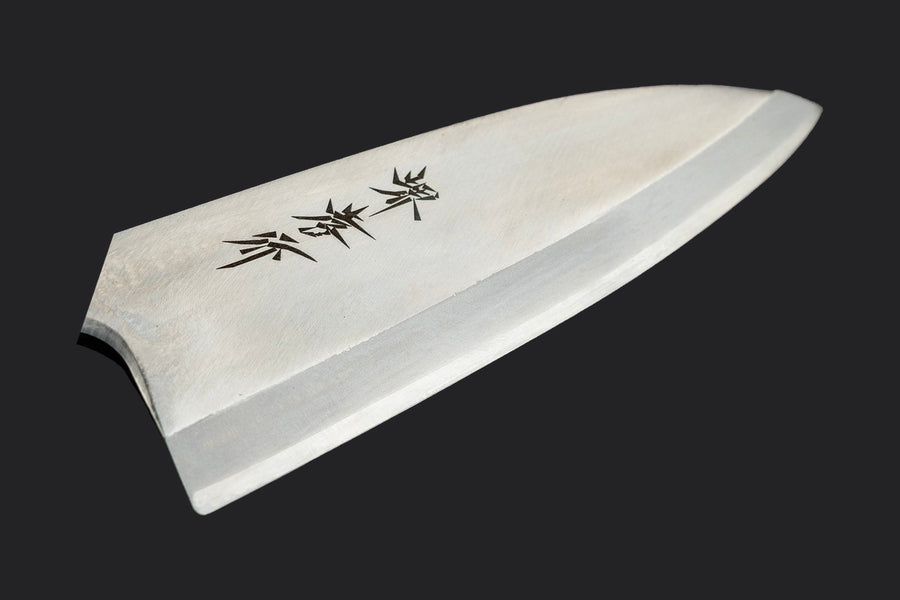
The 34-layer stainless Damascus cladding gives it that distinctive wave pattern that's become almost synonymous with “Japanese knife” in mainstream cooking culture. The blade is polished and well-ground — it's not the thinnest knife out there, but the geometry is sensible for an all-rounder, handling everything from onions to herbs to breaking down a chicken without feeling like you need to baby it. It's a workhorse, and it's designed to be treated like one.

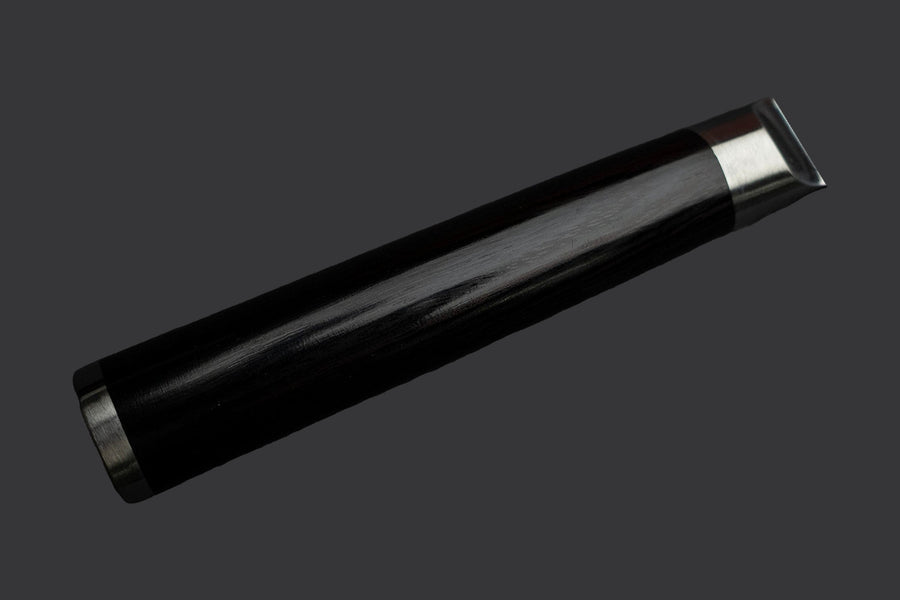
The black Pakkawood D-shape handle is comfortable for extended use and works well for both pinch grip and handle grip users. The lineup covers the essentials — chef's knife (20cm), santoku (18cm), utility (15cm), paring (9cm), and bread knife (22cm). If there's a knock on the Classic, it's that VG-MAX can be a bit stubborn on the stones compared to simpler carbon steels — but that's the trade-off for a blade you can leave on a magnetic rack without worrying about rust. For someone stepping up from a supermarket knife, the Shun Classic is still one of the best entry points into Japanese knives.

Pros Cons
  • Great OOTB
  • Easy to look after
  • Excellent fit and finish
  • Workhorse grind
  • Relatively hard to sharpen
  • Not the thinnest geometry
Care Instruction
  1. Don't cut hard things! Japanese knives are brittle so bone hacking is a NO NO!
  2. Wash with neutral detergent after use, and wipe dry;
  3. Please don't wash knife with dishwasher, it will damage the wood handle;
  4. Be careful not to leave the knife close to a heat source for a long time;
  5. It is a lot more dangerous to cut with a blunt knife than a sharp knife!
  6. It is best to sharpen a Japanese knife regularly on a waterstone.

KAI

KAI — A Century of Seki Blade-Making, Worldwide

KAI Corporation (貝印), founded in Seki in 1908, is the world's largest Japanese knife manufacturer and the company behind Shun (旬) and Seki Magoroku. For many knife users around the world, a Shun or a Seki Magoroku was their very first real Japanese knife — a gateway that opened the door to an entire world of Japanese blade craft. Now in its fourth generation under Hiroaki Endo, KAI acquired various brands like Zero Tolerance and Kershaw and operates globally from Tokyo, combining over a century of blade-making heritage with modern manufacturing at scale.

Read more

貝印 — the kanji literally means "shell mark," a reference to the company's original trademark. What started in 1908 as a pocket knife workshop by Saijiro Endo (遠藤斉治郎) in Seki City has grown into one of the world's largest blade manufacturers, with over 10,000 products spanning kitchen knives, razors, medical instruments, and industrial blades. But for the knife community, KAI matters because of one thing: they brought Japanese knives to the world.

The Endo family has led KAI through four generations. The second-generation Saijiro expanded into razors after the war, creating Japan's first disposable razor. By the 1970s, the company had entered kitchen knife production and begun exporting internationally. The real game-changer came in 2000 with the launch of Shun (旬) — a premium line that combined traditional Japanese blade geometry with Western handle ergonomics and striking Damascus patterns. Shun became a global phenomenon, selling over 10 million units, and for millions of home cooks and professional chefs outside Japan, it was their first encounter with what a Japanese knife could do.

KAI's Seki Magoroku (関孫六) line carries the name of a legendary Muromachi-era swordsmith from Seki, connecting the brand directly to the city's 800-year blade-making heritage. While these are factory-produced knives rather than artisan-forged, the engineering and quality control behind them is serious — KAI's Seki factory is one of the most advanced knife production facilities in Japan, blending robotics and IoT systems with traditional heat treatment knowledge.

Today, under fourth-generation president Hiroaki Endo (遠藤浩彰), KAI operates subsidiaries in the USA, Germany, China, and India. They've won numerous design awards and continue to push boundaries — from the VG-MAX steel developed specifically for Shun to eco-friendly paper razors. Love them or debate them, KAI's role in globalising Japanese knife culture is undeniable. They opened the door that many of us walked through.

“The world's gateway to Japanese knives — Shun, Seki Magoroku, and a century of Seki blade-making at global scale.”

Est. 1908 | 明治41年
Known for Shun premium knives, Seki Magoroku line, world's largest Japanese knife manufacturer
Website kai-group.com Read more about KAI
KAI — Seki

Knife details

Frequently asked questions

Gyuto or santoku - which should I choose?

Both are all-purpose Japanese knives, and for most home cooks either will handle the bulk of daily prep. The choice comes down to length, blade shape, and how you like to cut.

A gyuto is the Japanese chef's knife - typically 210 to 240mm with a gently curved edge that lets you rock and slide through cuts as well as chop. The extra length and pointed tip give you reach and versatility, from proteins to large produce.

A santoku is shorter, usually 165 to 180mm, with a flatter profile and a rounded sheep's-foot tip. It rewards a straight up-and-down push cut, feels nimble in smaller hands or tight kitchens, and is the classic Japanese household knife.

Rule of thumb: choose a gyuto if you want one do-everything knife with more reach, or a santoku if you prefer a compact, easy-to-control blade. Plenty of our customers end up owning both.

You May Also Like