PRAHRAN STORE NOW OPEN · THU–MON · 10AM–6PM

Hatsukokoro  |  SKU: HATS_SGBRH_KGY240-BR

Hatsukokoro Ryuhyo SG2 Black Damascus K-tip Gyuto 240mm Birch

Regular price $9,667.00

Sold out right now

Leave your email and we’ll send one message the moment it’s back in stock.

One email, no marketing. Privacy policy.

Availability

  • St Peters, NSW —
    2 Bishop St, Unit 2, St Peters NSW 2044
  • Crows Nest, NSW —
    107 West St, Shop 1, Crows Nest NSW 2065
    Pickup only
  • Prahran, VIC —
    180 Commercial Road, Shop 1, Prahran VIC 3181
    Pickup only
Detailed Specifications
Line Hatsukokoro Ryuhyo SG2 Damascus Kurozome
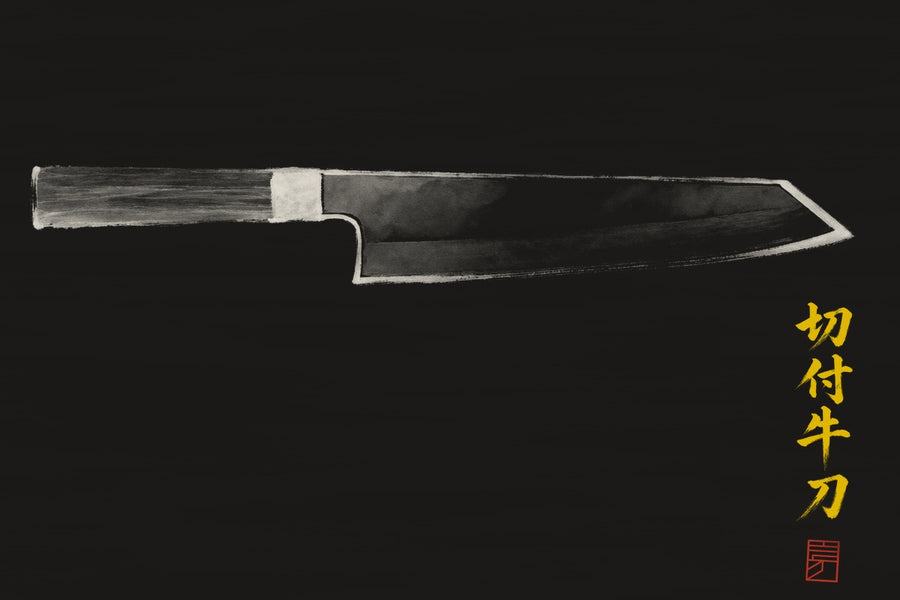
Profile K-tip Gyuto / K-tip chef's knife
Bevel Type Double Bevel
Weight 171 g | 6.0 oz
Edge Length 242 mm | 9 17/32″
Heel Height 52 mm | 2 3/64″
Width @ Heel 1.8 mm | 5/64″
Width @ Mid 1.8 mm | 5/64″
Width @ 1cm from Tip 0.7 mm | 1/32″
Steel SG2 / R2 | Powdered | Stainless
Blade Construction Sanmai - Stainless Damascus Clad
Hardness (HRC) 62 - 64
Surface Finish Etched
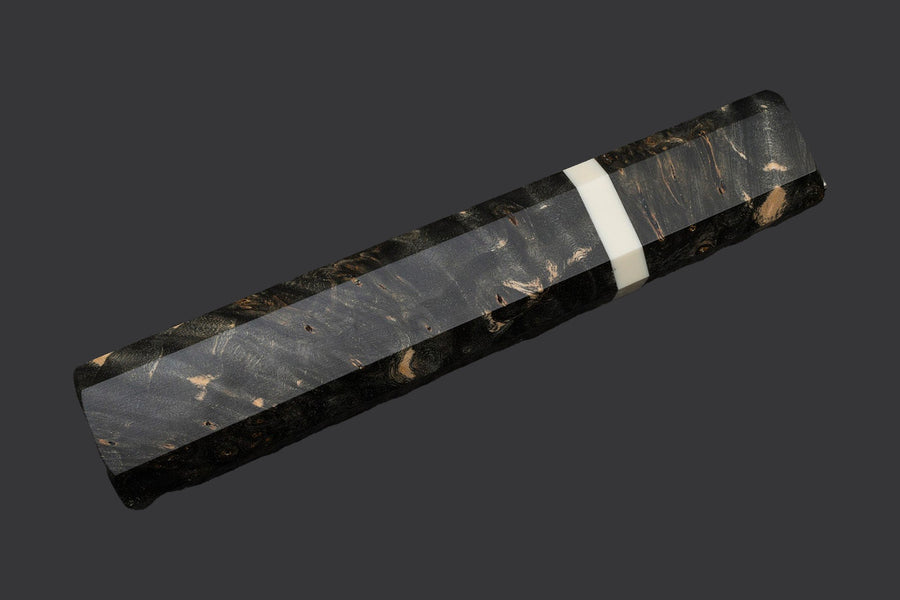
Handle Octagonal Birch Burl with Spacer
Region Hyogo
Best for
  • Enthusiasts
  • Pro chefs
  • First-timers
  • Free shipping for knives over AU$200 Australia wide.
  • World-wide shipping via DHL Express, 3 to 5 days.


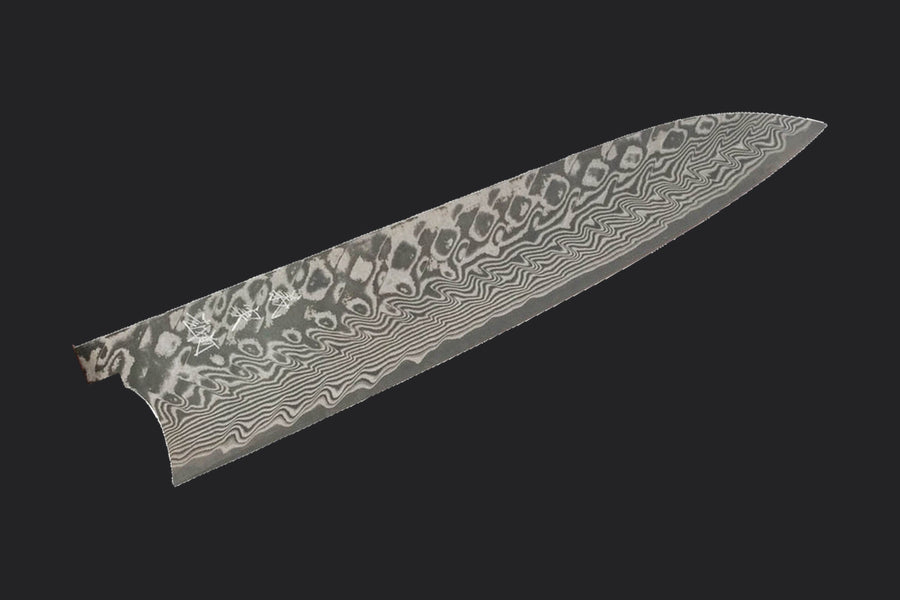
The Ryuhyo(流冰, Flowing Ice) is a line that looks familiar but feels different. It is almost indistinguishable from the Saihyo SG2 line by the look. But after having a try, I can say that look is very deceiving, the improved sharpening and compelling price would likely make this line a often recommended option for a intermediate to high-end knife. Not to mention the unique black Damascus look.

Hatsuokoro's existing model Saihyo has been around for a while on the market, but it haven't been very popular. One of the reason I thinks is the sharpening being applied to the knife is somewhat standard, it features a flat grind bevel with polished sandblasted damascus finish, and the thickness behind the edge is not particularly thin. This combination results in a blade that doesn't feel particularly sharp or smooth in the cut, and many other blades can outperform it in its price range.

Hatsukokoro seems to noticed this situation and they have worked on improving their manufacturing process. The Ryuhyo not only comes at a lower price, but also feel much smoother in the cut. The geometry is more of a sabre/v-grind that transitions smoothly without a shinogi line, not only allows the food to glide smoothly on the surface without sticking, but also kept the beautiful damascus pattern flowing throughout the blade. Maybe this is the reason behind the name.

The etching is also brighter than the Saihyo, which seems to be a result of smoother surface(less reactive with acid). This does improve the performance as the friction between the food and the blade is noticeably reduced.

The steel would be the good ol SG2, I would consider this as the endgame steel for most household and professional as it is excellent in wear resistance without being too hard to sharpen or prone to rust. Having this steel means Ryuhyo is aim more towards the higher end part of the market for both professionals and home cook, and it have positioned itself very well this time so it is clearly more affordable than the more hand crafted SG2 knives while have a performance that is close to them as well as a stunning look.

In summary, the Ryuhyo is the result of Hatsukokoro's improving manufacturing technique, and it is a good sign to see. While we all like the masterfully handcrafted knife that offers us unbeatable performance, it is these more "machine made" blades that would allow more people enjoy the smooth cut offered by Japanese kitchen knives. Having this section of the market improving both in quality and value would surely be a plus in my opinion.

Pros Cons
  • Excellent performance
  • Great artistic
  • Thin behind the edge
  • Etched damascus can be hard to maintain
Care Instruction
  1. Don't cut hard things! Japanese knives are brittle so bone hacking is a NO NO!
  2. Wash with neutral detergent after use, and wipe dry;
  3. Please don't wash knife with dishwasher, it will damage the wood handle;
  4. Be careful not to leave the knife close to a heat source for a long time;
  5. It is a lot more dangerous to cut with a blunt knife than a sharp knife!
  6. It is best to sharpen a Japanese knife regularly on a waterstone.

Hatsukokoro

Rising star of the industry

Hatsukokoro as a brand works extensively with the Japanese kitchen knife industry. Through collaboration with makers and manufacturers across the Japan, they’ve designed and created a huge collection of different knives, covering every possible price range while having a great value in many of their product lines. Their capabilities to incorporate resources have built a strong relation with knife makers, and more and more are happy to send their knives down to Amagasaki and have them delivered across the world.

“The rapidly expanding new brand in the industry based in Amagasaki, offering great varieties by working close with different makers across entire Japan to the entire globe while innovating in product design and metal fabrication.”

Est. 2019 | 令和元年
Known for Unrivalled product availability, exceptional performance at a highly competitive price.
Website handk.co Instagram @handk_official Read more about Hatsukokoro
Hatsukokoro — Hyogo

Knife details

Frequently asked questions

Is a K-tip Gyuto the same as a traditional Kiritsuke?

Not quite - and it is the single most common point of confusion when people shop for a kiritsuke. The two knives share the same striking angled, reverse-tanto tip, but underneath that tip they are very different tools.

A K-tip gyuto is a double-bevel knife: it is ground on both sides like any Western-style chef's knife, so it is ambidextrous, forgiving to use, and sharpened exactly the way you would sharpen a normal gyuto. You get the dramatic kiritsuke look with the everyday usability of an all-purpose chef's knife.

A traditional kiritsuke - including the kiritsuke-yanagiba (slicer) and kiritsuke-gyuto shapes - is a single-bevel knife, ground on one side only. It is historically a master chef's knife: it takes real practice to use well, is set up for right-handed users by default, and needs single-bevel sharpening technique to maintain.

So if you want the kiritsuke silhouette with no learning curve, choose a K-tip gyuto. If you specifically want the traditional single-bevel discipline - and the precision it allows on fish and vegetables - choose a true kiritsuke. At Knives and Stones we stock both, and each product page tells you which construction you are looking at.

SG2 steel knives at Knives and Stones

SG2 is my go-to recommendation for anyone who wants a stainless knife that performs like carbon steel without the fuss. At 1.25% carbon and HRC 62-64, it takes a screaming edge and holds it far longer than VG-10 or AEB-L, all while being fully rust-resistant. You get the best of both worlds: no patina worry, but real cutting performance.

SG2 vs AS steel for kitchen knives — which is better?

Neither is objectively better, it just depends on whether you value stainless convenience or a laser-sharp carbon edge. Go with SG2 if you want a knife that holds a screaming edge without any babysitting. Choose AS if you are chasing the thinnest possible edge and don't mind wiping the blade down after every use.

SG2 is a powdered stainless steel from Takefu, usually sitting around 62-64 HRC. It is tough and resists corrosion, which is why I reach for it when working with acidic foods. Aogami Super is high carbon and typically harder at 64-66 HRC. It sharpens to a hair-whittling edge that lasts slightly longer than SG2, but it will rust if you neglect it.

R2 steel vs SG2 — are they the same?

Yes, R2 and SG2 are the same steel — R2 is the name used by Kobelco Steel, and SG2 (Super Gold 2) is the name used by Takefu Special Steel for the identical powdered metallurgy formula. SG2 / R2 is a powder (PM) steel from Takefu Special Steel, Japan, with a composition of 1.25% carbon, 14.0% chromium, 1.8% vanadium, 2.3% molybdenum, and a hardness range of 62–64 HRC. So if you see a knife labeled R2 or SG2, you are getting the exact same material.

You May Also Like