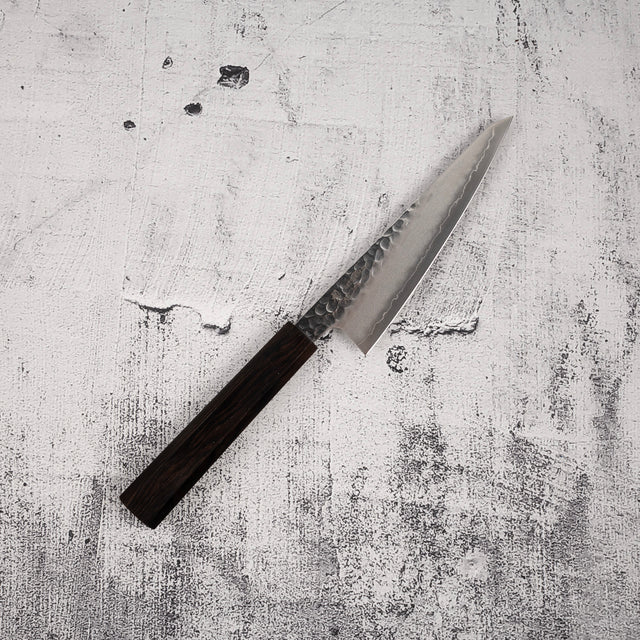
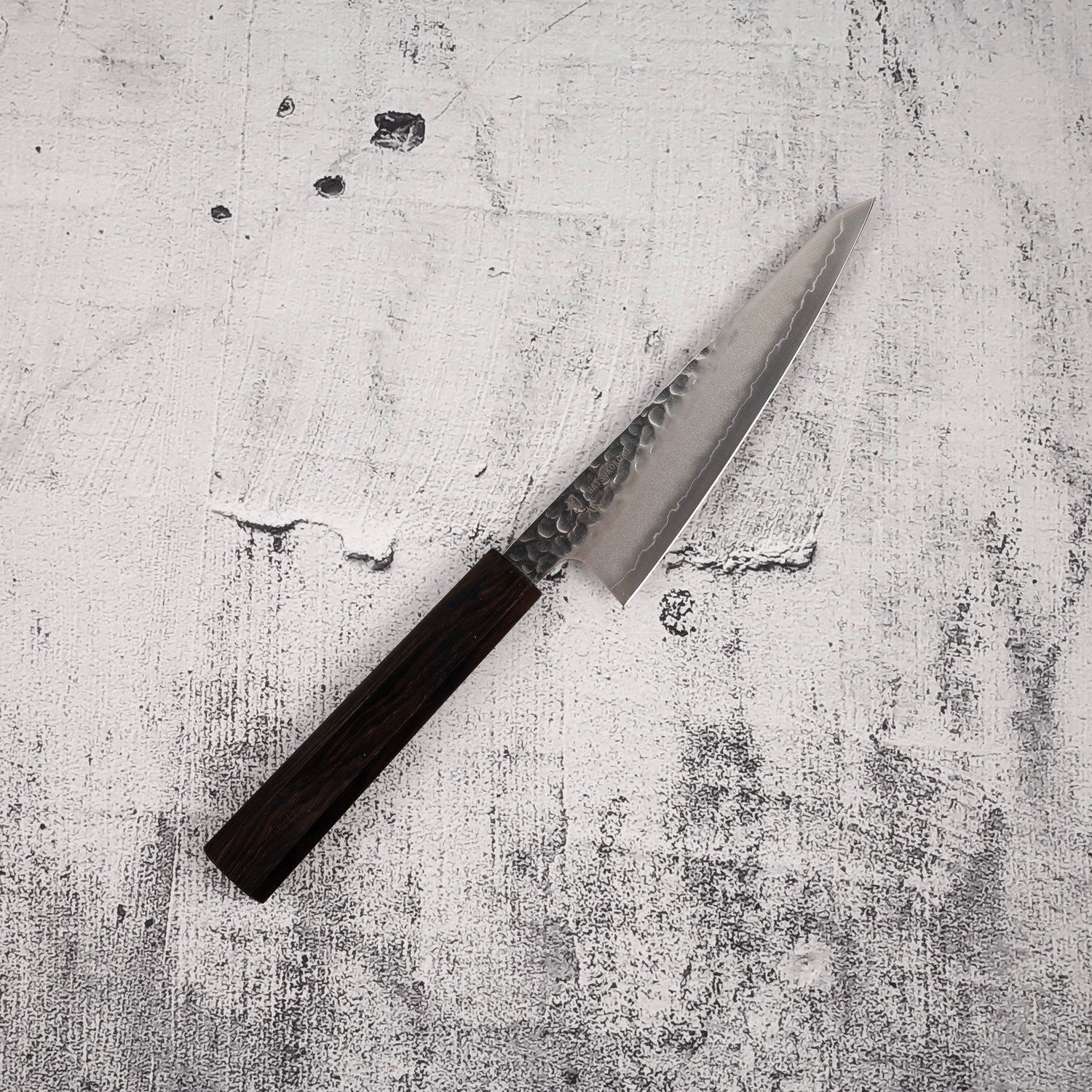
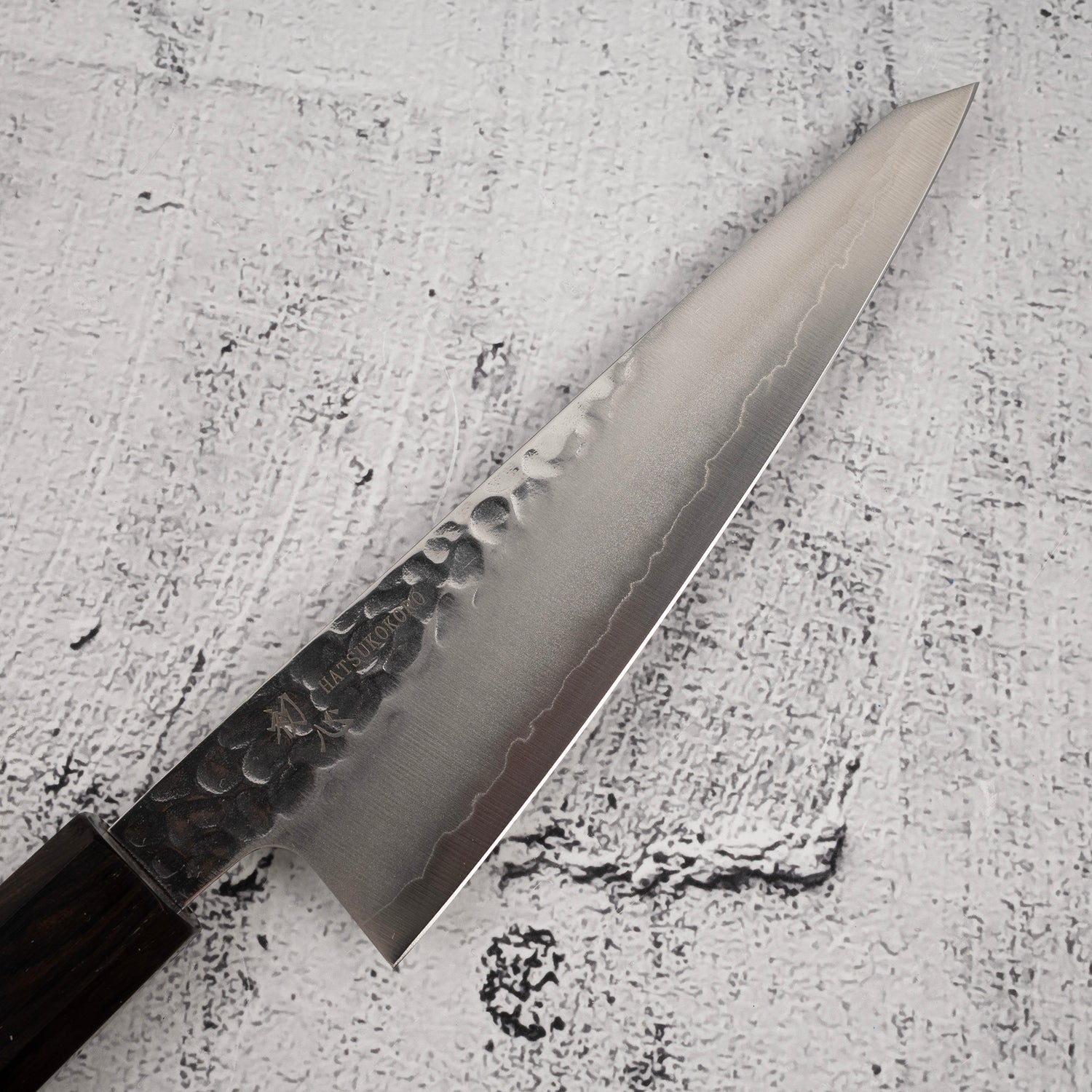
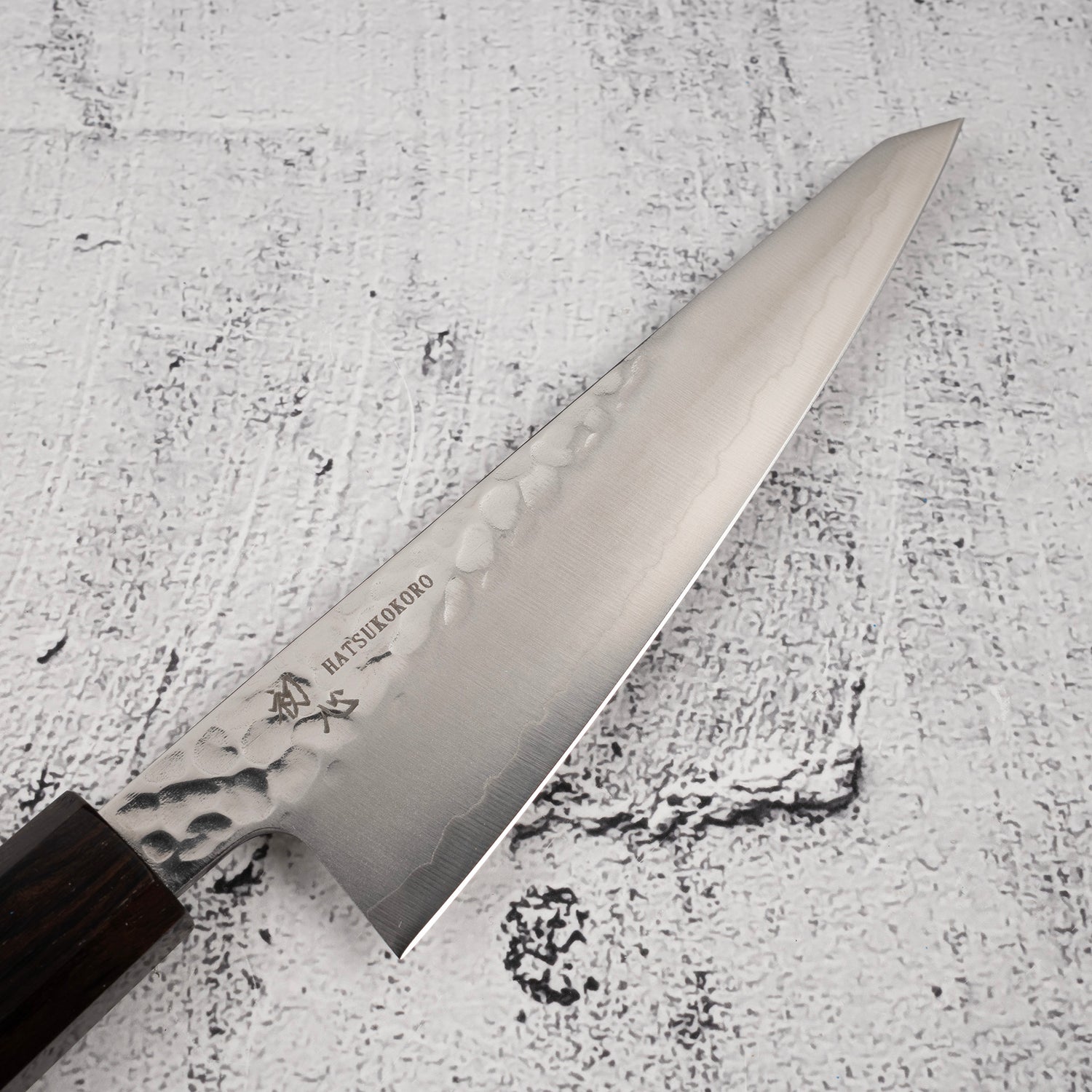
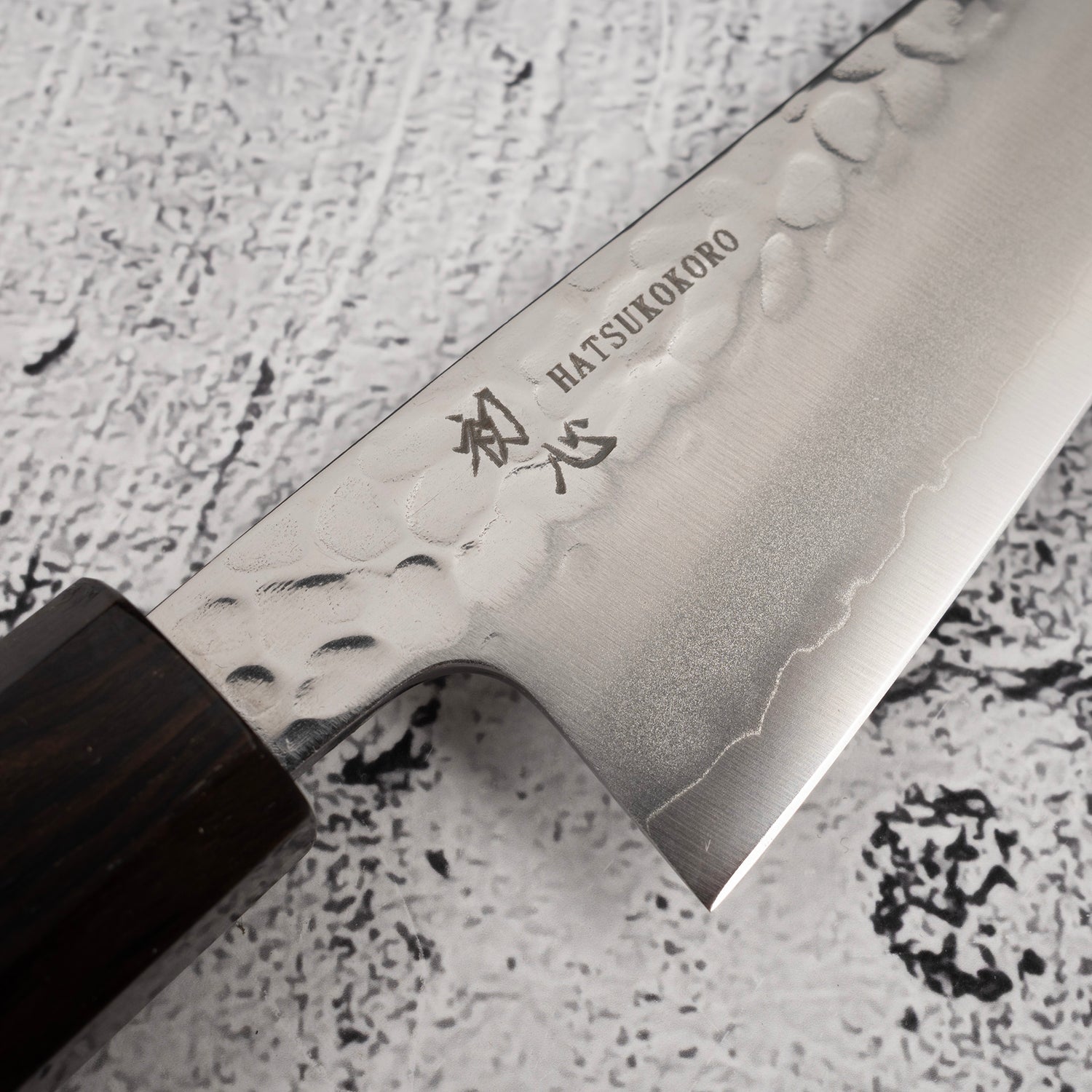
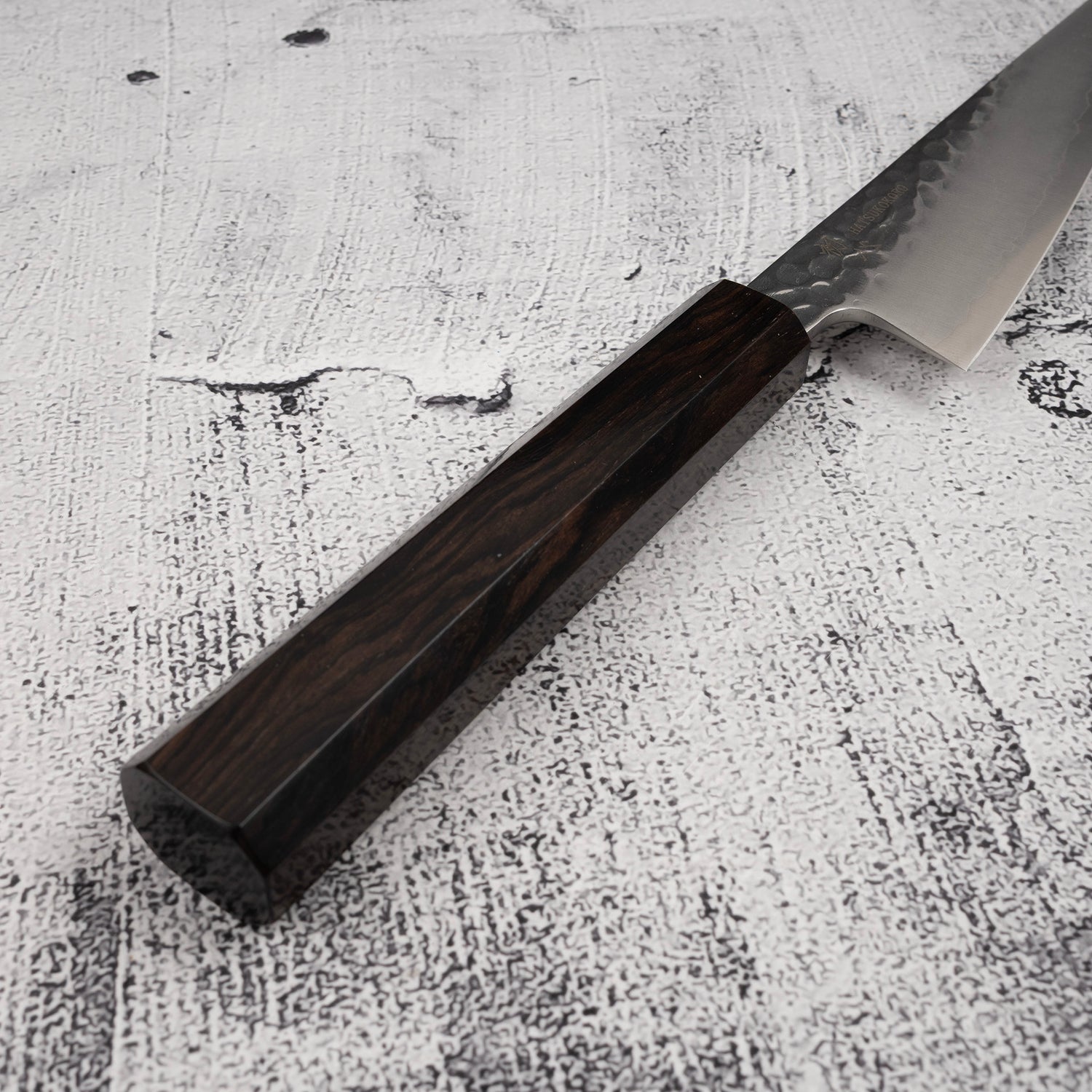
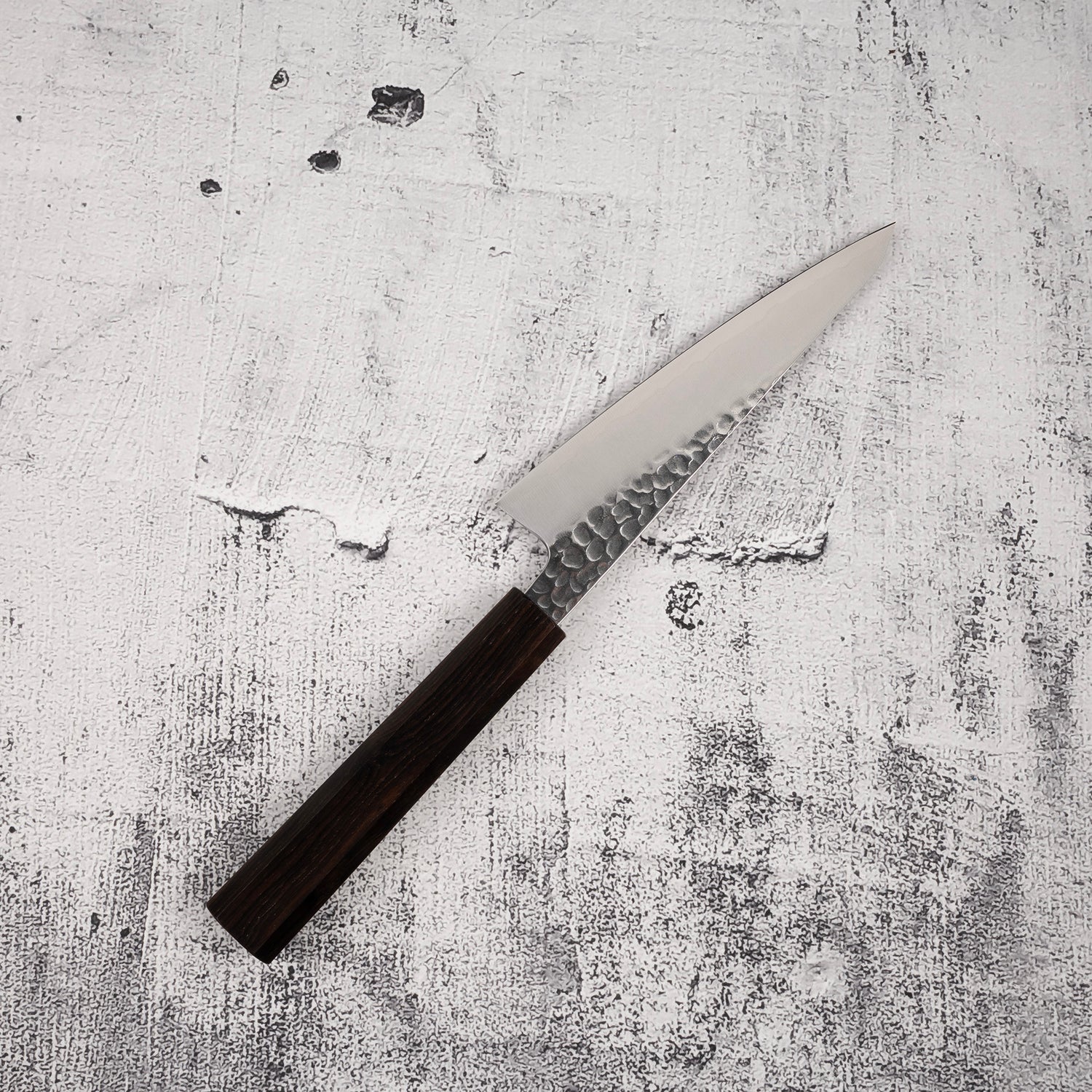
Hatsukokoro Ginsan Tsuchime Honesuki 150mm
Hatsukokoro Ginsan Tsuchime Honesuki 150mm is backordered and will ship as soon as it is back in stock.
Sold out right now
Leave your email and we’ll send one message the moment it’s back in stock.
One email, no marketing. Privacy policy.
Availability
Delivery unavailable for this item. Available for in-store pickup only.
-
St Peters, NSW —2 Bishop St, Unit 2, St Peters NSW 2044
-
Crows Nest, NSW —107 West St, Shop 1, Crows Nest NSW 2065Pickup only
-
Prahran, VIC —180 Commercial Road, Shop 1, Prahran VIC 3181Pickup only
Detailed Specifications
| Profile | Honesuki / Boning, Garasuki |
| Bevel Type | Double Bevel |
| Weight | 142 g 5.01 oz |
| Edge Length | 152 mm .5.98 inch |
| Heel Height | 30 mm .1.18 inch |
| Width @ Spine | 3.4 mm 0.13 inch |
| Width @ Mid | 3.3 mm 0.13 inch |
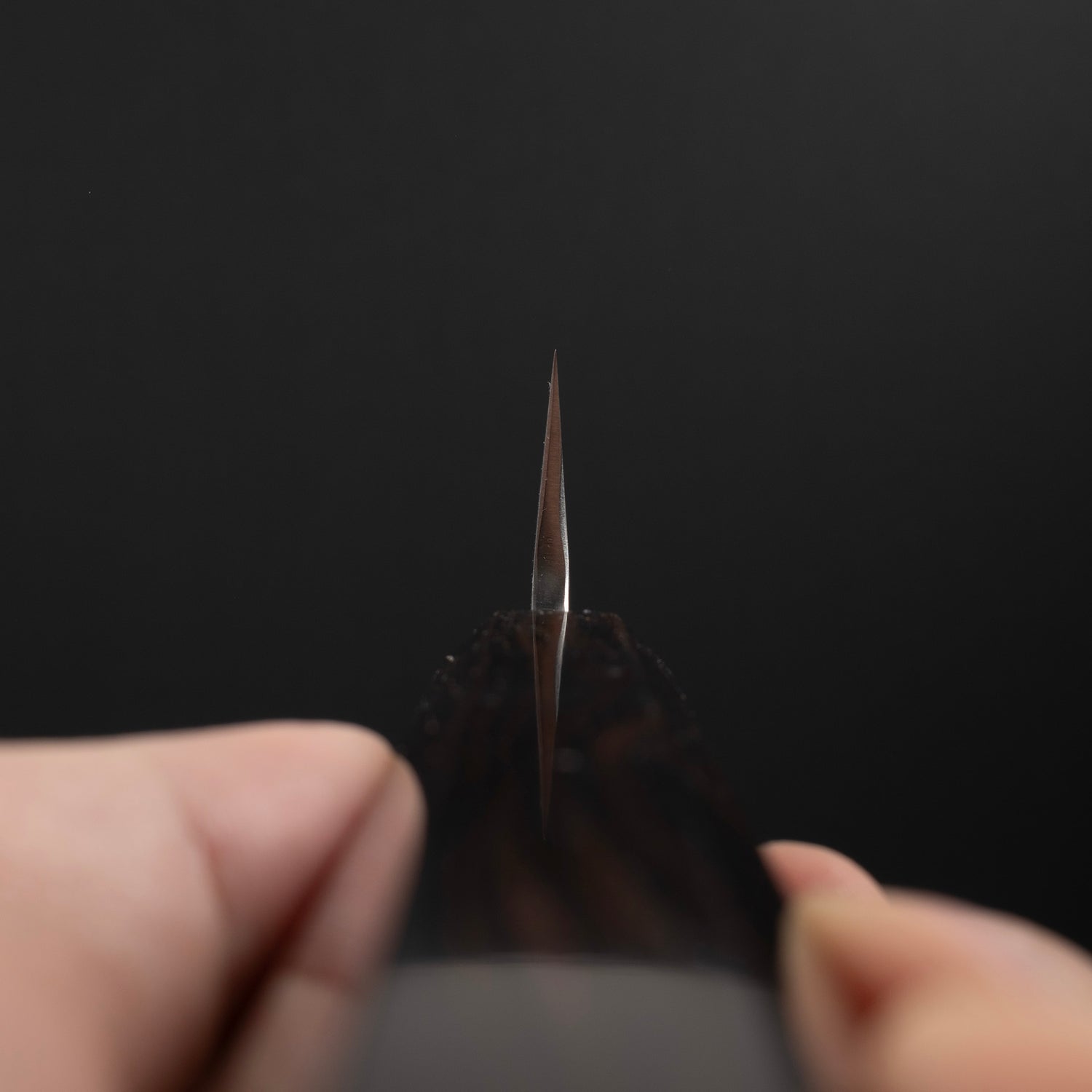
| Width @ 1cm from Tip | 1.3 mm 0.05 inch |
| Steel | Ginsan / Silver #3 | Stainless |
| Hardness (HRC) | 60 - 62 |
| Handle | Octagonal Black Chacate |
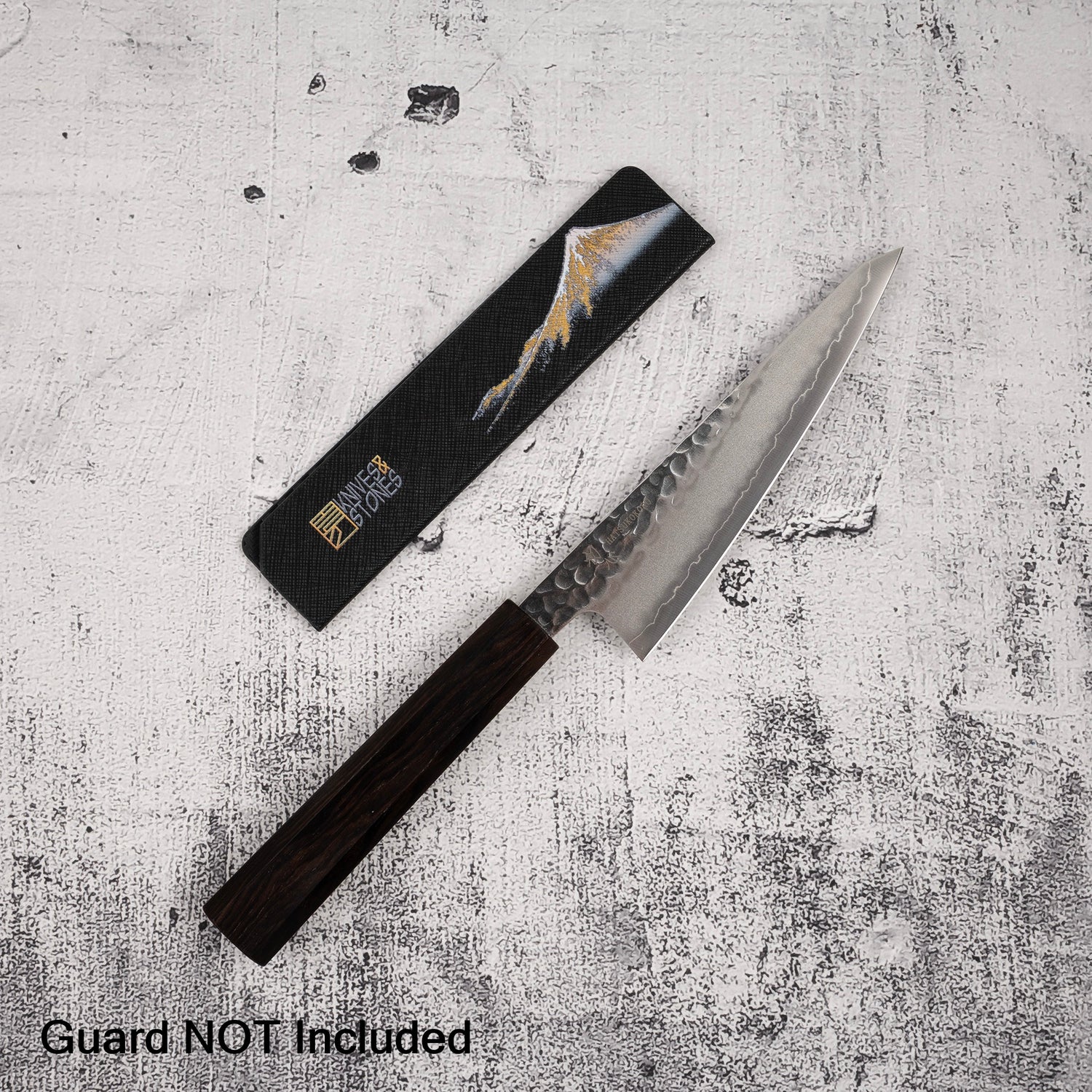
The Hatsukokoro Ginsan Tsuchime Honesuki 150mm is a double-bevel boning knife best fit for poultry preparation and meat butchery requiring precision around bones. This 150mm blade features a triangular profile with a pointed tip designed to manoeuvre around joints, puncture tough tissues, and separate meat with minimal waste. The stiff, broad construction supports controlled cutting tasks where flexibility is not required, distinguishing it from flexible Western boning styles.
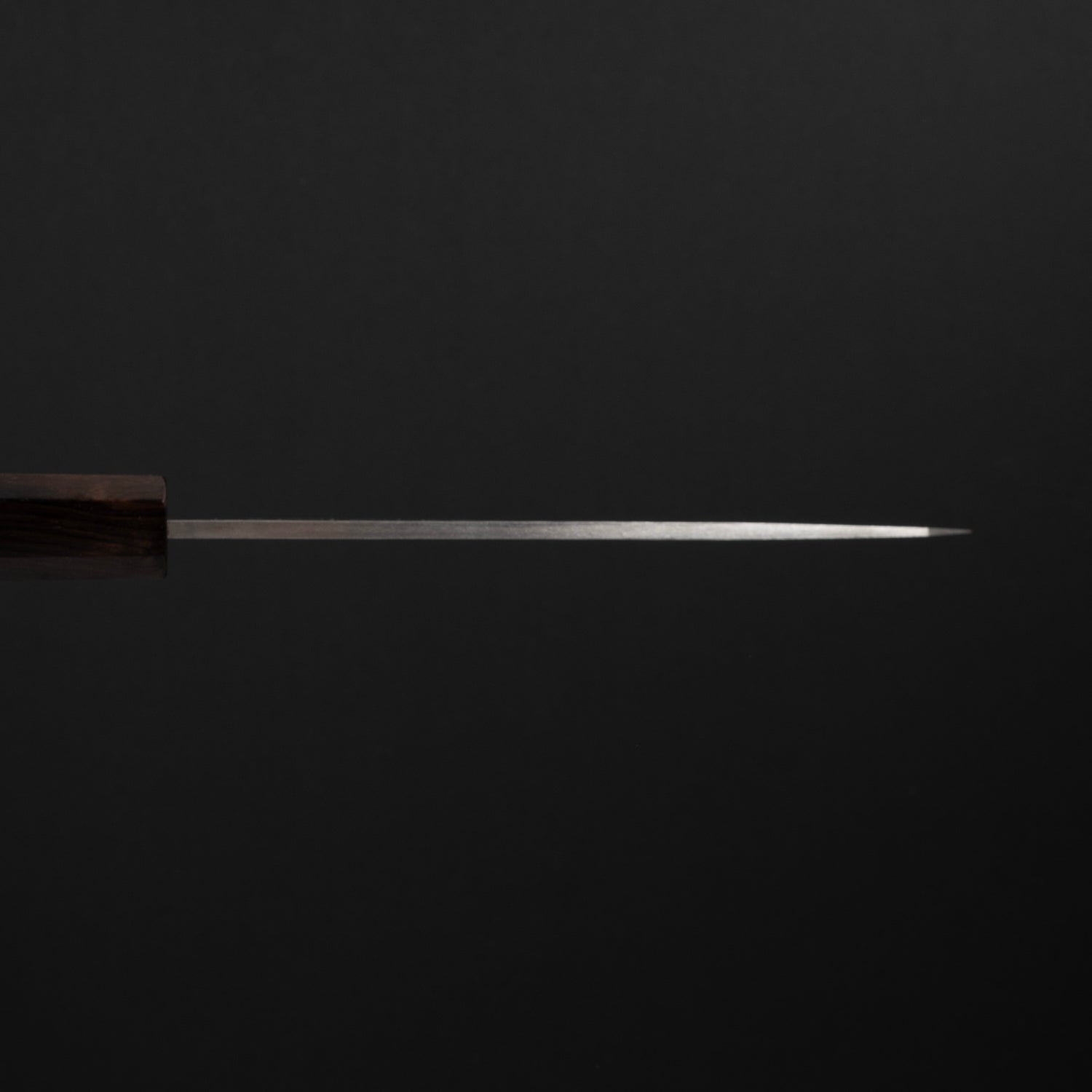
Hitachi Ginsan stainless steel provides corrosion resistance alongside a fine grain structure that facilitates sharpening and edge refinement. Measuring 3.4mm at the heel and tapering to 1.3mm at the tip, the blade offers substantial thickness for joint work while maintaining a precise point. The octagonal black chacate handle pairs with the 142g blade weight to provide a specific balance suited to detailed deboning applications. This tsuchime-finished honesuki serves as a dedicated tool for breaking down poultry and trimming meat where agility and stiffness are prioritised over general-purpose slicing.
- Don't cut hard things! Japanese knives are brittle so bone hacking is a NO NO!
- Wash with neutral detergent after use, and wipe dry;
- Please don't wash knife with dishwasher, it will damage the wood handle;
- Be careful not to leave the knife close to a heat source for a long time;
- It is a lot more dangerous to cut with a blunt knife than a sharp knife!
- It is best to sharpen a Japanese knife regularly on a waterstone.
-
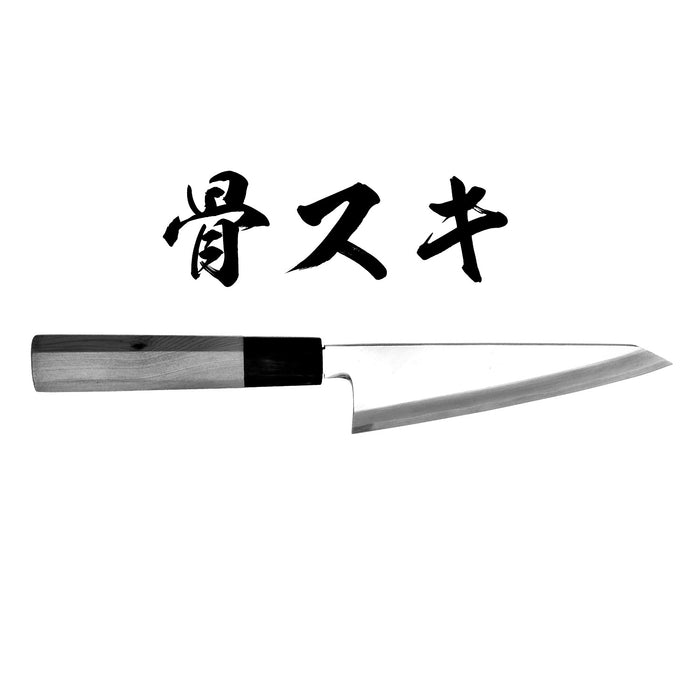
Profile: Honesuki
Boning, Garasuki
Slide for more >>
-
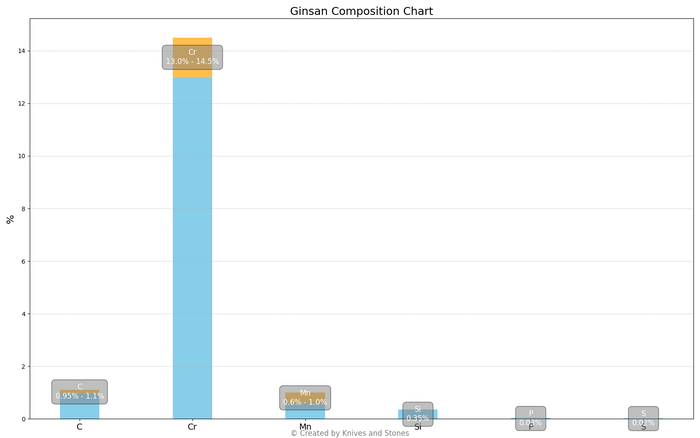
Steel: Ginsan / Silver #3
Manufacturer:
Nature: Stainless
Hardness: 60- 62
<< Slide for more >>
-
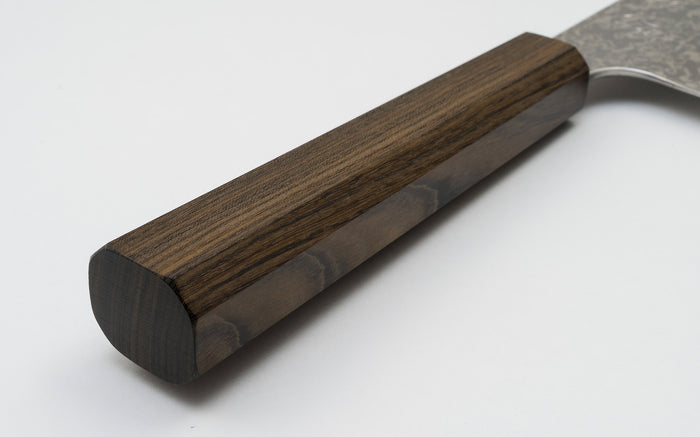
Handle Specs
Profile: Octagonal WA
Material:
<< Slide for more