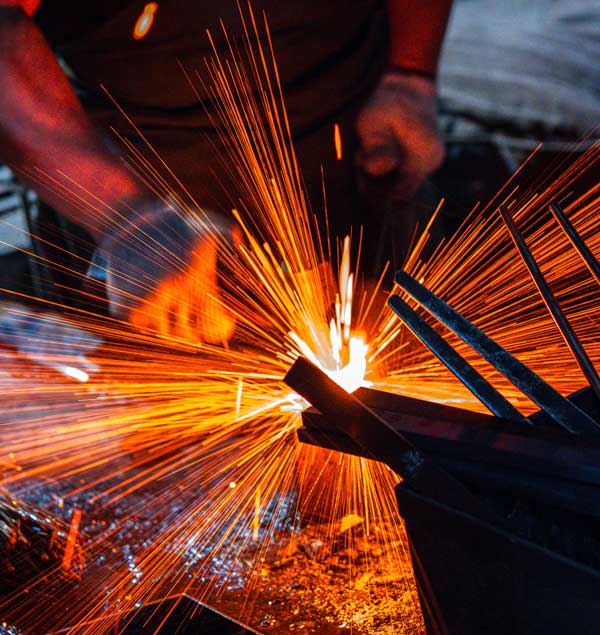


Tetsujin Ginsan Tanryusen (Metal Flow) K-Tip Gyuto 240mm
Tetsujin Ginsan Tanryusen (Metal Flow) K-Tip Gyuto 240mm is backordered and will ship as soon as it is back in stock.
Availability
Delivery unavailable for this item. Available for in-store pickup only.
-
St Peters, NSW —2 Bishop St, Unit 2, St Peters NSW 2044
-
Crows Nest, NSW —107 West St, Shop 1, Crows Nest NSW 2065Pickup only
-
Prahran, VIC —180 Commercial Road, Shop 1, Prahran VIC 3181Pickup only
Detailed Specifications
| Line | Tetsujin Blue 2 Tanryusen (Metal Flow) |
| Profile | K-tip Gyuto / Chefs Knife |
| Bevel Type | Double Bevel |
| Weight | 225 g 7.94 oz |
| Edge Length | 231 mm .9.09 inch |
| Heel Height | 50 mm .1.97 inch |
| Width @ Spine | 3.0 mm 0.12 inch |
| Width @ Mid | 2.6 mm 0.1 inch |
| Width @ 1cm from Tip | 0.6 mm 0.02 inch |
| Steel | Ginsan / Silver #3 | Stainless |
| Blade Construction | Sanmai - Soft Iron Clad |
| Hardness (HRC) | 60 - 62 |
| Surface Finish | Etched |
| Handle | Octagonal Ebony |
| Region | Tosa |
| Best for |
|
The Tetsujin Ginsan Tanryusen K-Tip Gyuto 240mm by Myojin Riki is a double-bevel chef’s knife best fit for users seeking precise tip work and push-cutting performance in a stainless steel blade. Made in Tosa with Ginsan Silver #3 steel, this 240mm profile features an angled kiritsuke-style tip and flatter edge geometry optimised for deliberate slicing strokes and detailed tasks like scoring or picking.
Ginsan stainless steel offers the fine grain structure and sharpness associated with carbon steel while providing corrosion resistance, measuring 60-62 HRC. The san-mai soft iron clad construction displays a tanryusen metal flow finish achieved through etching. This 225g knife has a spine thickness of 3.0mm at the heel tapering to 0.6mm at the tip, with a 50mm heel height and 231mm edge length. An octagonal ebony handle pairs with the double-bevel grind to support controlled cutting technique.
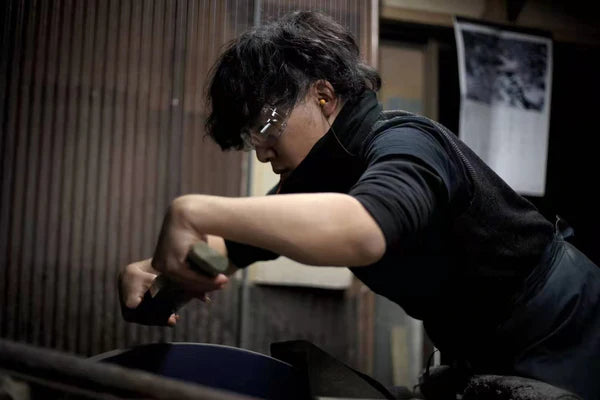
Myojin Riki performs both forging and finishing under one roof in Tosa, applying exceptional grinding and sharpening expertise to each blade. The Tetsujin line represents a collaboration with blacksmith Toru Tamura, combining Sakai-trained roots with distinct metal flow aesthetics. This K-tip gyuto suits chefs who value defined tip precision alongside general-purpose utility in a stainless steel format that balances edge retention with ease of sharpening.
- Don't cut hard things! Japanese knives are brittle so bone hacking is a NO NO!
- Wash with neutral detergent after use, and wipe dry;
- Please don't wash knife with dishwasher, it will damage the wood handle;
- Be careful not to leave the knife close to a heat source for a long time;
- It is a lot more dangerous to cut with a blunt knife than a sharp knife!
- It is best to sharpen a Japanese knife regularly on a waterstone.
-

Profile: K-tip Gyuto
Chefs Knife
Slide for more >>
-
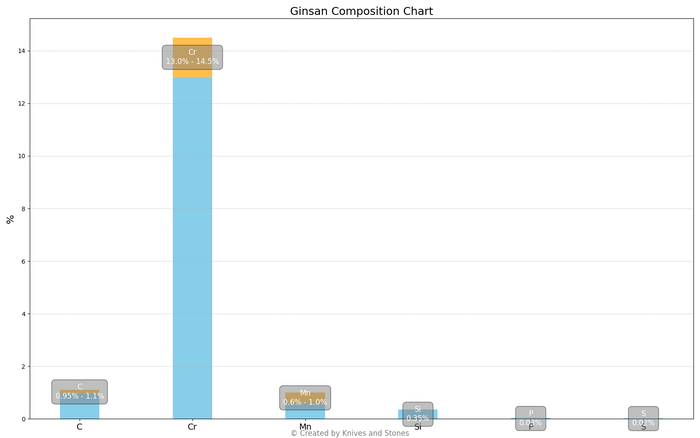
Steel: Ginsan / Silver #3
Manufacturer:
Nature: Stainless
Hardness: 60- 62
<< Slide for more >>
-
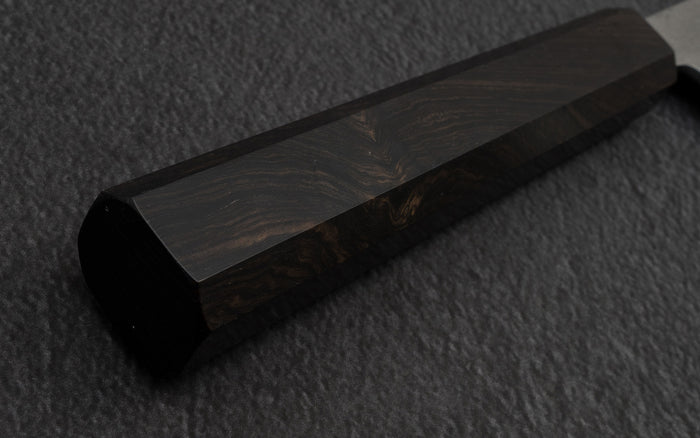
Handle Specs
Profile: Octagonal WA
Material:
<< Slide for more