Crows Nest store now open from Friday to Tuesday, 10am till 6pm.

Sukenari  |  SKU: SUKEN_SG2_KGY270DM_BR

Sukenari SG2 Damascus K-tip Gyuto 270mm Birch

Regular price $17,246.00

Add a saya or K&S Knife Roll to receive $20 bundle discount!

Detailed Specifications
Line Sukenari SG2 Damascus Double Bevel
Profile Gyuto / Chefs Knife
Bevel Type Double Bevel
Weight 251 g | 8.9 oz
Edge Length 265 mm | 10 7/16″
Heel Height 51 mm | 2 1/64″
Width @ Heel 2.7 mm | 7/64″
Width @ Mid 2.5 mm | 3/32″
Width @ 1cm from Tip 0.7 mm | 1/32″
Steel SG2 / R2 | Powdered | Stainless
Blade Construction Sanmai - Stainless Damascus Clad
Hardness (HRC) 62 - 64
Surface Finish Mirror Polish
Handle Octagonal Birch Burl with Spacer
Region Toyama
Best for
  • Pro chefs
  • First-timers
  • Enthusiasts
  • Free shipping for knives over AU$200 Australia wide.
  • World-wide shipping via DHL Express, 3 to 5 days.


Sukenari SG2 Damascus: Where Toyama Precision Meets Artistry

If the Migaki line is Sukenari in a sharp suit, this is the black-tie edition. After years of rarity, the return of the SG2 Damascus series is a celebration of form and function. It carries all the legendary Toyama performance of its sibling but dresses it in a breathtaking, polished Damascus cladding.

Beneath the beauty, the soul is pure Sukenari: the same revered SG2 powdered steel core. It’s the heart of the operation, delivering monstrous edge retention and the ability to hold a scary-fine, razor-sharp edge. And true to form, it remains surprisingly manageable to sharpen, a testament to Sukenari’s masterful heat treatment.

But the star is the finish. The cladding is a deeply etched, 69-layer Damascus, polished to a brilliant, shimmering finish that catches the light from every angle. As one owner put it, the finish is "way more impressive in person" – a true functional art piece that also helps prevent food sticking.

This is for the cook who refuses to choose between top-tier performance and stunning looks. It’s Sukenari’s statement that the most serious tool can also be a masterpiece. After such a long wait, it’s not just a knife; it’s an event.

Pros Cons
  • Excellent performance
  • Great for professionals
  • Easy to look after
  • Great artistic
  • Relatively hard to sharpen
  • High budget
  • Mirror polish can be hard to maintain
Care Instruction
  1. Don't cut hard things! Japanese knives are brittle so bone hacking is a NO NO!
  2. Wash with neutral detergent after use, and wipe dry;
  3. Please don't wash knife with dishwasher, it will damage the wood handle;
  4. Be careful not to leave the knife close to a heat source for a long time;
  5. It is a lot more dangerous to cut with a blunt knife than a sharp knife!
  6. It is best to sharpen a Japanese knife regularly on a waterstone.

Sukenari

Sukenari: The Toyama Forge That Tames Steel No One Else Can

Sukenari(佑成), a brand with a trademark written in two Kanji, one is "to support" or can be broken down to "human and its right side", the other one is "become, achieve). According to the current Representative Director Nobuo Hanaki, this name is filled with the desire of making product that will become an inseparable part in the right hand of those who cook.

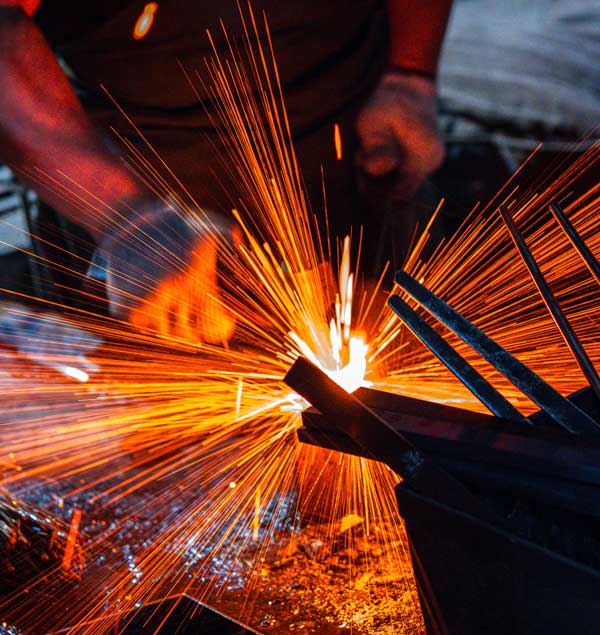
Eversince the founding of the company in Showa 8th (1933), Sukenari have been renowned for its products utilizing the hardest manufacturing technique of Honyaki. This applies not only to the traditional carbon steel, but also to modern stainless alloy steels, or even powder metallurgy steels. It is quite safe to say Sukenari, is one of the most, if not the most pioneering Japanese company in terms of new steel selection, with glorious track records of forging with steels never seen on any other kitchen knives.

Read more

Sukenari(佑成), a brand with a trademark written in two Kanji, one is "to support" or can be broken down to "human and its right side", the other one is "become, achieve). According to the current Representative Director Nobuo Hanaki, this name is filled with the desire of making product that will become an inseparable part in the right hand of those who cook.

Eversince the founding of the company in Showa 8th(1933), Sukenari have been renowned for its products utilizing the hardest manufacturing technique of Honyaki. This applies not only to the traditional carbon steel, but also to modern stainless alloy steels, or even powder metallurgy steels. It is quite safe to say Sukenari, is one of the most, if not the most pioneering Japanese company in terms of new steel selection, with glorious track records of forging with steels never seen on any other kitchen knives.

ZDP-189, YXR7 and HAP-40, these are the steels with extreme performance that was never considered by the industry to be suitable for knife making, yet Sukenari was daring enough to experiment with them, which lead to the adoptation by the industry. Without this company, we are likely unable to get our hands on some of the extreme performer knives today. It is great to see a Japanese company with rich history can breake the stereotype of lacking in innovation, and show us there are still potential for improvement. Just like the current company owner, 3rd-generation Hanaki - Mr. Nobuo Hanaki said: "we are willing to work hard to improve our skill and technique, so we can be relied upon by those who cook."

“The knife behind the knife — and the steel no one else dares.”

Est. 1933 | 昭和8年
Known for Forging the "unforgable" powdered steels
Website sukenari.jp Instagram @sukenari_official Read more about Sukenari
Sukenari — Toyama
Profile: Gyuto
Profile

Gyuto

Chefs Knife

A Japanese chef's knife is known as a gyuto (牛刀 ぎゅうとう) gyūtō), literally meaning 'beef knife'. Its blade resembles a flatter version of a French chef's knife. Japanese cutlery is known for sharpness due to its acute blade geometry, and the hardness of the steel used, sometimes exceeding 60 HRC on the Rockwell Scale A typical western chef's knife may be sharpened to an edge angle of 20-22°, while a Japanese gyuto generally has a sharper edge angle of 15-18° (or even lower), which requires a harder, more brittle grade of steel. In recent years Japanese gyuto have gained in popularity with western chefs.

A modern chef's knife is a multi-purpose knife designed to perform well at many differing kitchen tasks, rather than excelling at any one in particular. It can be used for mincing, slicing, and chopping vegetables, slicing meat, and disjointing large cuts.
Composition

SG2 / R2 Element Composition

Compare with
    SG2 / R2
    14.0% 10.5% 7.0% 3.5% 0
    C Carbon 1.25%
    Primary hardening element. Raises hardness and wear resistance — but too much increases brittleness and corrosion susceptibility. As a reference: German 1.4112 (~0.5%) sits at the low end; VG-10 (~1.0%) is a common mid-range; SG2 (1.25–1.45%) and ZDP-189 (~3.0%) represent high and extreme ends respectively.
    C
    1.25%
    Cr Chromium 14.0%
    Raises corrosion resistance; 13%+ qualifies steel as stainless. Also improves hardenability and wear resistance. In kitchen use, higher chromium levels contribute to a slight drag or sticking sensation when cutting — a trade-off for the rust resistance it provides.
    Cr
    14.0%
    V Vanadium 1.8%
    Forms extremely hard carbides for superior edge retention. Also refines grain structure, improving toughness.
    V
    1.8%
    Mo Molybdenum 2.3%
    Improves hardenability and toughness. Boosts corrosion resistance and helps the steel hold hardness under heat.
    Mo
    2.3%
    Mn Manganese 0.4%
    Aids hardenability and strength. Acts as a deoxidiser during smelting. Excess can reduce toughness.
    Mn
    0.4%
    Si Silicon 0.5%
    Strengthens the steel matrix and acts as a deoxidiser. Improves hardness and resistance to oxidation.
    Si
    0.5%
    P Phosphorus 0.03%
    Impurity from the smelting process. Even small amounts cause brittleness — steelmakers keep this as low as possible.
    P
    0.03%
    S Sulfur 0.03%
    Impurity that reduces toughness and promotes brittleness. Intentionally added only in free-machining steels.
    S
    0.03%
    C — Carbon Cr — Chromium V — Vanadium Mo — Molybdenum Mn — Manganese Si — Silicon P — Phosphorus S — Sulfur
    Hardness 62–64 HRC
    555759616365+
    Steel
    SG2 / R2
    Category
    Stainless
    Process
    Powder Metallurgy (PM)
    Manufacturer
    Takefu Special Steel, Japan 🇯🇵
    Hardness
    62–64 HRC
    Steel

    SG2 / R2

    • Manufacturer
      • Takefu Special Steel, Japan
    • Nature Stainless
    • Hardness62–64 HRC
    SG2, also known as Super Gold 2 or R2 steel, is a high-end powdered tool steel by Takefu Special Steel, known for its excellent edge retention, wear resistance, and ability to achieve a hardness of up to 64 HRC. Identical to Kobelco Steel's R2, it's prized in premium knife making for its fine edge sharpness and durability. The powdered nature ensures uniform carbide distribution, enhancing toughness and reducing chipping risks. SG2/R2 is ideal for those seeking top performance and longevity in their cutting tools.
    Construction: Sanmai - Stainless Damascus Clad
    Construction

    Sanmai - Stainless Damascus Clad

    Sanmai(Three-Piece) is a common construction for double bevel knives where two pieces of softer cladding steel are forgewelded to each side of a harder core steel. The harder but more brittle core steel will form the hard cutting edge after heat treating, and the softer cladding will support the core to increase the overall strength of the blade.

    Damascus Sanmai utilize damascus steel as the cladding material for the Sanmai construction, which adds aesthetic feature to the blade. On the Kitchen knives with stainless core steel, the damascus cladding will be stainless, this means they will also protect the carbon/semi-stainless core from rusting/discolouration.

    The soft cladding enables the thinning process to be a lot easier than a honyaki or monosteel construction. However, when the cladding is made of damascus, whether etched, polished or mirror polished, the thinning process will take a toll on the cladding, meaning the damascus won't look the same as when it was taken out of the box.

    Finish: Mirror Polish
    Finish

    Mirror Polish

    Mirror Polish is a simplistic yet hightly demanding process, where the roughness of the metal surface is gradually removed with higher and higher grit abrasives, leading to a extremly smooth surface with only specular reflection, just like a mirror.

    The Mirror Polish can be applied to various constructions, ranging from Damascus to Honyaki. It can reveal the beautiful Hamon on the Honyaki blade, and form textural contrast on damascus. The perfect surface is highly appreciated, but it also means a lot of care must be give to avoid it being scratched.

    Handle
    Handle

    Octagonal Birch Burl with Spacer

    • Profile Octagonal WA
    • Material
      • Birch Burl Stabilized

    The stabilized birch burl handle adorning the Hatsukokoro chef knife is a testament to both exquisite craftsmanship and natural beauty. Birch burl, prized for its intricate grain patterns and unique textures, undergoes a meticulous stabilization process to enhance its durability and stability, ensuring longevity and resilience against moisture and wear.

    The handle's ergonomic design offers a comfortable and secure grip, allowing for extended periods of use without fatigue. Its smooth contours and balanced weight distribution contribute to precise control and effortless maneuverability during culinary tasks.

    The natural variations in color and grain of the birch burl create a visually captivating aesthetic, making each handle distinctively unique. This harmonious blend of functionality and aesthetics not only elevates the chef knife's performance but also adds a touch of elegance to the kitchen, reflecting the unparalleled craftsmanship of Hatsukokoro knives.

    1 / 5

    You May Also Like