PRAHRAN STORE NOW OPEN · THU–MON · 10AM–6PM

Nigara Hamono  |  SKU: NG-ANSG2DM-PT120B

Nigara Anmon SG2 Raindrop Damascus Petty 120mm Birch Handle

Regular price $10,425.00
Tax included Shipping calculated at checkout.

Sold out right now

Leave your email and we’ll send one message the moment it’s back in stock.

One email, no marketing. Privacy policy.

Pickup available at Crows Nest

Usually ready in 24 hours

Availability

  • St Peters
    2 Bishop St Unit 2 St Peters NSW 2044
  • Crows Nest
    107 West St, Crows Nest NSW 2065
    Pickup only
Detailed Specifications
Line Nigara Anmon SG2
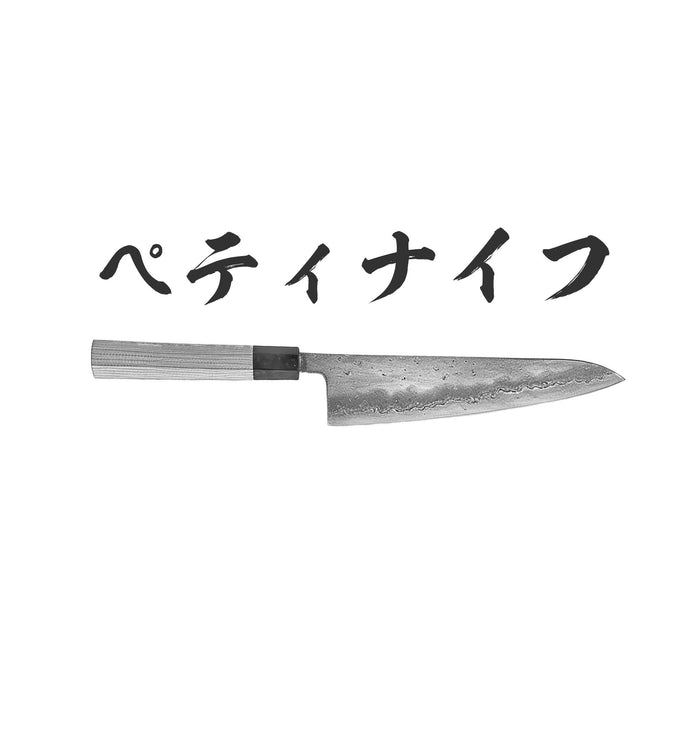
Profile Petty / Utility, Paring
Bevel Type Double Bevel
Weight 64 g | 2.3 oz
Edge Length 111 mm | 4 3/8″
Heel Height 30 mm | 1 3/16″
Width @ Heel 1.6 mm | 1/16″
Width @ Mid 1.4 mm | 1/16″
Width @ 1cm from Tip 1.0 mm | 3/64″
Steel SG2 / R2 | Powdered | Stainless
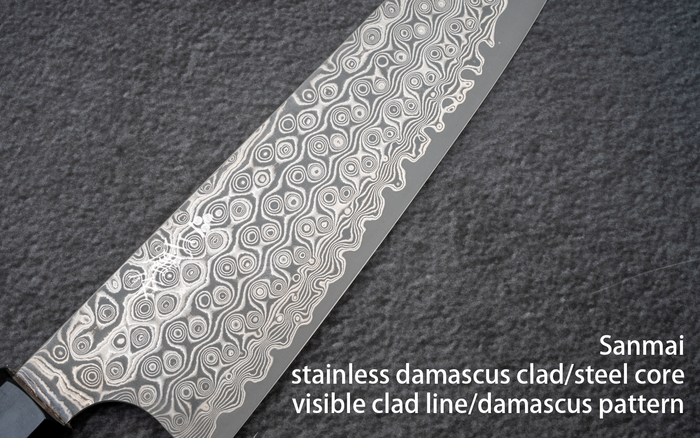
Blade Construction Sanmai - Stainless Damascus Clad
Hardness (HRC) 62 - 64
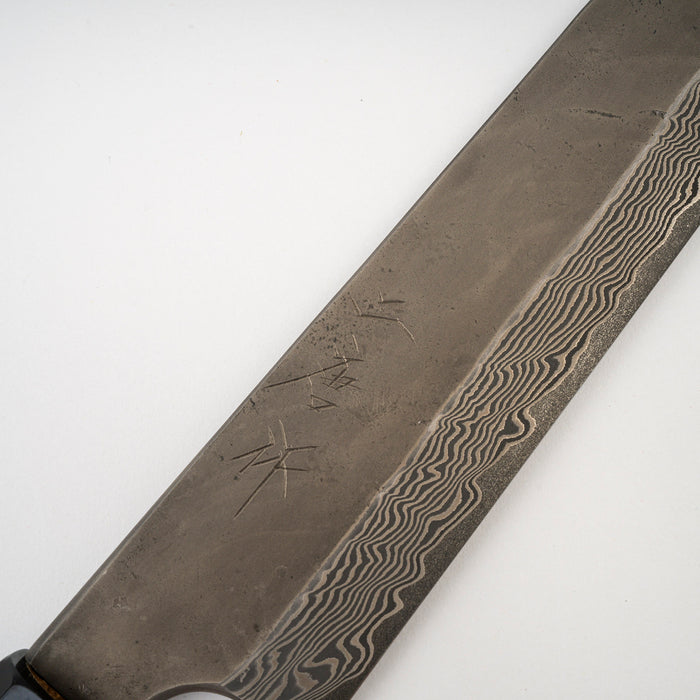
Surface Finish Etched
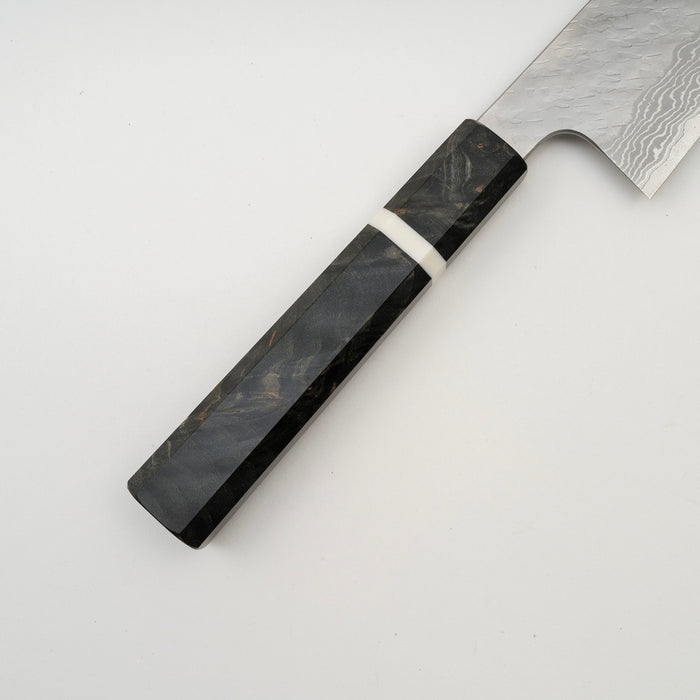
Handle Octagonal Birch Burl with Spacer
Region Aomori
Best for
  • Enthusiasts
  • Pro chefs
  • Collectors
  • Free shipping for knives over AU$200 Australia wide.
  • World-wide shipping via DHL Express, 3 to 5 days.


The Anmon SG2 series consist knives of various construction and sizes, all clad in 25 layers of forged damascus on each side of the blade. The ripple markings on the finely polished steel, distinctive of Tsugaru forging, is an original technique of the Nigara Forging.

The “Anmon” design was inspired by the rippling water of the Anmon Waterfalls, cascading from the foot of the World Heritage Shirakami Mountains adjacent to the city of Hirosaki. Old growth beech and pine encompass the Anmon falls where the cool mountain stream cascades down from the precipitous rocks above. The sight of the rippling waterfall has enchanted its visitors with its mystical power.

However, a interview with the Toshiju Yoshizawa reveals the personal inspiration for him, he said it was Andy Warhol's painting of John Lennon, specifically the fascinating distortion in his glasses that lead him to this design.

Combining this pattern with a matte etched surface, the Anmon line gets a truely breathtaking, high contrast look. This dazziling appearance combines the great edge retentionof the SG2 powder stainless steel, result a series of knives excels in all aspects. There is a reason that these knives are sold very quickly despite the high price of them.

Care Instruction
  1. Don't cut hard things! Japanese knives are brittle so bone hacking is a NO NO!
  2. Wash with neutral detergent after use, and wipe dry;
  3. Please don't wash knife with dishwasher, it will damage the wood handle;
  4. Be careful not to leave the knife close to a heat source for a long time;
  5. It is a lot more dangerous to cut with a blunt knife than a sharp knife!
  6. It is best to sharpen a Japanese knife regularly on a waterstone.

Nigara

Based in the small yet beautiful city of Hirosaki in the northern prefecture of  Aomori, Nigara hamono has been making samurai swords for 350 yearas, with master Kunitoshi  (國俊) being one of the most famous sword smith in his generation. Now headed by the 8th generation mastersmith Go Yoshizawa (吉澤 剛) supported by his father Toshiju Yoshizawa (吉澤 俊寿), Nigara is becoming very popular thanks of its exquisite forging skills and second to none quality control. 

  • Profile: Petty

    Utility, Paring

    The Petty knife, a smaller Japanese utility knife, serves as an ideal tool for precision tasks such as peeling, trimming, and slicing fruits and vegetables. With a blade length ranging from 120mm to 180mm (4.7 to 7 inches), it stands out for its ability to handle detailed work like deveining shrimp or cutting garnishes. Its slightly longer and slimmer profile compared to the Western paring knife enhances its functionality for intricate tasks, making it a valuable addition to any kitchen toolkit.

    Slide for more >>

  • Steel: SG2 / R2

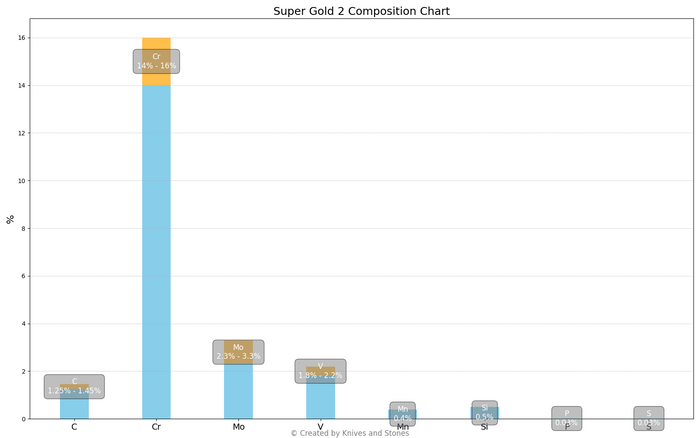
    SG2 (Super Gold 2, also documented as SPG2) is a powder-metallurgy blade steel made by Takefu Special Steel. Takefu describes a fine, uniform structure and lists hardness of HRC 62 or higher. The maker's heat treatment determines the hardness of a finished knife. Takefu does not publish its current chemical composition; the ranges below are reference figures.

    Manufacturer:

    • Takefu Special Steel, Japan

    Nature: Stainless

    Hardness: 62- 64

    << Slide for more >>

  • Construction: Sanmai - Stainless Damascus Clad

    Sanmai(Three-Piece) is a common construction for double bevel knives where two pieces of softer cladding steel are forgewelded to each side of a harder core steel. The harder but more brittle core steel will form the hard cutting edge after heat treating, and the softer cladding will support the core to increase the overall strength of the blade.

    Damascus Sanmai utilize damascus steel as the cladding material for the Sanmai construction, which adds aesthetic feature to the blade. On the Kitchen knives with stainless core steel, the damascus cladding will be stainless, this means they will also protect the carbon/semi-stainless core from rusting/discolouration.

    The soft cladding enables the thinning process to be a lot easier than a honyaki or monosteel construction. However, when the cladding is made of damascus, whether etched, polished or mirror polished, the thinning process will take a toll on the cladding, meaning the damascus won't look the same as when it was taken out of the box.

    << Slide for more >>

  • Finish: Etched

    The etching process starts with the knife being thoroughly cleaned to remove any oils or residues. A protective mask may be applied to the areas not intended to be etched. The blade is then submerged in an acidic solution, such as ferric chloride, which reacts with the different layers of steel at varying rates. This creates a layer of dark oxide on the surface of the blade where the thickness of the oxide varies according to the reactiveness of the steel. After etching, the knife is neutralized in a baking soda solution, rinsed, and dried. The final step involves polishing the blade to highlight the etched design, enhancing both the knife's beauty and showcasing the craftsmanship of its maker.

    << Slide for more >>

  • Handle Specs

    Profile: Octagonal WA

    Material:

    • Birch Burl Stabilized

    An octagonal WA handle made from stabilised birch burl, with a spacer. The example shown has a pale spacer and dark wood with lighter swirls in the grain. Check the individual knife’s photos for its colour and pattern.

    << Slide for more

Liquid error (sections/product-recommendations line 9): Could not find asset snippets/kns-product-recs.liquid