


Sakai Takayuki Aoniko Blue 2 Mono-steel K-tip Sujihiki 240mm
Sakai Takayuki Aoniko Blue 2 Mono-steel K-tip Sujihiki 240mm is backordered and will ship as soon as it is back in stock.
Availability
Delivery unavailable for this item. Available for pickup at Crows Nest only.
-
St Peters —2 Bishop St Unit 2 St Peters NSW 2044
-
Crows Nest —107 West St, Crows Nest NSW 2065Pickup only
Detailed Specifications
| Profile | Sujihiki / Slicer |
| Bevel Type | Double Bevel |
| Weight | 185 g 6.53 oz |
| Edge Length | 240 mm .9.45 inch |
| Heel Height | 37 mm .1.46 inch |
| Width @ Spine | 2.2 mm 0.09 inch |
| Width @ Mid | 2.2 mm 0.09 inch |
| Width @ 1cm from Tip | 1.1 mm 0.04 inch |
| Steel | Blue 2 / Aogami #2 | Carbon |
| Hardness (HRC) | 61 - 63 |
| Handle | Western Pakka Wood no Bolster |
The Sakai Takayuki Aoniko Blue 2 Mono-steel K-tip Sujihiki 240mm is a double-bevel carbon steel slicer best fit for users requiring a long blade for thin protein carving and portioning. This 240mm knife features a slim profile designed to reduce surface contact and friction during slicing tasks, distinguishing it from taller chef knives when working with soft proteins. The flat geometry pairs with the K-tip shape to support precise cuts through terrines, patés, and large meat portions.
Constructed from Hitachi Blue 2 carbon steel hardened to 61–63 HRC, this reactive mono-steel blade requires immediate drying and light oiling after use to prevent oxidation. The steel composition includes tungsten and chromium additions that form hard carbides for improved edge retention while maintaining ease of sharpening and resistance to chipping. Weighing 185g with a 2.2mm spine at the heel tapering to 1.1mm at the tip, the knife offers a balance of agility and cutting length suited for general slicing applications where reduced food grip is advantageous.
- Don't cut hard things! Japanese knives are brittle so bone hacking is a NO NO!
- Wash with neutral detergent after use, and wipe dry;
- Please don't wash knife with dishwasher, it will damage the wood handle;
- Be careful not to leave the knife close to a heat source for a long time;
- It is a lot more dangerous to cut with a blunt knife than a sharp knife!
- It is best to sharpen a Japanese knife regularly on a waterstone.
- Oil the (carbon) knife if storing for an extended period of time to prevent rust.
-
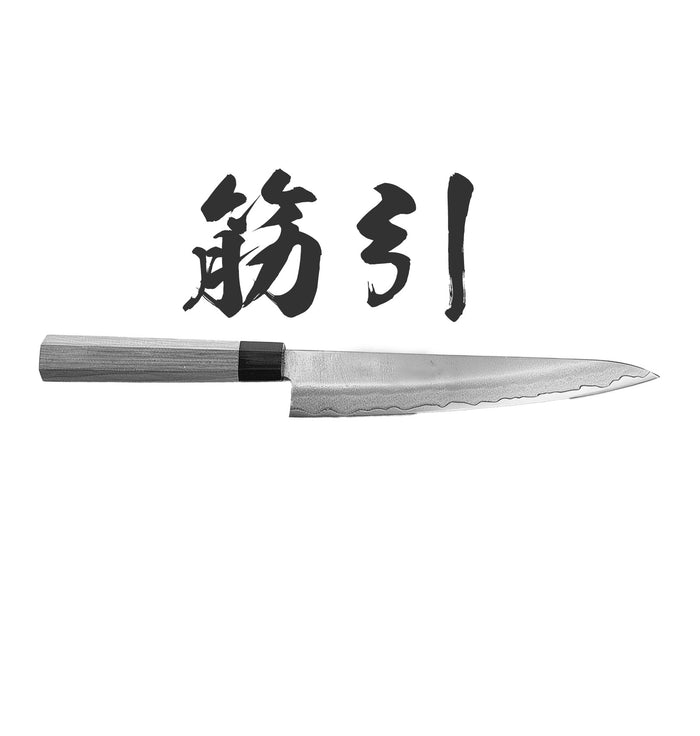
Profile: Sujihiki
Slicer
Slide for more >>
-
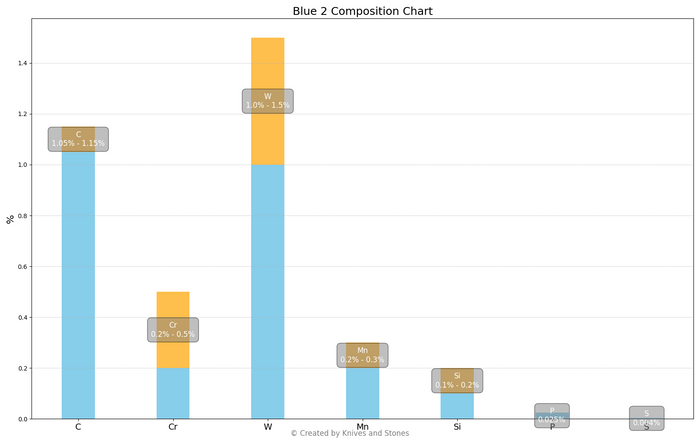
Steel: Blue 2 / Aogami #2
Manufacturer:
Nature: Carbon
Hardness: 61- 63
<< Slide for more >>
-

Handle Specs
Profile: Western without bolster
Material:
<< Slide for more

